SPAIN TRAVEL GUIDE
Spain Travel Essentials
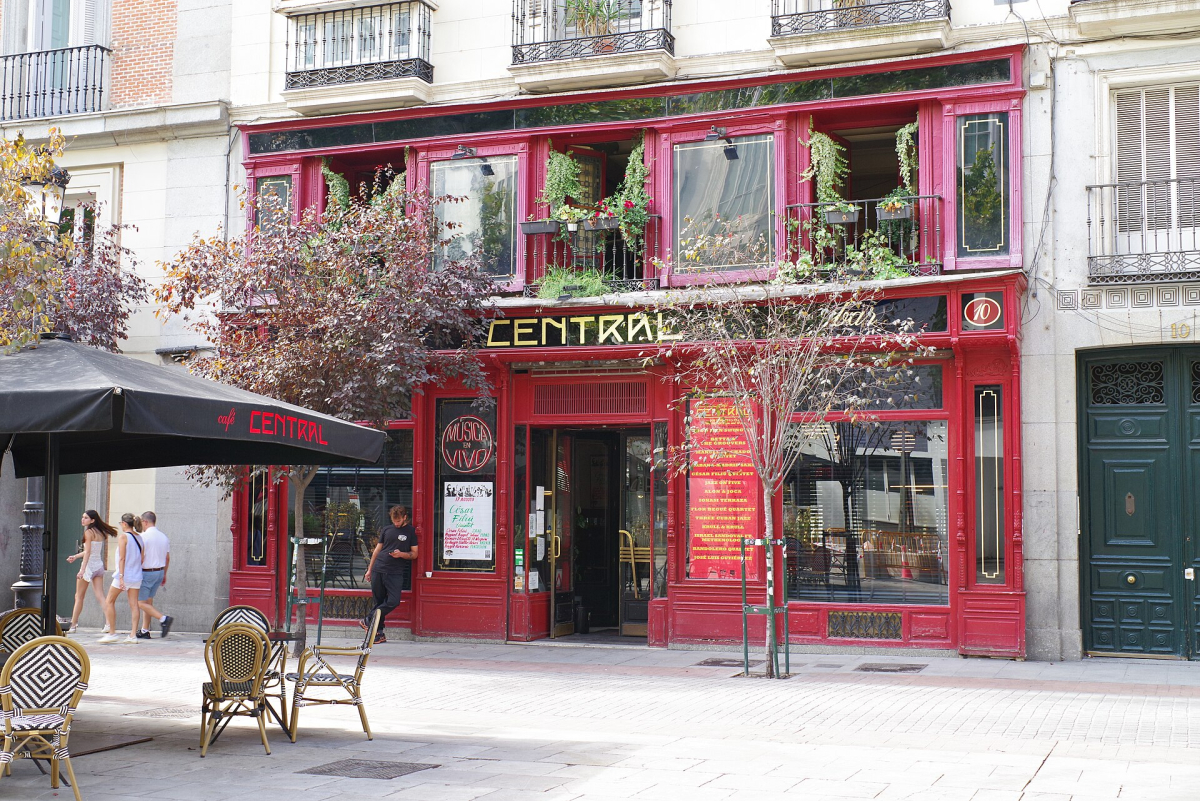
Spain is one of Europe’s most exciting destinations – a country of vibrant cities, sunny coastlines, delicious food and centuries of culture. Whether you are exploring historic neighborhoods, relaxing on the Mediterranean beaches or wandering through beautiful small towns, Spain rewards every kind of traveler. This guide covers essential travel tips to help you experience the country smoothly, safely and confidently.
Essential Travel Advice for Spain
Opening hours and mealtimes vary by place and venue. Some smaller shops close in the afternoon, while larger urban businesses may remain open. Check the actual museum, shop and restaurant before planning the day around a national stereotype.
Tipping is optional. Read the bill and choose any tip according to your experience rather than assuming a fixed national percentage. Carry a small amount of cash, and check accepted payment methods at the venue.
Photography is widely accepted, especially in public squares, markets and cafés. However, always be respectful when taking pictures of locals, performers or inside religious sites.
Safety Tips & Common Scams to Avoid
Spain is a welcoming and safe country, but it receives millions of visitors each year, which means petty theft can occur in busy places. Pickpocketing is the most common issue, particularly in crowded squares, metro stations, nightlife districts and major attractions. Keep your phone in a zipped pocket or secure bag, and avoid leaving valuables on café tables.
Common tourist scams include the “friendship bracelet” trick, where someone places a bracelet on your wrist and demands payment, or fake petitions where a stranger asks for your signature while attempting to distract you. Politely decline and continue walking.
If you ever need help, Spain’s emergency number is 112, valid throughout the entire European Union. Police officers are friendly and used to assisting tourists, especially in major cities.
Transportation Tips & Getting Around Spain
Spain has one of Europe’s most efficient transportation systems. In major cities, the metro is clean, fast and inexpensive. Buying a rechargeable travel card saves money if you plan to use public transport frequently. Buses and trams also cover extensive routes, and ride-sharing services like Uber or Cabify are widely available.
For long-distance travel, Spain’s high-speed train network, the AVE, is outstanding. Trains connect Madrid, Seville, Valencia, Málaga, Barcelona and many other cities in just a few hours. Booking tickets in advance often reduces costs significantly.
For a car rental, check city access and parking before booking. Municipal restrictions and the actual vehicle’s eligibility are separate from the rental company’s general description.
Money, Payments & Budget Tips
Spain uses the euro. Check the ATM’s displayed charge, your bank’s conditions and any currency conversion offered before confirming a withdrawal. Selecting euros lets your card provider handle conversion; compare the terms rather than assuming every airport or bank machine has the same fee.
Build a budget using actual room, transport and activity quotes for your dates. Distinguish per-person costs from shared room or vehicle costs. The Travel Costs & Money section below gives a comparison method; an unsourced national daily average can miss local charges, seasonal demand and your travel style.
Health, Safety & Emergency Information
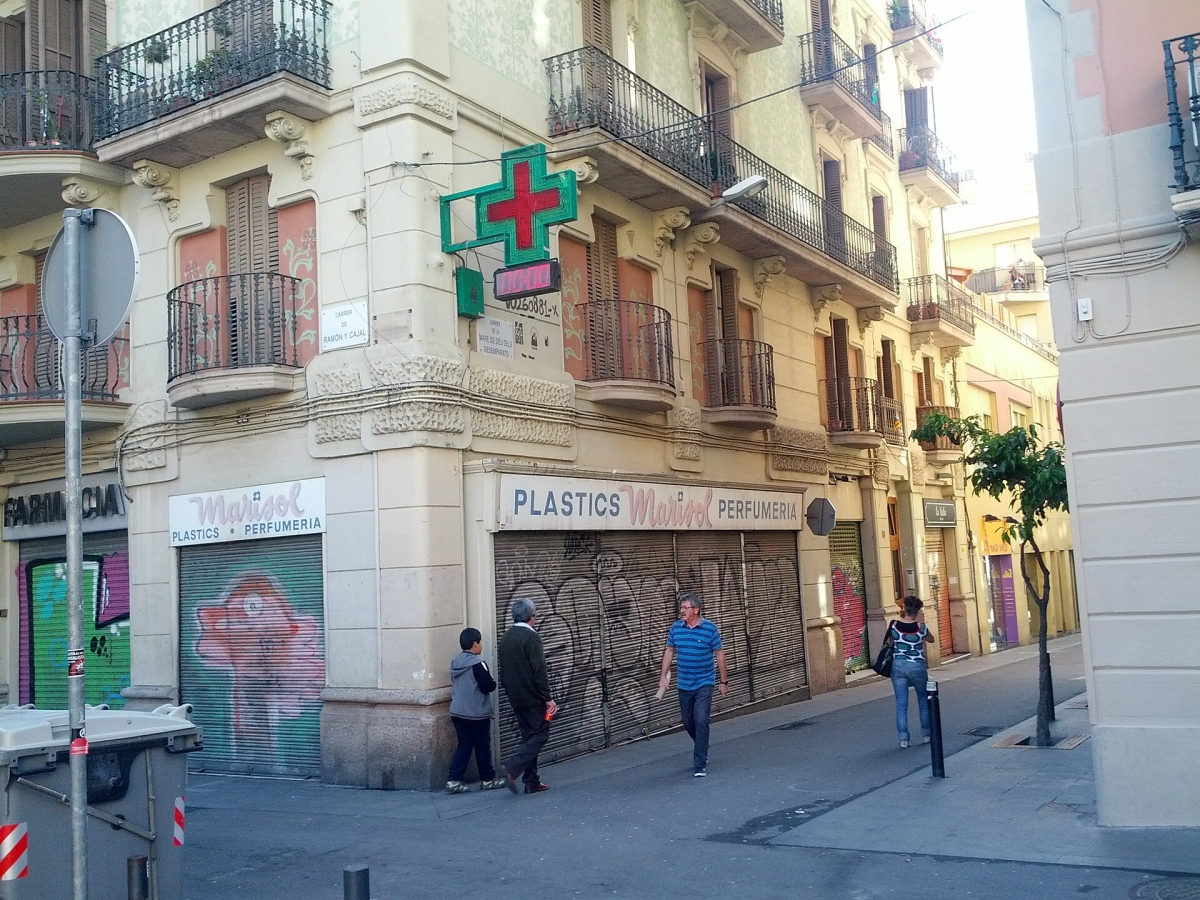
Check healthcare cover before travel. Pharmacies commonly use a green cross, but opening arrangements vary; find the local duty pharmacy for out-of-hours needs.
Follow the water advice for the actual property and locality, including temporary restrictions. In hot conditions, plan regular breaks, accessible drinking water and a shorter outdoor route.
Practical Tips for Hotels & Accommodation
Hotels in Spain range from boutique historic houses to modern high-rise buildings. Check-in times are typically around 3:00 PM, and check-out is usually between 11:00 AM and 12:00 PM. Air conditioning may operate seasonally, especially in older buildings, and some hotels require a room key to activate electricity.
Due to Spain’s lively nightlife culture, some central areas can remain noisy until late at night. If you prefer quiet evenings, consider staying slightly outside the busiest districts.
Cultural Etiquette & Social Behavior
A greeting such as “Hola” or “Buenos días” is useful in shops and cafés. Respect the person and context rather than assuming every resident has the same behaviour.
Meal times follow a different rhythm than many other countries. Lunch is the most important meal of the day, and dinners begin later than visitors may expect. When invited to someone’s home, bringing a small gift such as sweets or wine is a common courtesy.
Packing Tips for Spain
Packing for Spain depends on the season, but comfortable walking shoes are essential year-round. The country’s cities often feature cobblestone streets, so supportive footwear makes a noticeable difference. Lightweight layers are ideal during spring and autumn, while summer requires breathable fabrics, sunscreen, sunglasses and a hat.
If visiting the beaches, bring swimwear, a quick-dry towel, sandals and sun protection. Spain uses Type F plugs, so travelers from outside Europe should bring the appropriate adapter.
Weather Tips & When to Visit
Spain’s weather varies by region. Coastal Mediterranean cities offer warm summers and mild winters, while inland areas like Madrid experience hotter summers and cooler winters. Spring and autumn are considered the best seasons for comfortable travel.
For a detailed guide to regional climates, visit our full weather page:
Spain Weather & Best Time to Visit
Useful Spanish Phrases for Travelers
Learning a few Spanish phrases makes travel easier and more enjoyable. Here are helpful basics:
- Hola – Hello
- Gracias – Thank you
- ¿Dónde está…? – Where is…?
- La cuenta, por favor – The bill, please
- Perdón – Excuse me
- Ayuda, por favor – I need help, please
Digital Life, SIM Cards & Wi-Fi Tips
Check your device, tariff and coverage for the actual route. Rural and mountain coverage may be less reliable than city coverage. Save important information offline and compare current offers through providers’ own terms.
Where to Go Next
Continue exploring Spain with our related guides:
Key Facts at a Glance
| Official Name | Kingdom of Spain (Reino de España) |
|---|---|
| Continent / Region | Europe (Iberian Peninsula), plus Balearic Islands, Canary Islands and two North African enclaves (Ceuta & Melilla) |
| Capital City | Madrid |
| Major Cities | Barcelona, Valencia, Seville, Bilbao, Málaga, Zaragoza |
| Official Language | Spanish (Castilian); co-official regional languages include Catalan, Galician and Basque |
| Currency | Euro (€) |
| Time Zone | Central European Time (CET, UTC+1) and Central European Summer Time (CEST, UTC+2); Canary Islands: UTC & UTC+1 |
| Government | Parliamentary constitutional monarchy |
| Schengen / EU | Member of the European Union and the Schengen Area |
| International Dialing Code | +34 |
Time Zone, Power & Practical Details
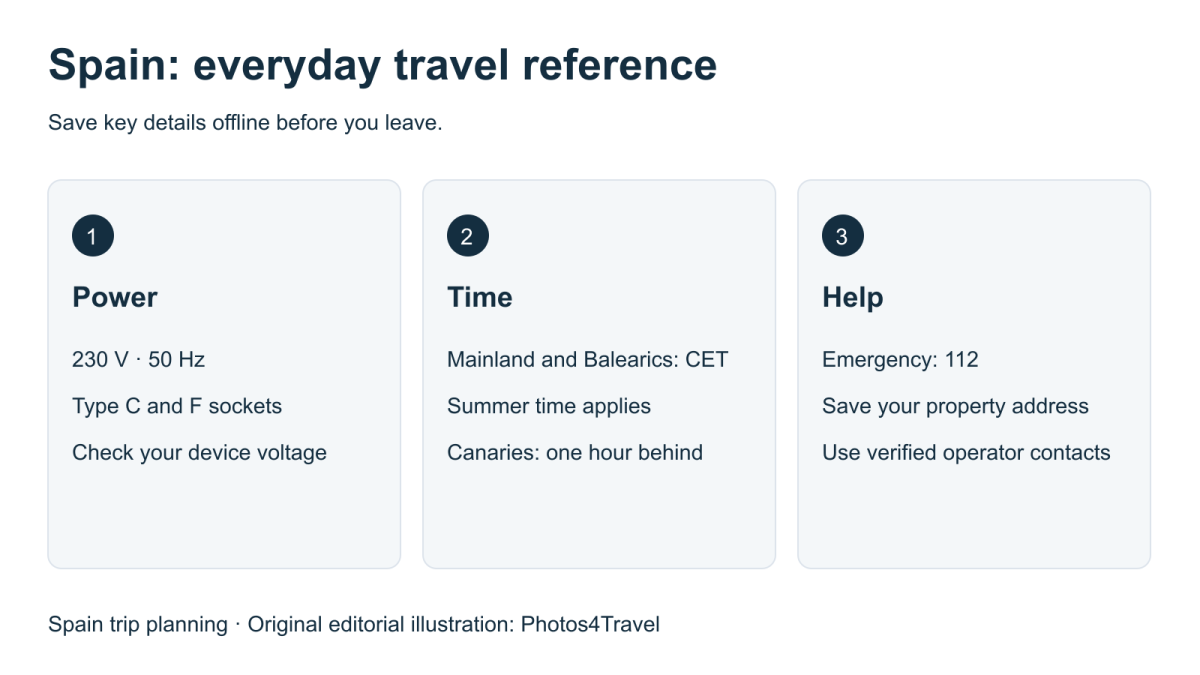
- Time zone (mainland & Balearic Islands): CET (UTC+1) in winter, CEST (UTC+2) in summer.
- Time zone (Canary Islands): One hour behind mainland Spain.
- Electricity: 230V, 50Hz, Type C and F plugs (standard European).
- Water: Follow local and property guidance, including temporary restrictions or supply notices.
Travel Costs & Money
Spain uses the euro. Carry a small amount of cash for places where card payment is inconvenient, and check the conditions of your own card before travelling. Read the machine's fee and conversion choices before confirming an ATM withdrawal. Selecting euros lets your card provider perform the conversion; compare the terms rather than assuming every withdrawal is free.
Build your budget from the trip you are actually booking: accommodation per room, meals per person, local travel, intercity journeys, paid visits and any applicable accommodation charge. Prices differ between cities, islands, seasons and property types. The illustrative ranges elsewhere in this guide are planning examples, not quotes for a particular date.
| Budget item | What to compare | Common omission |
|---|---|---|
| Accommodation | Final room price for your dates | Local charges, breakfast and cancellation |
| Transport | Complete door-to-door journey | Airport access, luggage and local transfers |
| Food | Meals, drinks and groceries per person | Snacks and repeated terrace stops |
| Experiences | Priority visits and any reservations | Separate guided tours or entry slots |
For couples and families, distinguish shared costs from individual ones. A room quote divided between two adults is different from a per-person hostel bed. Likewise, compare a car's complete bill with all the train tickets you would otherwise buy, including parking and fuel. For payment and tipping customs, consult Spain's official money guidance.
Health & Safety
Keep essential medicines and important travel documents accessible, and check healthcare cover before departure. Eligibility for public treatment and the costs of private care depend on your circumstances. An EHIC, where applicable, and travel insurance serve different purposes; verify what each covers instead of assuming either pays for every service or a journey home.
For an immediate emergency in Spain, call 112. Give the location, describe the problem and follow the operator's directions. For non-urgent health questions, identify an appropriate local service rather than using an emergency number for routine travel planning. Read the official healthcare information and visitor safety guidance before travelling.
On busy transport and at terraces, keep bags closed and valuables away from the edge of tables. Save a separate record of important contact details. After a theft, ask the local police about reporting the incident and contact the relevant card issuer or consulate as appropriate. In hot weather or on a coast, follow local warnings and adjust outdoor plans to the conditions.
Useful Contacts
- Immediate emergency: 112 throughout Spain.
- Passport or consular assistance: use the official contact details of your own country's embassy or consulate. Spain's tourism service provides an embassy directory.
- Rail tickets or a disrupted journey: contact the operator named on your ticket. Start with Renfe for its services; other operators have their own channels.
- Airport or flight problem: use the airline for booking and baggage matters, and the airport's official information for terminal and ground transport arrangements.
- Local visitor information: use the destination's official tourism office for opening arrangements, local events and access restrictions.
Prepare your booking reference, location, relevant dates and a short description before making contact. Save important numbers offline, and check the service's own website for opening hours. Avoid sending passport or payment information to an account merely because it appears in a search result.
Responsible Travel
Choose accommodation and activities that fit the place you are visiting. In busy historic centres, keep luggage and group gatherings out of residents' doorways, reduce late-night noise and respect building rules. Buy from local businesses when their products meet your needs, and ask before photographing workers, performers or residents closely.
In protected areas, follow marked routes and the authority's access arrangements. Leave wildlife undisturbed, take rubbish back with you and check current restrictions before lighting a fire or using cooking equipment. Water use matters during a stay: follow any local instructions and avoid treating a hotel or holiday apartment as exempt from them.
For a city-based trip, compare rail and local public transport with a car before booking. A rental vehicle can be useful for rural access, but it also creates parking and restricted-zone decisions in historic cities. Fewer accommodation changes can reduce repeated transfers and give you more time to understand one neighbourhood.
Use Spain's official responsible tourism information to find further local options. Choose practical actions that suit your itinerary rather than assuming a destination or provider is sustainable simply because it uses that word.