
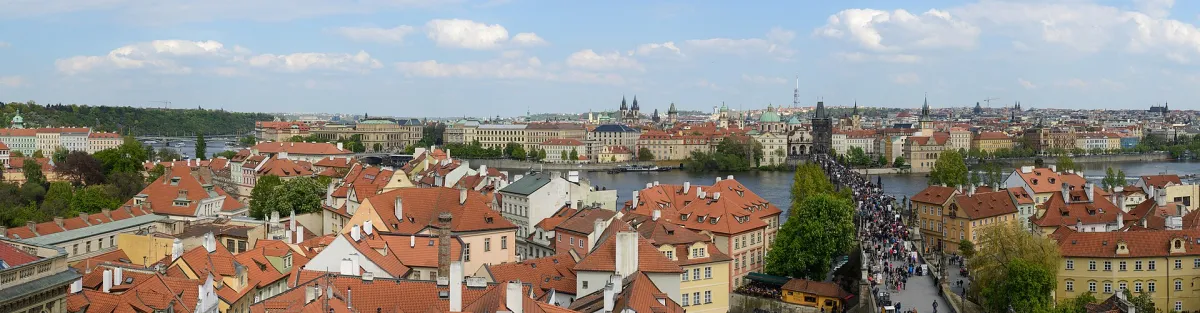
These photographs come from the site's existing licensed collection; each image retains its photographer and licence credit. They illustrate composition and place, rather than guaranteeing today's weather, access or street layout. Use this guide for photographic decisions and the Prague attractions guide for choosing which interiors and monuments deserve a longer visit.
When to Photograph Prague: Light and Timing
There is no single best clock time for the whole city. Sunrise and sunset shift through the year, while buildings shade narrow streets long after the sun has risen. Check the forecast and the sun's direction for your travel dates. The windows below are editorial starting points: cloud, pedestrian traffic and the photograph you want should decide the final choice.
| Subject | Light or time to try | Photographic purpose | Access check |
|---|---|---|---|
| Charles Bridge | Around sunrise; return near dusk | Separate statues and towers with fewer people, or include evening movement | The bridge crossing and paid tower visits are separate |
| Vltava river views | Low sun or blue hour after sunset | Compare skyline layers, reflections and light on the water | Choose an open public bank; check closures after high water |
| Old Town Square and Týn | Early morning or soft overcast light | Keep towers distinct from foreground façades and control harsh contrast | Events and temporary structures can change the available frame |
| Astronomical Clock | Even daylight, away from peak crowding | Record the two dials and sculptural details clearly | Street photography does not include Town Hall admission |
| Nerudova and house details | Bright overcast conditions or open shade | Show painted signs and ornament without deep shadow | Keep doorways and narrow pavements clear |
| Castle area and Loreta | Inspect façade light on arrival; soft light for detail | Choose symmetry, stonework or a wider square composition | Outdoor areas, cathedral, exhibitions and towers have different access |
| Tower panoramas | A clear period within published opening hours | Find separation between roofs, church towers and the river | A sunrise plan must not depend on a tower being open |
| Wenceslas Square | Side light, overcast daylight or early evening | Emphasise the long avenue and the National Museum end | Construction, traffic arrangements and events may affect sightlines |
Low sun can give stone texture and long shadows, but it can also put the subject into silhouette. Blue hour offers colour in the sky while artificial lights become visible; its useful length varies with season and conditions. On a grey day, switch from a distant skyline to signs, tracery and façades. For seasonal trade-offs, use Prague weather and the best time to visit.
16 Prague Photo Spots and What to Look For
The sequence starts in Old Town, crosses the river and climbs towards Hradčany, with Wenceslas Square as a separate extension. Each stop suggests a different frame. You do not need to photograph all sixteen in one day.
1. Staré Město: Rooftops and a Sense of Place
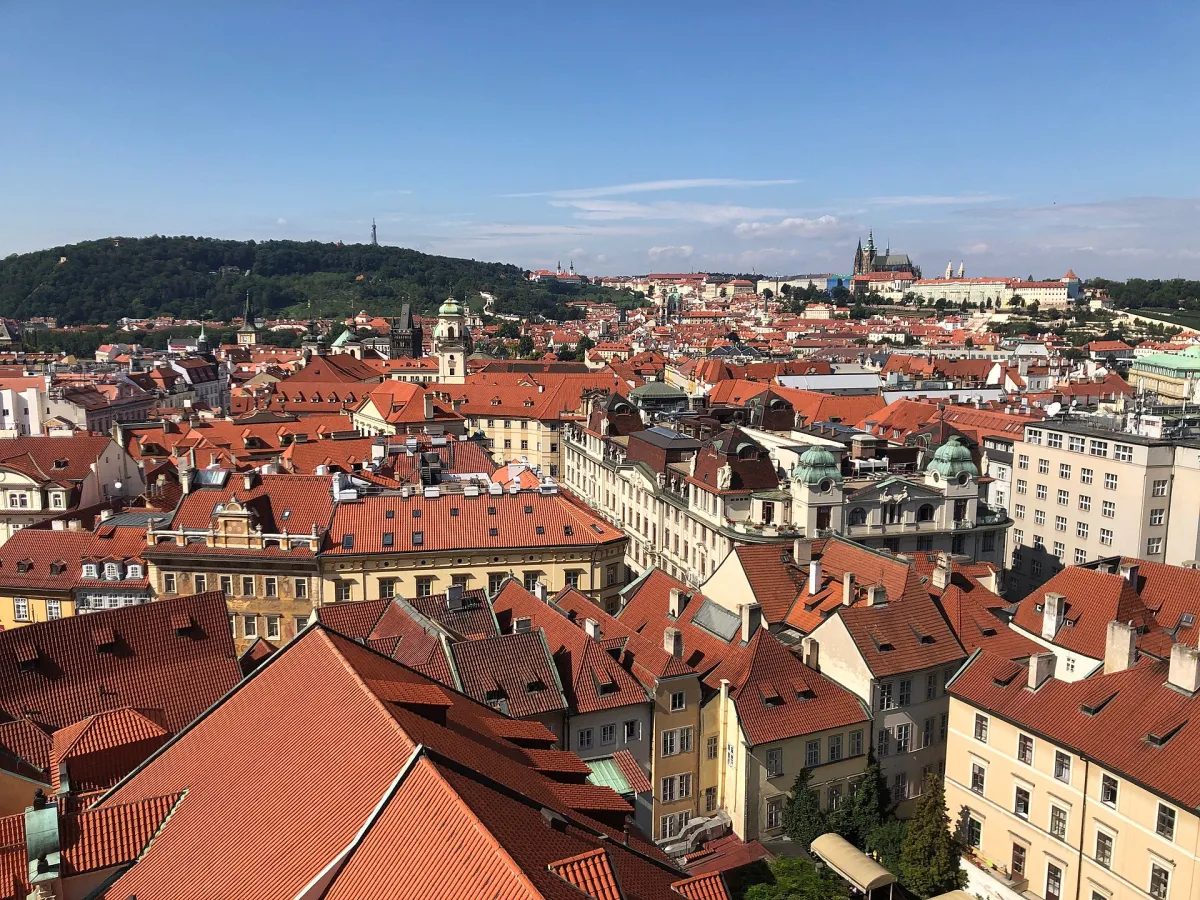
Old Town photographs work best when one tower or roofline gives the eye a clear anchor. From an elevated viewpoint, look for repeating roof planes and leave enough space around the main spire to avoid a confused skyline. The photograph here was made from Old Town Hall; it is not a view available from every street.
At ground level, build a different sequence: a broad square, a lane leading towards a tower, then a doorway or sign. Overcast light can make coloured façades easier to balance. A paid lookout adds height, but opening hours, stairs and viewing conditions belong in the decision before buying a ticket.
2. Astronomical Clock: Two Dials, One Composition
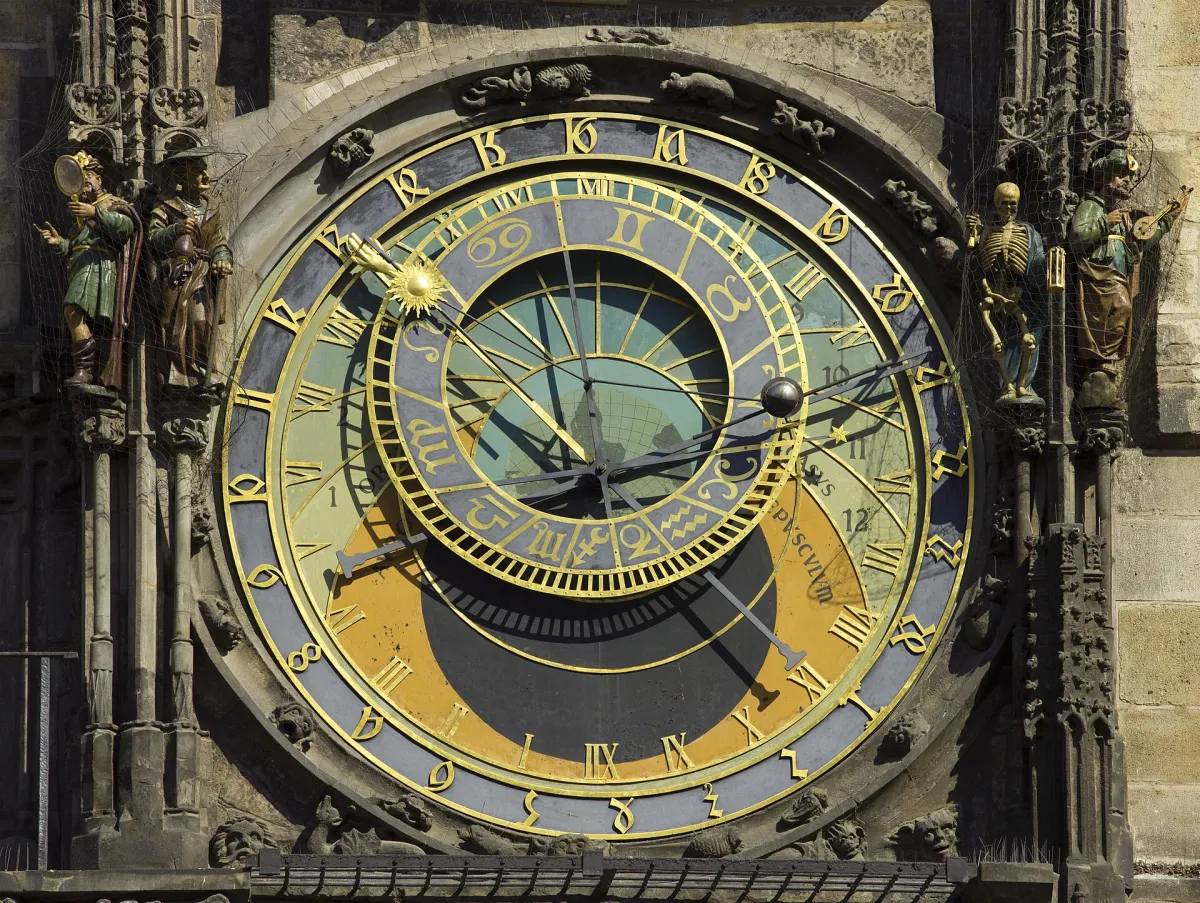
The astronomical dial and the calendar below it are different parts of the Old Town Hall clock frontage. Start with a medium frame that explains their relationship, then move to a detail of the dial, sculpture or surrounding stone. A close crop of one face tells a different story from a photograph of the whole installation.
Try a slightly longer focal length from a safe standing position rather than tilting an ultra-wide lens steeply upwards. Keep an eye on people moving behind you and avoid stopping in the main flow. Choose even illumination when possible; bright stone and shaded ornament can be difficult to expose together.
3. Old Town Hall Tower: Photograph It or Look from It
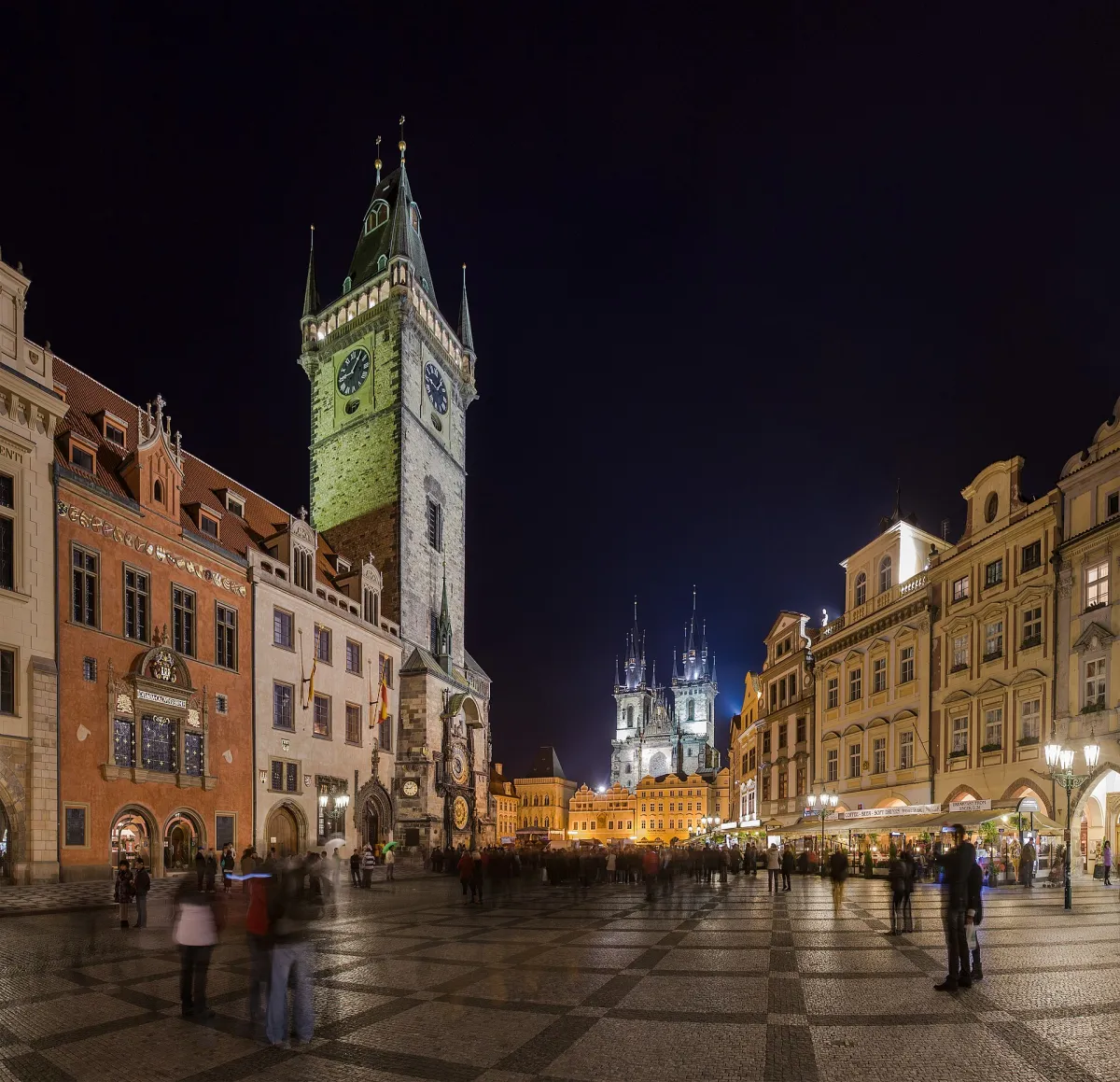
Decide whether the tower is your subject or your viewpoint. An exterior composition can use the surrounding buildings to lead towards it; a visit to the viewing level produces a roofscape instead. Those are two separate photographic tasks, and a rushed visit can leave too little time for either.
From the square, compare a close architectural view with a more distant frame that includes everyday activity. Avoid cutting the tower top accidentally when straightening perspective later. Before planning an elevated photograph, check current Old Town Hall visitor information, including access arrangements for the route you need.
4. Church of Our Lady before Týn: Keep the Foreground
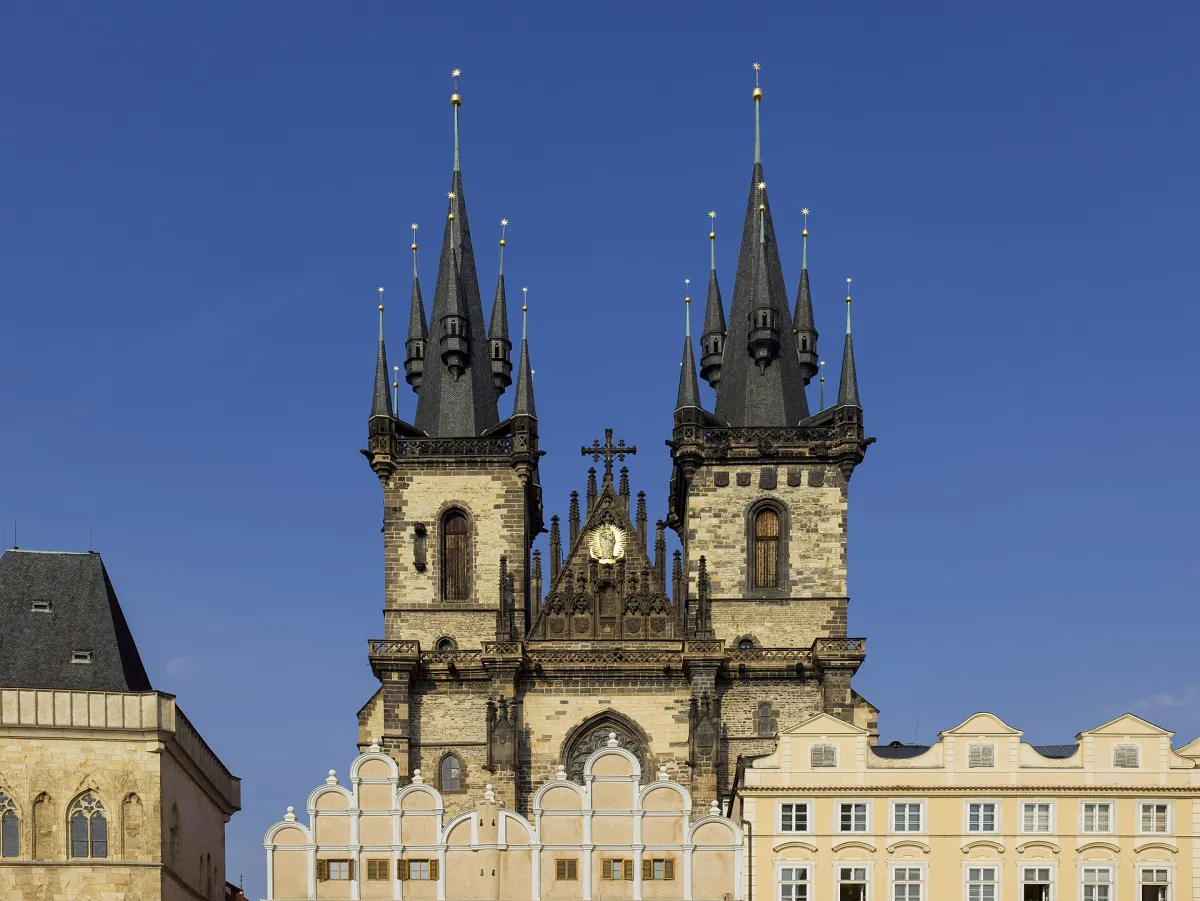
Týn's two towers rise behind the buildings facing Old Town Square. That overlap is part of the scene. Keeping some foreground façades explains why the towers appear above a roofline, while a very tight crop turns them into an isolated architectural study.
Move across the square before changing lenses: a few steps can alter which roof edge intersects a tower. Soft light helps preserve detail in the darker surfaces. If you want an interior visit, locate the actual entrance and check visitor conditions separately; the most obvious viewpoint across the square is not an entrance instruction. Respect services and any photography signs inside.
5. St Nicholas Church on Old Town Square
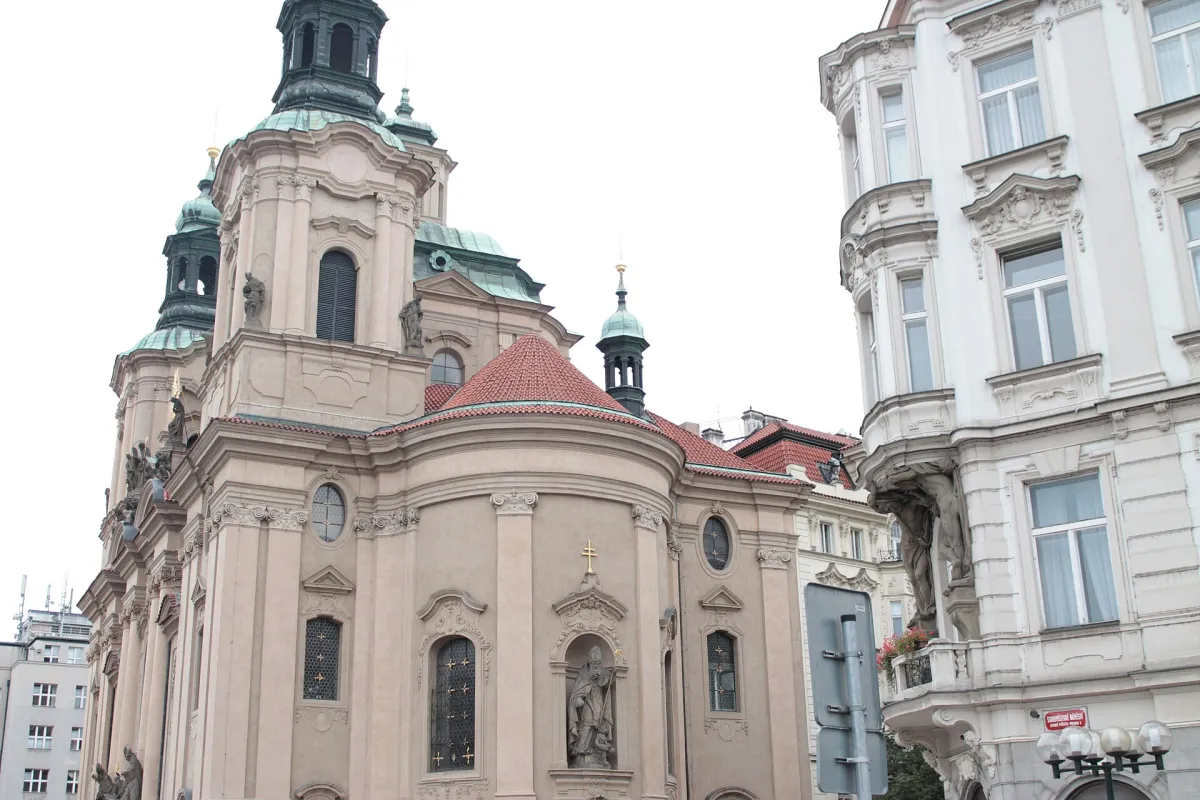
This is St Nicholas Church in Old Town, not the church of the same name in Malá Strana. Keep the district in your notes and image captions so that photographs and visitor information do not become mixed up.
Use the church's curved Baroque façade as a contrast to the other building shapes around the square. A wider frame shows its civic setting; a medium view concentrates on the rhythm of windows and ornament. Wait for a clear gap if a person would obscure an architectural feature. An exterior photograph gives no assurance of interior access: worship, concerts and tourist visiting can involve different arrangements.
6. House at the Minute: Decorated Façades
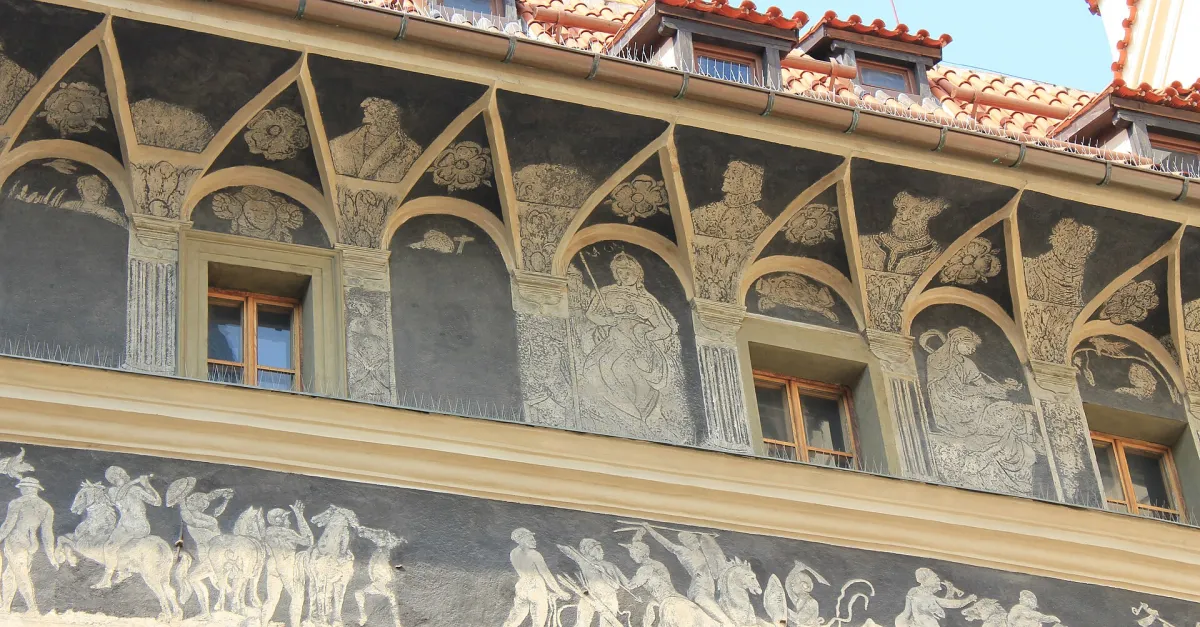
The House at the Minute makes a useful change of scale after the square's towers. Look at how the decoration wraps around the corner, then decide whether the picture is about the whole building or a particular section of the surface. A frame including the street gives context that an ornament-only crop cannot.
For cleaner verticals, keep the camera level where space allows. In a tight lane, a deliberate oblique view can look more coherent than forcing the entire façade into an extreme wide angle. Soft light usually makes surface detail easier to read. Do not identify painted figures or attach a house-sign legend unless you have checked it.
7. Powder Gate Tower: Stonework above the Street
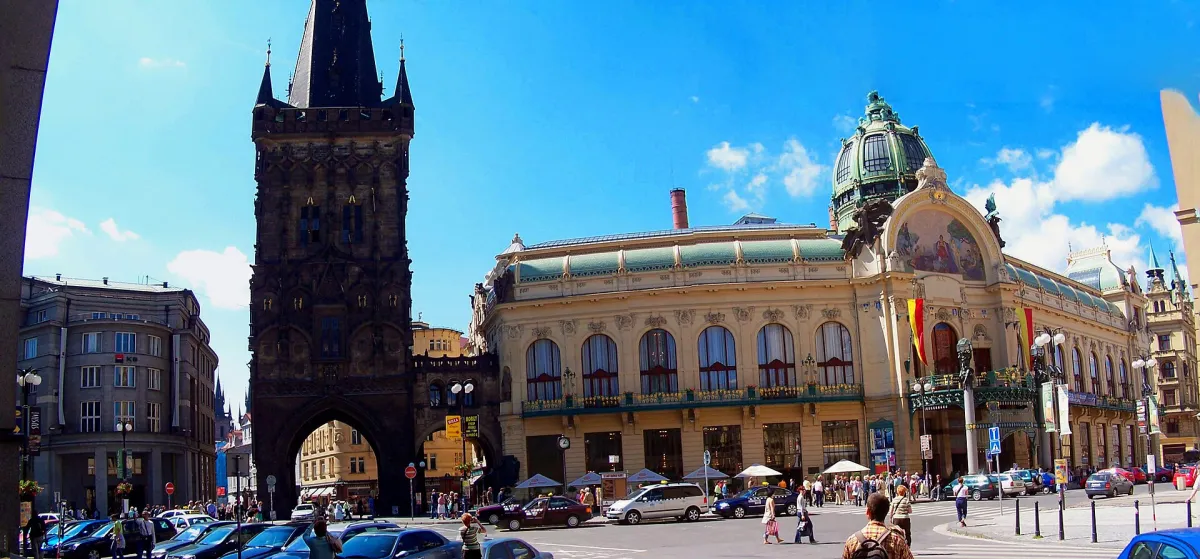
Prague's Powder Gate Tower stands beside the Municipal House, offering a useful pairing of contrasting architectural forms. This is the city gate, not Mihulka Powder Tower within Prague Castle. Include enough street-level context to establish which monument you mean.
For a vertical subject, leave room around the top and corners for perspective correction. An oblique composition can show the depth of the gateway, while a closer study isolates carving against dark stone. Bright overcast weather can reduce the difference between a pale sky and a shaded façade. If considering a tower visit, check the operator's current access information rather than assuming an exterior photo describes the view from above.
8. Charles Bridge: Decide Which Way the Picture Looks
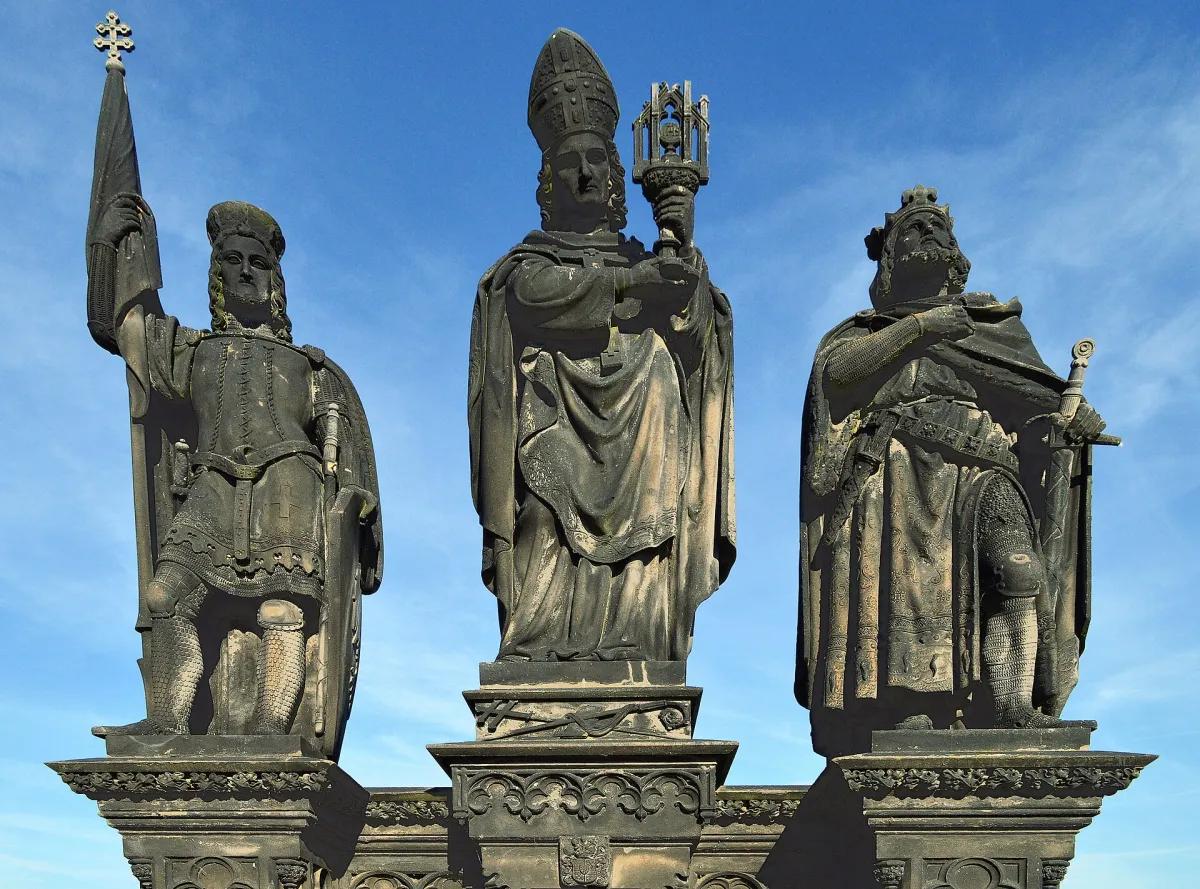
Photographing Charles Bridge and photographing from Charles Bridge produce different images. A riverbank view shows arches and the bridge's length. On the deck, statues, paving and a distant tower become the main compositional tools. Decide which version matters before committing your best light to one position.
Try repeated statues as a leading line, keeping the main tower separate from a nearby sculpture. Early morning is worth considering for pedestrian space, although an empty bridge is never guaranteed. Later, include movement deliberately rather than treating every passer-by as a problem. The official Charles Bridge description distinguishes the towers at its two ends.
9. Vltava River: Reflections and Layered Crossings
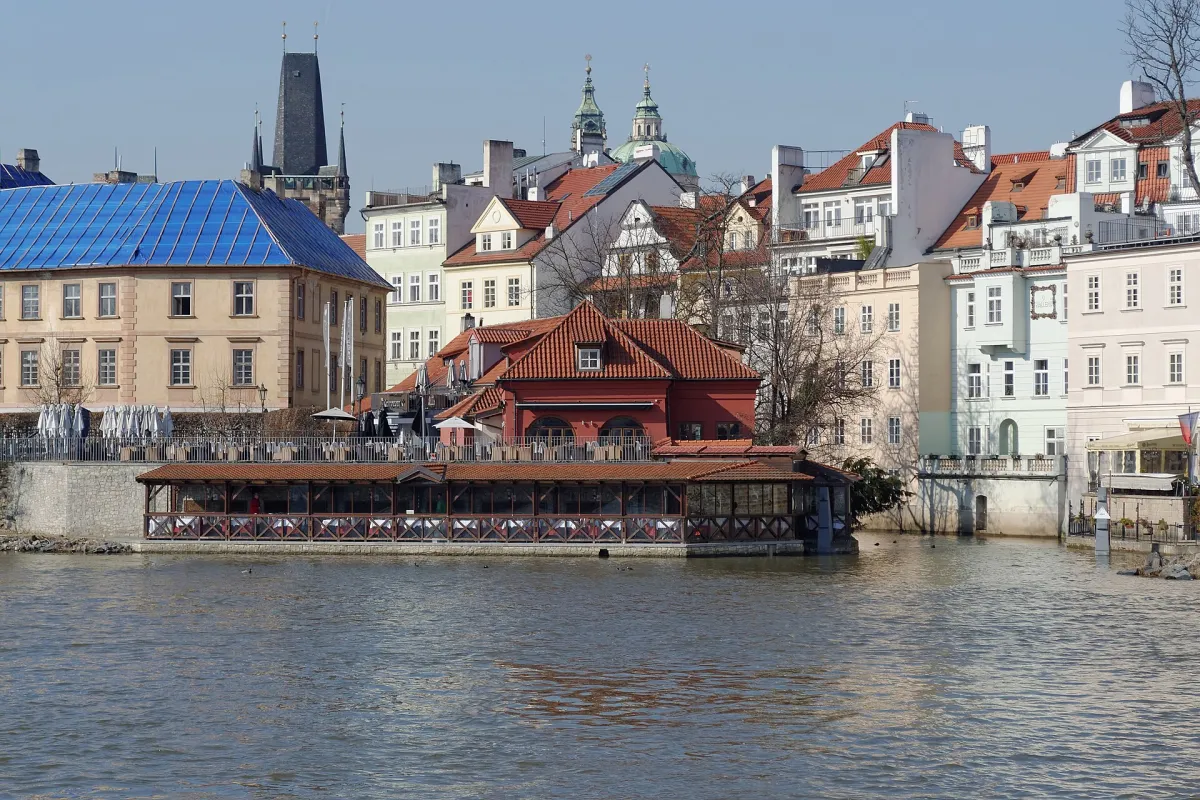
A bank-level frame can emphasise reflections; bridge level shows the channel's direction; an elevated view can separate several crossings. These positions do not reproduce each other's foregrounds. Compare one accessible riverbank with a crossing before deciding that a longer lens alone will create the scene you want.
Wind and boat wakes can break reflections, so a smooth-water photograph is a weather-dependent possibility. Use ripples as texture when the river is moving. Stay on open public routes and away from moorings, restricted steps and closed banks. After high water, follow local closures. This photographic river stop is not a recommendation for swimming in the central channel.
10. Lesser Town Bridge Tower: The Western Gateway
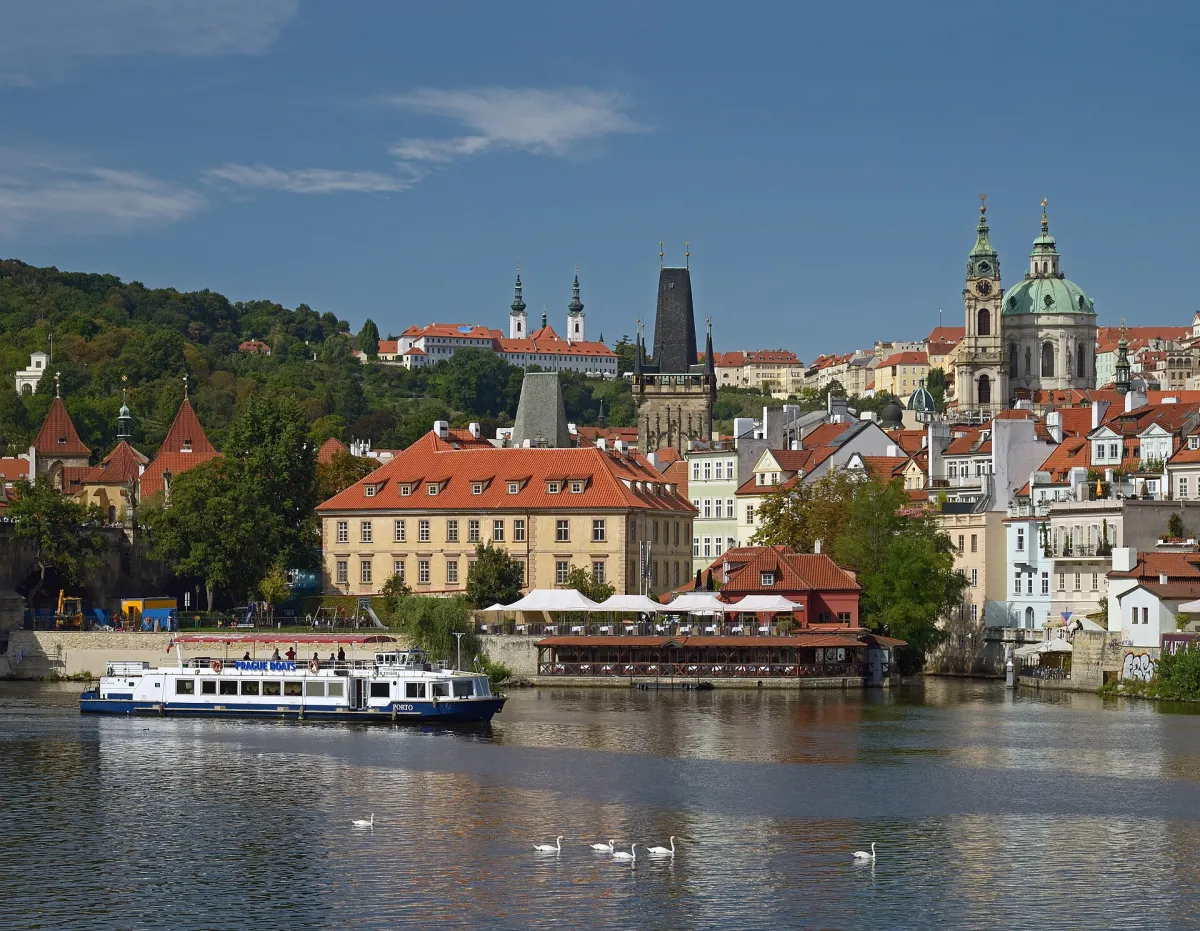
The Lesser Town towers mark the western, Malá Strana end of Charles Bridge. Distinguish them from the Old Town Bridge Tower on the eastern bank. From the ground, the gateway can frame people and the approach into the district; from an elevated position, roofs, river and church towers can overlap.
The layered view shown here brings several landmarks into one picture. Their apparent closeness does not mean they stand beside one another. Compare a broad view with a tighter skyline study and keep your location notes. For a visit to the taller tower's gallery, consult official seasonal opening and ticket information before reserving a particular light window.
11. Malostranské náměstí: A Square with Movement
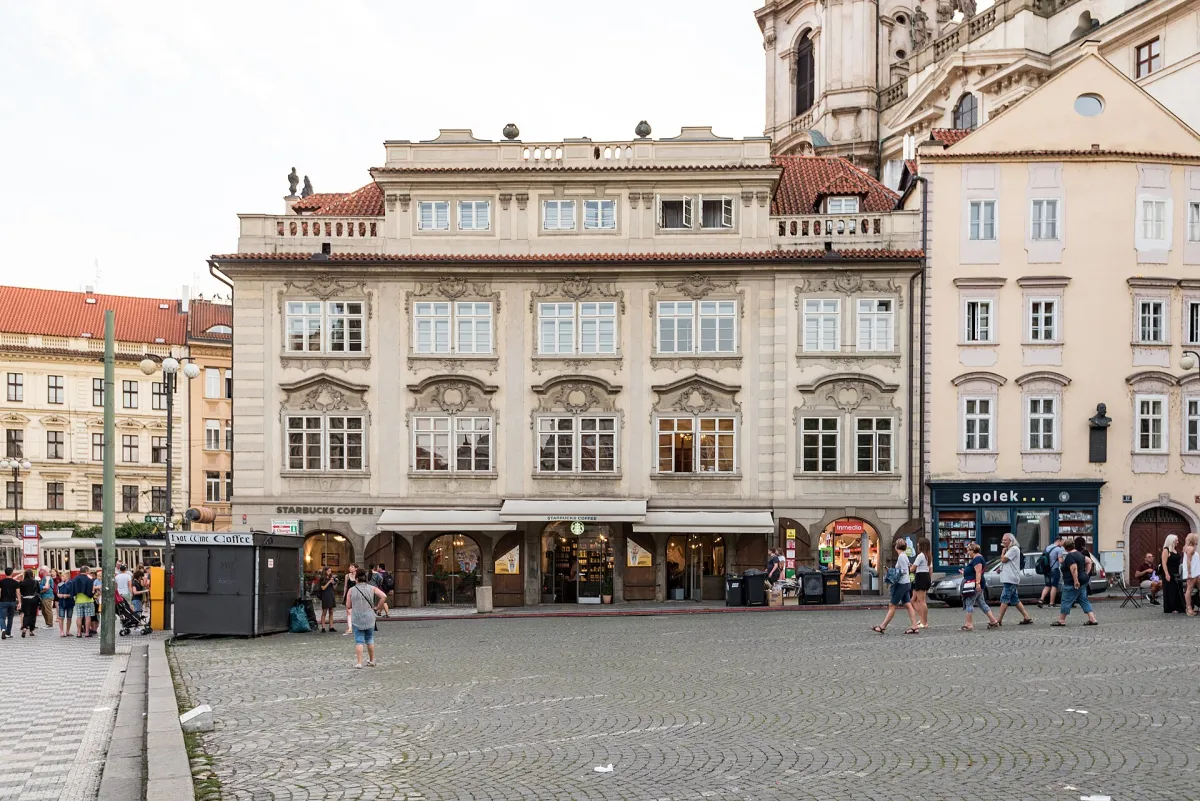
Lesser Town Square connects the bridge approach with streets climbing towards the Castle. Here the church, façades and street movement make a stronger subject together than another isolated skyline. Establish the shape of the square first, then look for a passing tram or pedestrian that adds scale without hiding the main building.
Traffic arrangements can change, so choose your standing position from today's pavement conditions. Never step into tram space for a symmetrical frame. This square is associated with the Malá Strana St Nicholas Church; the Old Town church illustrated earlier is across the river. Keep those two stops distinct when planning indoor visits.
12. Nerudova Street: Read the Signs, Show the Slope
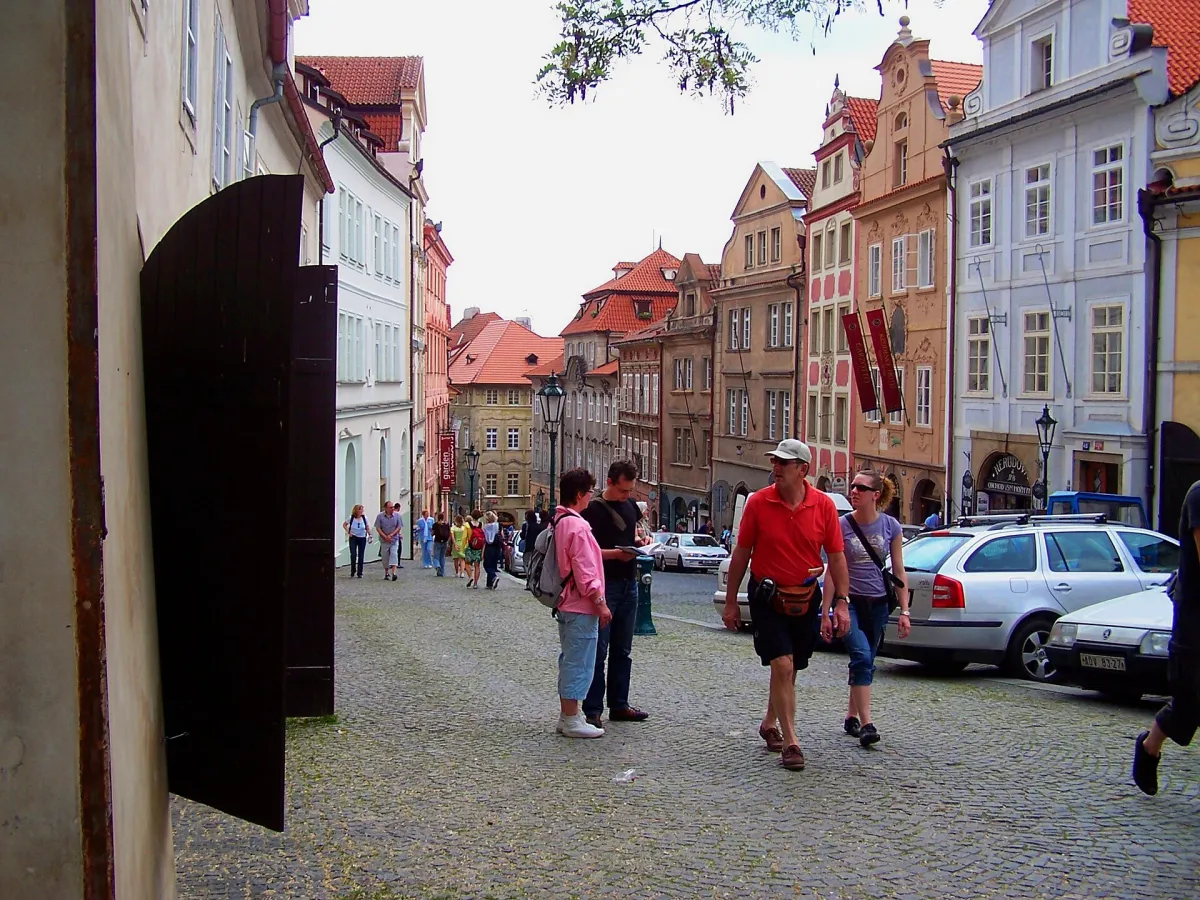
Nerudova links Lesser Town with the approach to Prague Castle. Its slope and sequence of façades offer a strong street view, while house signs reward slower looking. Prague City Tourism identifies signs including the Three Violins and Two Suns in its guide to Prague house signs.
Make one image that shows the gradient and a second that isolates a sign with enough surrounding wall to locate it. Open shade helps with painted or sculpted detail. If a long uphill photo walk would be tiring, start higher and work downhill, checking transport beforehand. Keep shop entrances clear and avoid turning a private doorway into a portrait set.
13. Archbishop's Palace: Symmetry on Hradčanské náměstí
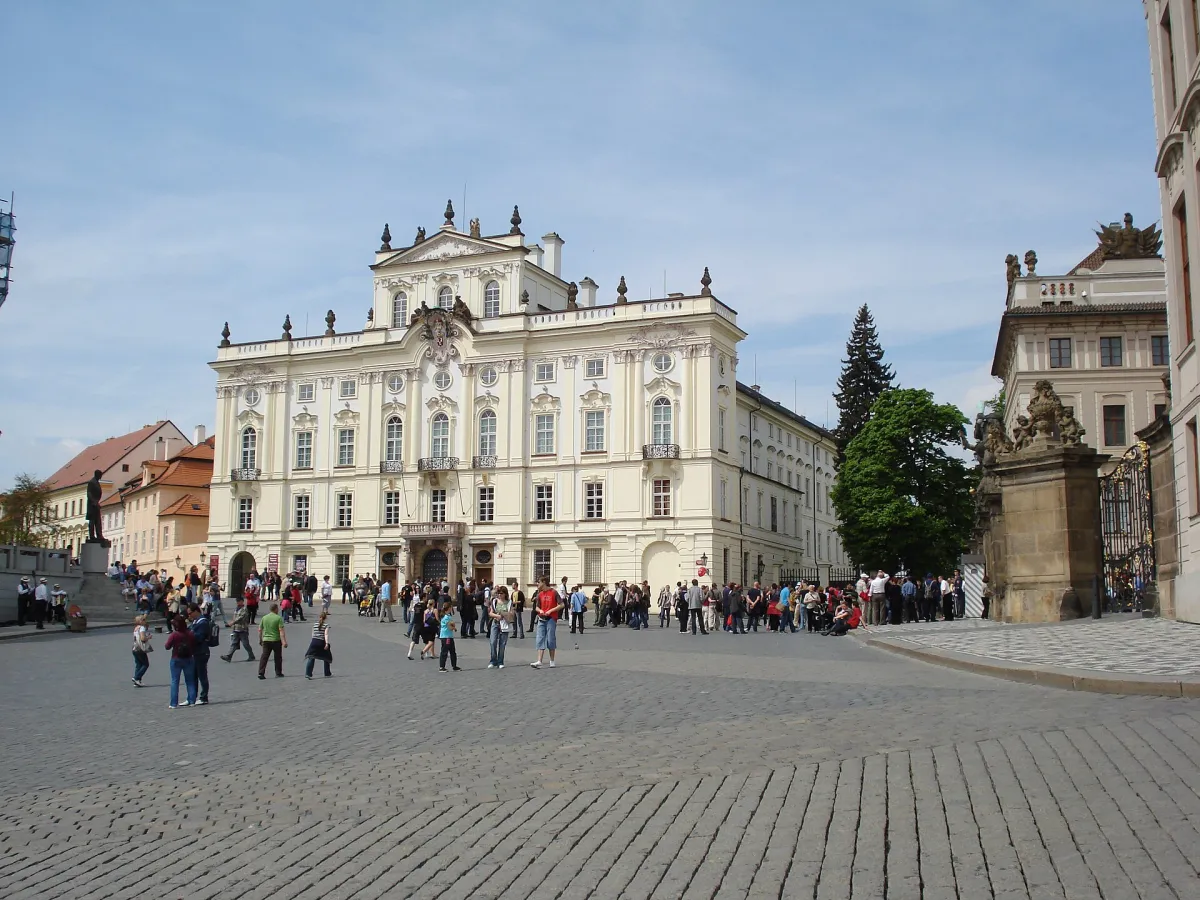
The Archbishop's Palace belongs to the ceremonial setting of Hradčanské náměstí near the Castle entrance. A centred view draws attention to the façade's symmetry, while an oblique composition explains its relationship with the square and neighbouring buildings.
Check the edges of a wide frame for signs, barriers and people cut in half; a small change of position can simplify the foreground. In strong sun, decide whether illuminated stone or shaded detail is more important to the exposure. The palace exterior is the subject here. Do not interpret a photograph from the square as confirmation that palace interiors are open for a casual visit.
14. St Vitus Cathedral: Separate Skyline and Detail
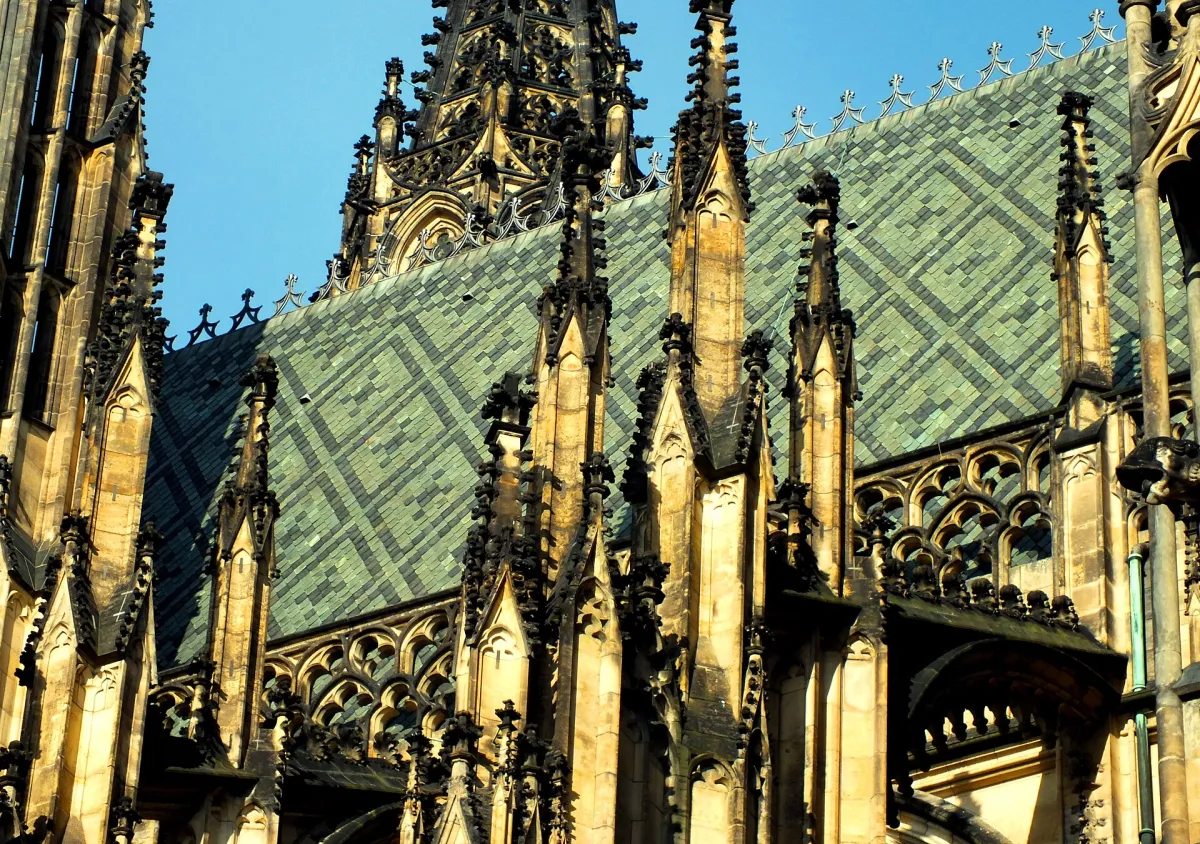
St Vitus Cathedral supplies a vertical accent within the broader Castle complex. A distant frame can contrast its spires with the lower palace buildings. Close up, roof patterns, tracery and carved stone offer a separate architectural study, as the photograph here shows.
Choose one scale at a time. Trying to include the full height from immediately below can produce heavily converging lines and an unhelpful foreground. Treat the interior as a place of worship with controlled visitor access. Cathedral entry, exhibitions and a tower climb are different plans; consult Prague Castle's official visitor information and the rules at the entrance before relying on a particular photograph.
15. Loreta: Give the Complex Its Own Stop
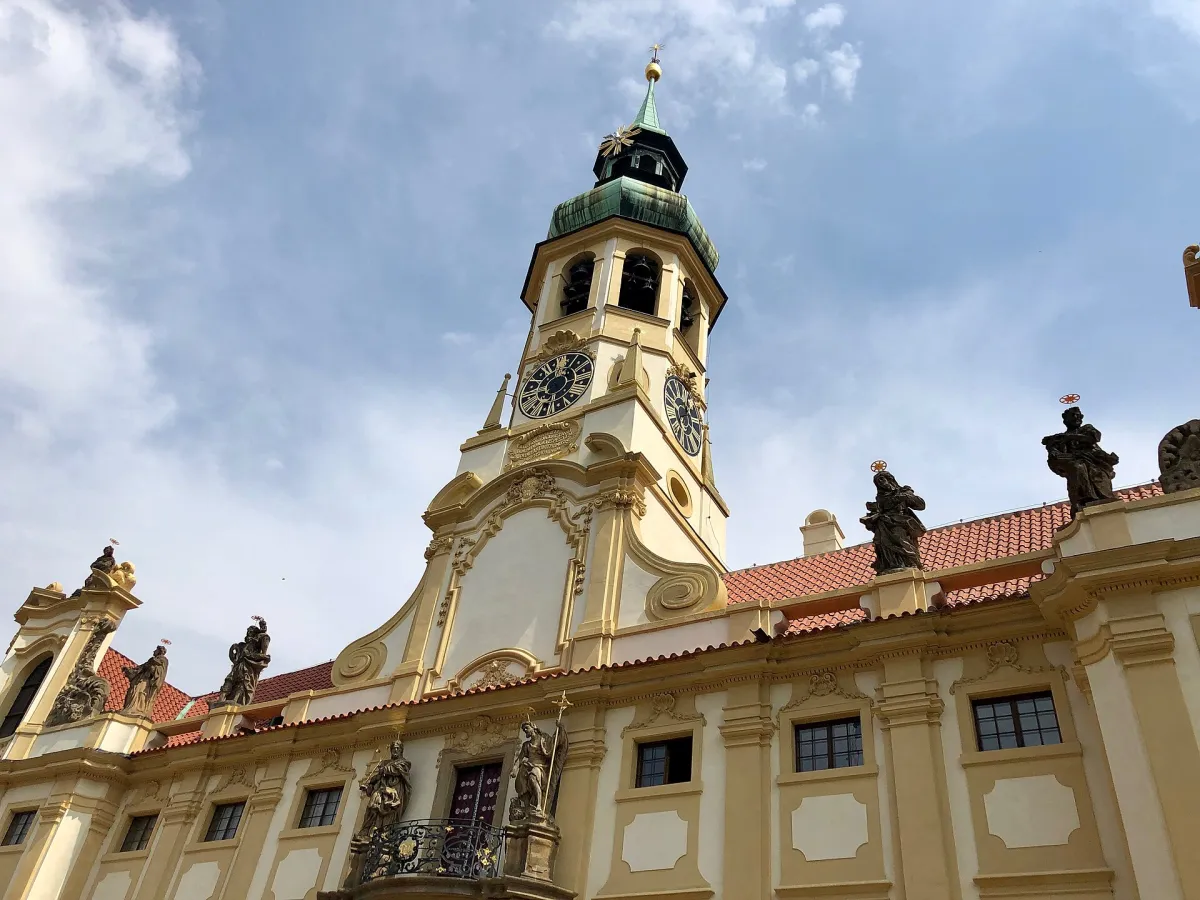
Loreta lies in Hradčany and works best as an intentional addition to a Castle-area walk. Start by deciding whether you want the frontage's central axis or a wider photograph showing the space around it. A centred frame rewards careful alignment; an angled view can show more depth.
The exterior is only one part of the complex. The Holy House, cloisters, chapels and treasury involve a different visit from a brief façade stop. Allow a separate time block if those are your interest, and check current visiting and photography conditions with the operator. Avoid treating an exterior image as evidence that photography is allowed throughout the interiors.
16. Wenceslas Square: A Different Kind of Prague View
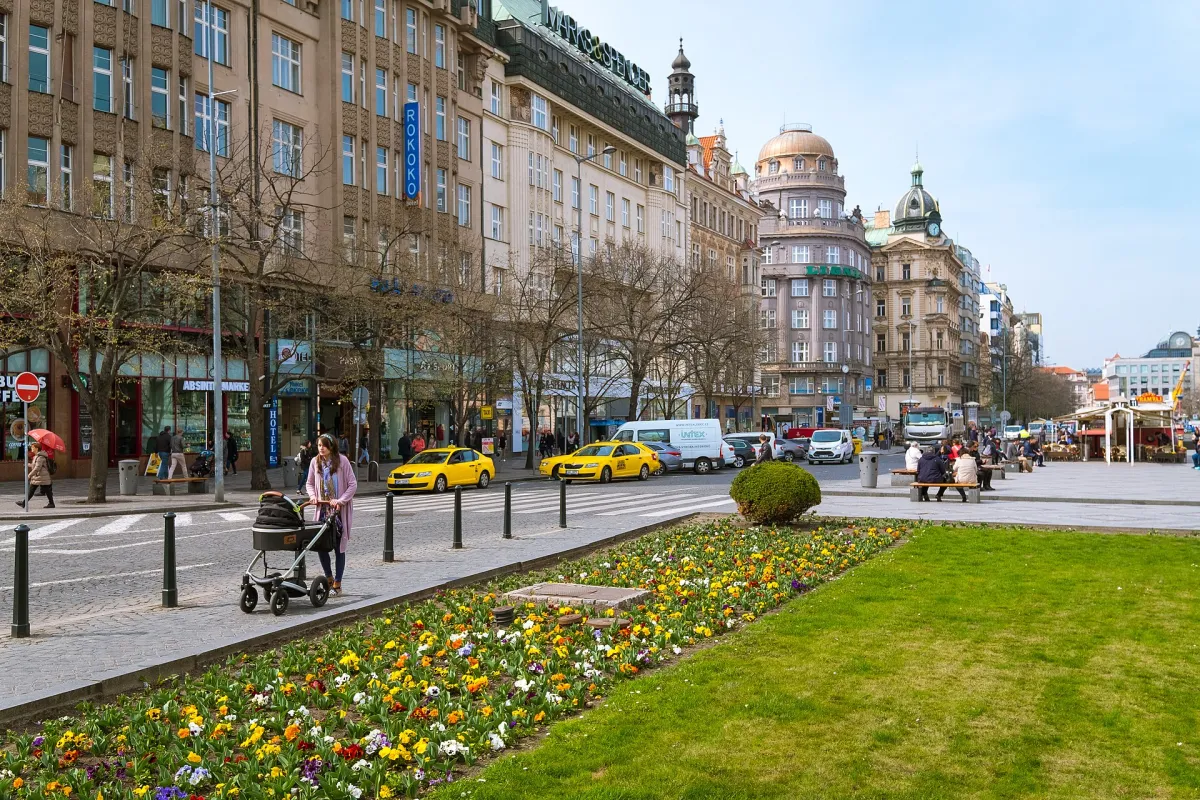
Wenceslas Square offers a long urban axis rather than the enclosed composition of Old Town Square. Use the National Museum end as an anchor, then decide how much foreground street life belongs in the picture. A more distant view explains the avenue's length; a closer frame concentrates on an individual façade or monument.
Check the current streetscape before choosing a side: works, events and transport changes may alter familiar views. Include ordinary activity honestly in captions rather than implying that a present-day scene documents a historical event. Treat this as a New Town extension, leaving enough time to return to the river if evening light is your priority.
Two Manageable Prague Photography Walks
Old Town and the river: start at Old Town Square for Týn, St Nicholas, the clock and the House at the Minute. Add the Powder Gate as an eastern out-and-back, then walk towards Charles Bridge. Compare a bridge-deck frame with a public riverbank view. Reserve a tower visit only if its opening hours fit the light you want. Wenceslas Square is an optional extension, not a compulsory detour.
Malá Strana and Hradčany: connect the western bridge gateway with Malostranské náměstí and Nerudova, then Hradčanské náměstí and the Castle area. Add Loreta when you can give it attention. Reverse the direction if a downhill walk suits you better. These are editorial walking sequences, not timed tours; hills, indoor visits and repeated photo stops can substantially change their duration. The Prague itineraries help fit photography around the rest of a trip.
Access, Indoor Photography and Practical Equipment
A phone or a camera with a modest zoom can cover much of this guide. Use a wide setting for context and a longer setting for signs and roof details. At dusk, check sharpness before leaving; stabilise the camera only where doing so is permitted and does not obstruct a route. Wet cobbles, stairs and narrow pavements deserve more attention than the camera screen.
Photography rules belong to each venue. The Jewish Museum's published conditions, for example, allow personal photography without flash, additional lights or a tripod; they are not permission for every museum or church in Prague. Ask the relevant operator about commercial sessions, lighting and tripods in advance. Check Castle notices and instructions on the day, and ask before close portraits. For wider practical planning, read Prague travel essentials.
Prague Photography FAQ
Where should I start if I have only one morning?
Choose Charles Bridge and one nearby river view, then Old Town Square for the clock, towers and façade details. Keep the river photograph as the light-dependent priority and let the remaining stops follow weather and pedestrian conditions.
Is sunrise always the best time for Prague photos?
No. It can offer more space on popular routes, but a shaded façade, an indoor visit or a closed tower may favour another time. Check sunrise for your dates and the direction of the subject instead of following a fixed hour.
Which St Nicholas Church is pictured here?
The dedicated St Nicholas photograph shows the church on Old Town Square. Malostranské náměstí is associated with the separate St Nicholas Church in Malá Strana, west of the river. Label the district when saving photographs or checking admission.
Do I need to pay to photograph Charles Bridge?
Crossing the bridge and entering a paid bridge tower are different activities. A tower ticket buys access to a particular elevated viewpoint during its operating hours; it is not required simply to make an exterior photograph from an accessible public route.
What can I photograph on an overcast day?
Concentrate on the House at the Minute, Nerudova's signs, the clock dials and cathedral stonework. Soft light often makes these surfaces easier to read than a high-contrast sunny view. Use a roofscape if visibility is good enough to separate the layers.
Are these photographs available to reuse?
Each caption links to its source and licence. Check that individual licence and meet its attribution and other requirements before reusing an image. Publication on this guide does not make the whole collection public domain or remove the photographer's rights.
Editorial and official-source review: 24 November 2026. Recheck opening calendars, temporary closures and venue photography conditions before visiting. Light suggestions and walking sequences are editorial guidance; image credits identify the licensed collection's sources.


