
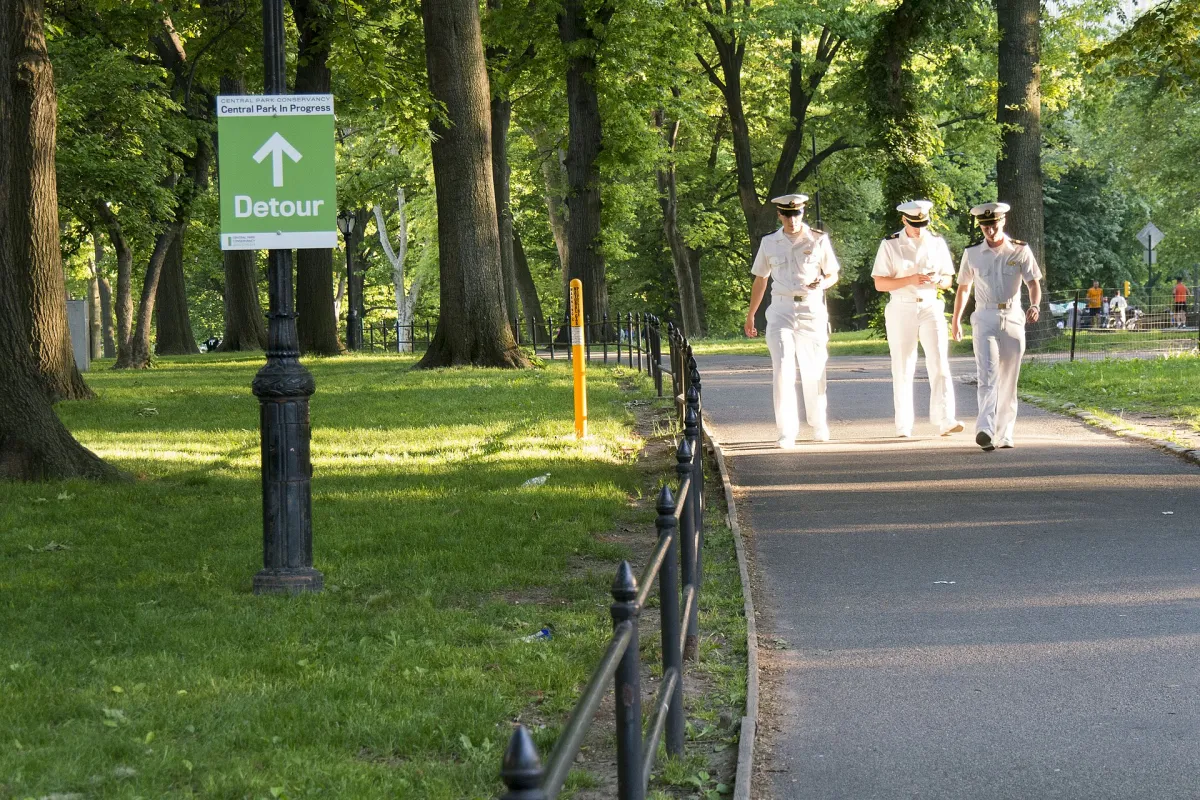
Keep your attention on the shared street
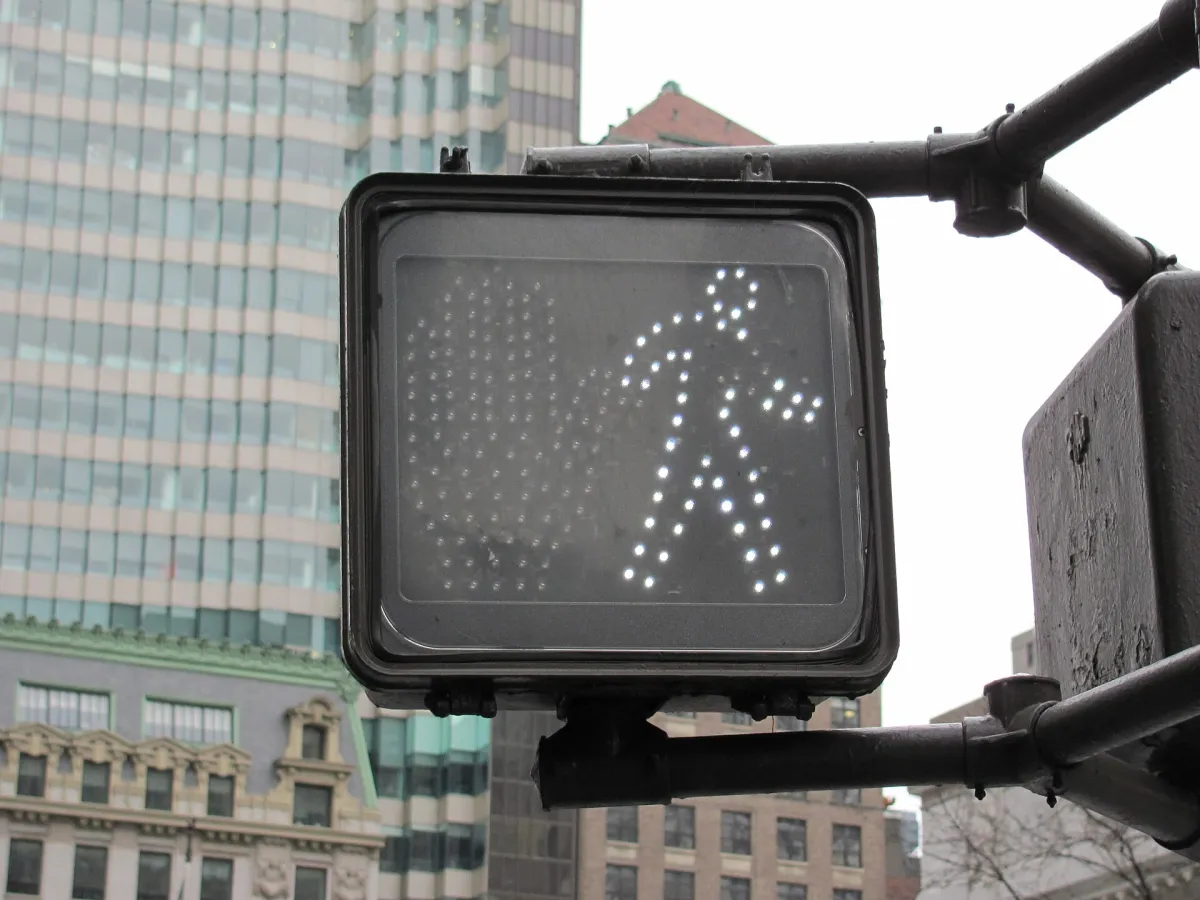
Stop at a safe place to read your phone rather than walking into a crossing while looking at directions. Watch for turning vehicles and bicycles, including when the street appears clear in one direction. Keep bike lanes available for moving traffic and choose a photo position that does not require stepping backwards into one.
At a busy station entrance or theatre exit, move away from the flow before regrouping. Give your party a meeting point that is easy to describe without blocking stairs, ramps or doors. A little extra crossing time is especially useful when travelling with children, luggage or anyone who walks more slowly.
The NYC DOT street-safety guidance describes the street as a shared environment for drivers, cyclists and pedestrians. Plan your own route to reduce rushed decisions: an extra walk to a straightforward crossing can be a better choice than trying to follow the shortest line on a map.
Look after belongings and choose official sales channels
Keep bags under your control in busy places, on trains and while sitting in cafés. Before leaving a vehicle or venue, check your phone, wallet and any bag stored out of your direct view. Keep a second payment method and essential details separate so losing one item does not remove every way to continue the trip.
Use the attraction’s official ticket process or an explicitly authorized seller. Near The Battery, the National Park Service warns about unauthorized Statue of Liberty ticket sellers. Establish whether you are buying an island landing, a harbour cruise or a ground-level view before paying. A confident sales pitch is not proof that a boat docks at the islands.
For airport taxis and licensed pickups, follow official airport instructions rather than unsolicited approaches. Save the provider’s receipt and vehicle details. If something is lost, use the operator-specific contacts directory promptly, with the route, time and a useful description. Do not share full payment or passport numbers in a public lost-item post.
Make the return journey part of the plan
Check the route home before a performance, dinner or late photograph outing. Weekend and overnight service may differ from the outward journey. Save the actual accommodation address and a usable alternative. A taxi or licensed car can be a practical choice when fatigue, weather or a complicated interchange makes the intended route unsuitable.
On platforms, keep back from the edge and follow staff instructions. Do not enter track areas to retrieve a dropped item; seek staff assistance. Keep entrances and vehicle doors clear rather than trying to hold a service while the rest of the party catches up.
Use Getting Around for choosing services and Accessibility for current elevator and entrance checks. An apparently short transfer can involve stairs, corridors or a direction-specific entrance. If the route does not work for your party, take time to establish a suitable alternative instead of pressing on with an unsuitable connection.
Respond to heat, air quality and severe weather
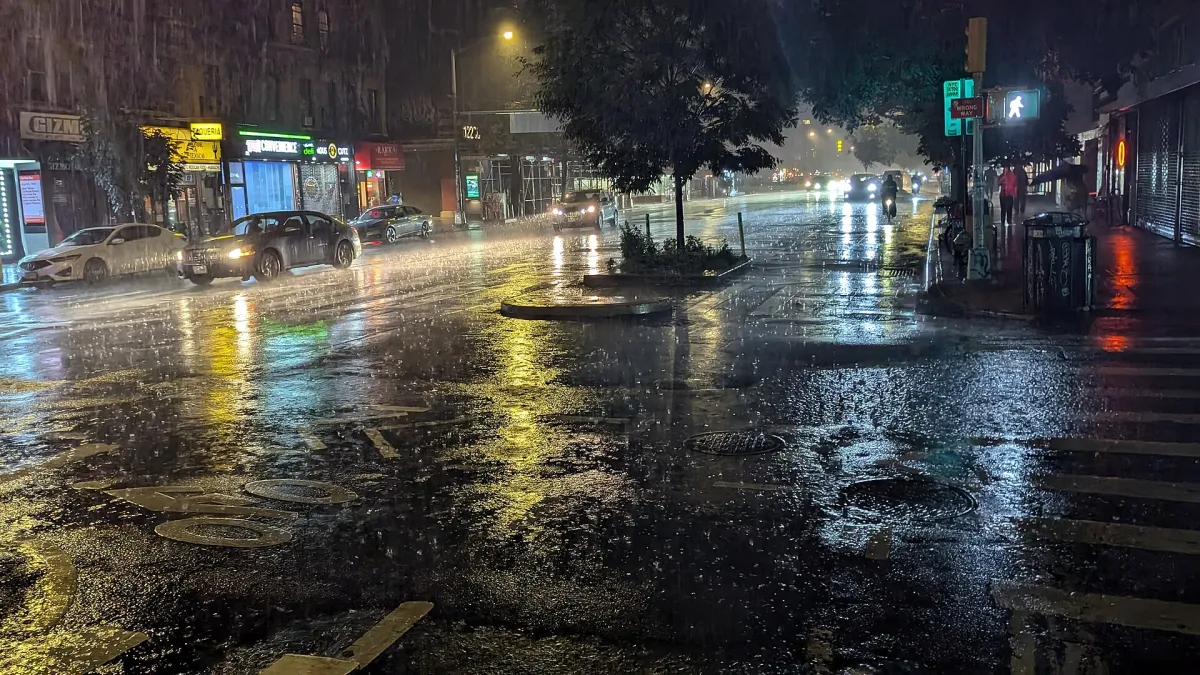
Make hot-weather days less exposed, with a practical indoor break rather than several continuous outdoor queues. NYC Health’s heat guidance and air-quality information provide the relevant local advice and links to current conditions. Follow guidance appropriate to your circumstances, especially when travelling with someone more affected by heat or pollution.
Use official emergency alerts when severe weather may affect the day. The city’s flooding travel advice warns against entering flooded subway stations. A booked ticket is not a reason to ignore a closure or warning.
For a beach visit, check the official swimming season, lifeguards and current section status. A shoreline that is open for walking is not necessarily open for swimming. The beach guide separates those activities and points to current city information.
Know how to ask for help
For an immediate emergency, call 911 and give the location as clearly as possible: street address, borough, nearby crossing and any useful station or venue details. New York City says calling is the preferred method; text is available when calling is not possible. Use the official government contact page for current service details.
For a non-emergency city question, 311 can direct you to the appropriate service. For a routine medical question while travelling, use your insurer’s assistance arrangements or an appropriate licensed local provider; keep your own prescription information and essential contacts available. Do not assume a list of tourist information numbers substitutes for medical assessment.
Before a long day, check the weather, necessary medication or personal supplies, charging and access to the return route. These preparations reduce avoidable problems without requiring you to plan for every hypothetical event. For a directory of services and lost-property steps, see Useful Contacts.
Travel Tip:
Save the return route before going out and keep an alternative payment method separately. If weather, service or the street conditions make the planned route unsuitable, change the route or the day’s final stop.
Sources and Current Checks
Editorial sources checked on 3 November 2026. Check current operating, booking and travel conditions for your dates.
Frequently Asked Questions
Is New York safe for visitors?
Conditions differ by location, time and circumstances, so a blanket guarantee is not useful. Pay attention to streets and belongings, use official transport/ticket channels and current alerts, and choose a practical return route.
What number should I use in an emergency?
New York City directs fire, police and medical emergencies to 911. Give the exact location and follow the dispatcher’s instructions. Use 311 for non-emergency city information.
What should I do if severe rain affects the subway?
Check official alerts and service information and use an appropriate alternative. NYC emergency guidance warns against entering flooded subway stations; do not cross a closure to reach a booking.
Can I buy a Statue of Liberty ticket from someone near The Battery?
Use the authorized operator or the official ticket process. NPS warns about unauthorized sellers. Confirm whether the ticket includes landing on the islands, rather than merely passing the statue on a cruise.


