


Sign in
For Photos4Travel editors and team members.

Photo: Hazal Ozturk · Unsplash License · Resized.
Caribbean · Jamaica guide
Jamaica Travel Guide: Regions, Routes and Practical Planning
A good Jamaica trip starts with the part of the island you want to spend time in. Negril offers long beach days and a separate cliffside setting; Montego Bay can simplify a western arrival; Ocho Rios puts several north-coast outings within reach. Kingston, Port Antonio and the South Coast make different kinds of holidays. Choose the daily experience first, then work backward to the airport, room and route.
On this page · 10 sections ShowHide
This Jamaica travel guide brings those decisions together. Use it to choose one or two sensible bases, leave enough time for the road and find the detailed page that answers your next question. You do not need to cross the island repeatedly to have a varied week. Music, food, a waterfall and unhurried time by the sea can fit a compact trip when the geography is doing some of the work.
What to check before booking now
Jamaica is welcoming visitors, while recovery from Hurricane Melissa remains uneven. As checked on 19 November 2026, the tourism board’s travel alerts describe operating gateways and maintain property and attraction updates. Check the particular accommodation and experiences you intend to book; an island-wide statement does not establish the condition of one room, road or community.
Ask the accommodation about reliable power and water, usable facilities, road access and any ongoing work that could affect the stay. If a beach, pool, restaurant or children’s facility is central to your choice, ask about it explicitly. Read cancellation terms with those answers in mind. A reopened hotel and a fully available service package are different pieces of information.
The practical approach is to put current checks at the points where money is committed. Review official travel advice before booking, reconfirm the first transfer and ask an operator about conditions before a weather-sensitive outing. For the Blue Mountains, obtain current access information from the park manager before designing a summit trip. The detailed safety and outdoor guides explain these decisions without assuming that an old listing proves present access.
Choose a base that matches your holiday
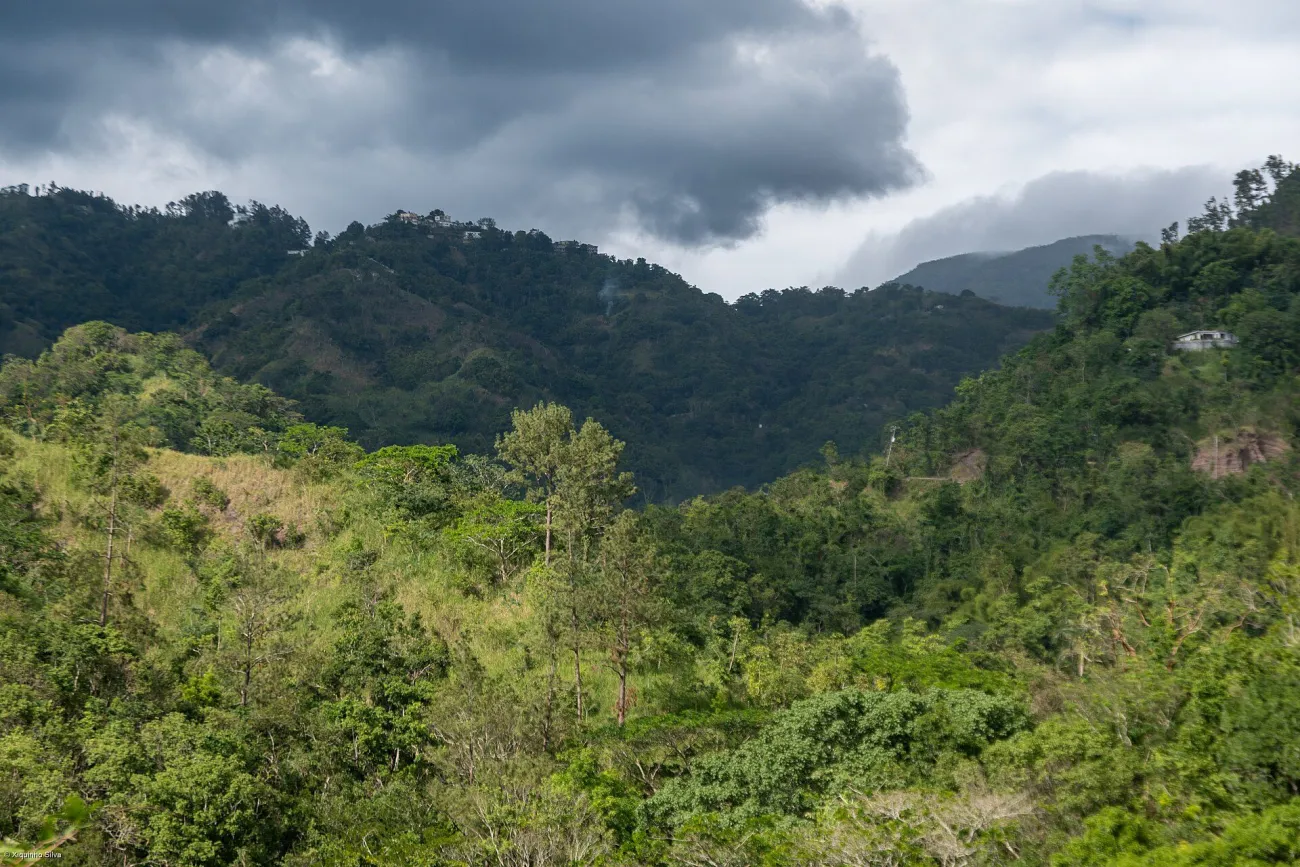
Photo: xiquinhosilva · CC BY 4.0 · Resized.
For a beach-led first visit, start by comparing Negril, Montego Bay and Ocho Rios. Negril suits travelers who want their days to revolve around the beach and sunsets. Montego Bay can reduce the first transfer when arriving at Sangster, depending on the exact property. Ocho Rios suits a north-coast base with waterfalls and other organized outings. Each name covers a broad area, so check the actual room location.
Kingston deserves its own stay for travelers interested in music, museums, food and urban life. Port Antonio offers coves, a greener eastern setting and river outings that reward several nights. Treasure Beach and the South Coast suit visitors looking for a smaller-scale coastal stay, with local excursions planned around realistic access.
Use Top Destinations for the comparison, then Map & Regions to check the connections. A place that looks close across the island may involve mountain roads or a long coastal route. Booking the room before understanding that geography can turn a cheap flight or attractive hotel rate into an inconvenient holiday.
How long to spend and how often to move
With seven days, one main base or a simple two-stop plan usually leaves more useful time than a circuit of the whole island. Ten days can support a more comfortable combination of coast and city. Two weeks gives space for a broader route, while three weeks allows slower stays or a properly arranged mountain segment. More time is useful only if the overnight plan uses it well.
Count nights, arrival and departure before adding attractions. A seven-day trip commonly provides six hotel nights when you arrive on day one and leave on day seven. A late arrival can make the first day little more than a transfer and dinner. Changing bases uses time for packing, checkout, the road and settling in even when the driving portion sounds manageable.
Our 7-, 10-, 14- and 21-day itineraries make the overnight allocations explicit. Adapt the first and last days to your flights. Leave an alternative for an outdoor activity affected by heavy rain or sea conditions. A flexible morning near your base is more useful than a list that only works if every journey and booking runs exactly to plan.
Choose dates for the place and activity
Jamaica’s coastal and mountain conditions are not interchangeable. Beach weather, a river outing and a pre-dawn summit attempt need different forecasts and equipment. Seasonal rainfall patterns help you choose dates, but they cannot promise the conditions of a particular day. Keep an outdoor alternative within the same region so a change of plan does not require another long journey.
Use the Best Time to Visit guide for the difference between climate patterns and a forecast. If an event is the reason for traveling, verify its current edition before choosing the base. An announced festival window without an announced venue is not enough to decide where to sleep. Familiar annual names can move or change format.
If you want quieter days, compare school-holiday periods, major events and the atmosphere of your chosen property. A low-season label says little about the particular week or hotel. Room offers, restaurant hours and excursion availability can vary independently. A lower rate is worthwhile when the experience you want is operating and the cancellation arrangement suits your tolerance for change.
Compare the complete stay
An all-inclusive resort can make daily spending simpler, but only after checking what the package includes. An independent hotel, apartment or guesthouse offers a different relationship with local meals and transport. Compare the normal day you expect to have: breakfast, the beach or activity, lunch, dinner and the journey back. The room rate alone cannot answer which format is better value.
Use Where to Stay & Hotels to compare settings and selected properties. Ask about the exact room, beach access, age policies and services that matter to your group. A photograph records a moment and a place; it does not establish a current room category, completed repairs or availability on your dates.
The cost guide separates planning models from actual quotes. For a longer stay, investigate electricity, water, internet, cleaning, deposits and the full booking period. A price displayed as monthly does not automatically cover the exact number of nights you need. Set aside money for local meals and experiences as well as the room.
Match the airport to the first and last nights
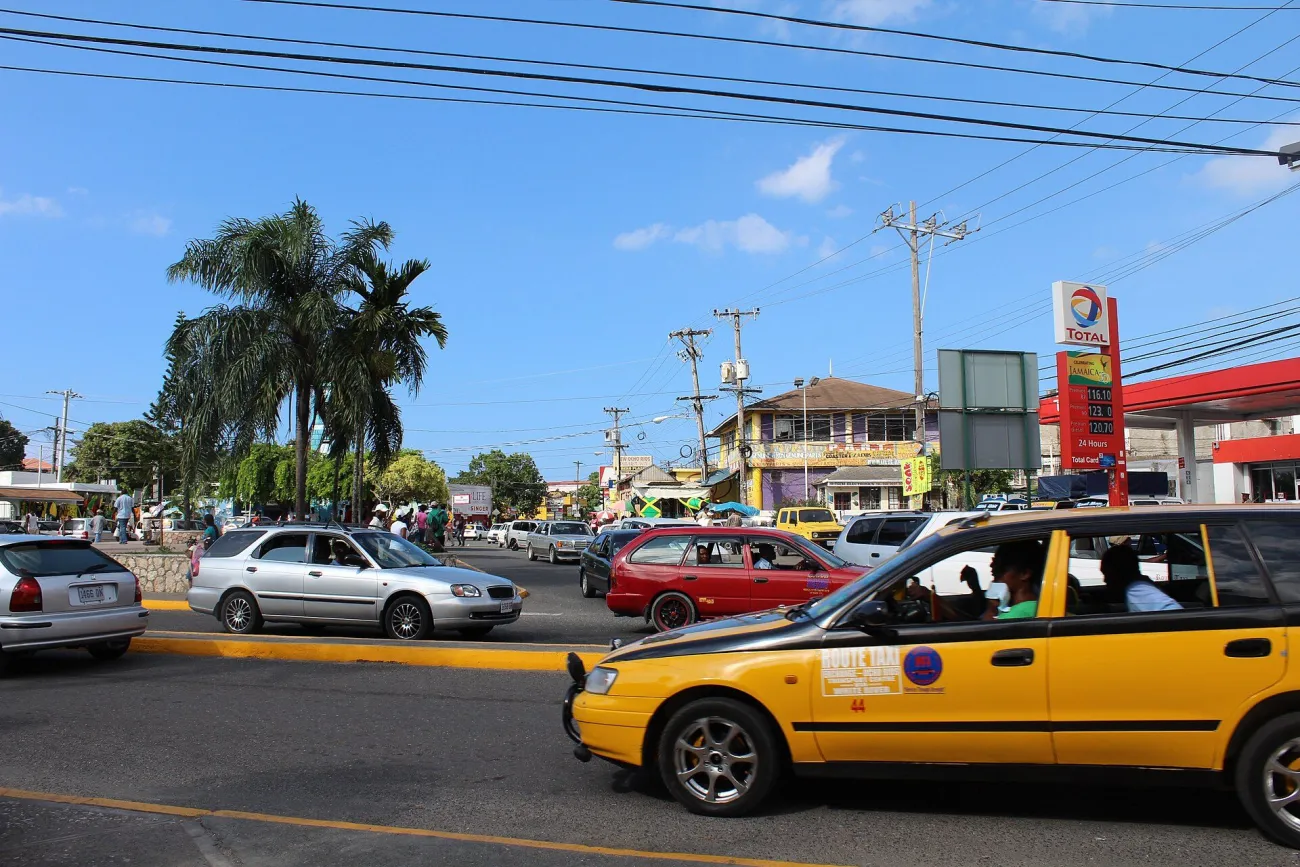
Photo: Kingston street, Jamaica — yonolatengo · CC BY 2.0 · Resized.
Sangster International Airport at Montego Bay, Norman Manley at Kingston and Ian Fleming near Ocho Rios serve different parts of the island. Compare the complete journey from the available flight to the first room, then from the final room to departure. A lower airfare through a distant gateway can add a tiring road transfer, particularly after an overnight flight.
For a multi-region trip, see whether arrival and departure through different airports work with your flights, driver or rental arrangements. For a compact beach holiday, a straightforward return through the closer gateway may be simpler. The Airports & Transfers guide explains the choices without assuming that every airport has the same route network.
A rental car is not necessary for every visitor. Transfers and selected excursions may suit a resort trip; an independent road itinerary requires comfort with left-side driving, insurance and local conditions. Use Getting Around to compare those options. Obtain a current estimate for important journeys, including western routes affected by road works, and keep your departure-day margin practical.
Add experiences that belong to your route
Choose one or two outings that justify their place in the itinerary, then leave room for ordinary pleasures. A waterfall visit, a river trip, a museum and a beach each make different demands. Read what an activity includes: pickup point, time at the site, walking, water exposure, meals and the return journey. The attraction name does not tell you the full shape of the day.
The Things to Do guide helps you select experiences; Beaches compares coastal settings and access; Walking & National Parks explains the difference between a short nature outing and a demanding trek. Photo Spots gives specific ways to use light, foregrounds and viewpoints without repeating the same sightseeing list.
Food and music can provide as much character as a ticketed excursion. Try a Jamaican breakfast, understand a jerk plate and choose an evening that fits the following morning. Ask before close photographs and respect community spaces. The Responsible Travel guide connects those choices with local guides, wildlife, water use and sensible behavior in areas still recovering.
Prepare the documents and daily essentials
Check entry rules for your passport and route, complete the free official C5 declaration through the government site and keep the confirmation accessible. A declaration is separate from a visa. Previous-country and transit history can also matter for health documentation, so a friend’s different itinerary is not a reliable guide to your own requirements.
Save your accommodation address, transfer instructions and insurance contacts offline. Understand Jamaican dollars and US-dollar quotes, check phone connectivity and bring suitable power arrangements. Read Travel Essentials & Fast Facts for those everyday questions, and the separate Visa & Entry guide for documents. Keep the most useful details available without needing to find an email after landing.
Use the current Health & Safety guide for transport after dark, health precautions and useful contacts. Choose insurance for the activities you actually plan and raise individual health questions with a qualified professional. Preparation should make the trip easier to enjoy: once the key bookings and practical arrangements are sound, leave enough space to discover a place at a human pace.
Explore the complete Jamaica guide
Discover Jamaica
Things to Do · Top Destinations · Map & Regions
Plan Your Trip
Itineraries · Best Time to Visit · Travel Costs & Money · Longer Stays & Costs
Stay & Get Around
Where to Stay · Hotels · Airports & Transfers · Getting Around
Experiences & Photography
Beaches · Walking & National Parks · Food & Drink · Nightlife · Festivals & Events · Photo Spots · Shopping
Before You Go
Travel Essentials · Visa & Entry · Health & Safety · Useful Contacts · Responsible Travel
Jamaica travel questions
Where should I stay on a first Jamaica trip?
Compare Negril, Montego Bay and Ocho Rios for a beach-led visit, and add Kingston or Port Antonio only when their experiences fit your time. Check the precise hotel location and airport journey before choosing.
Is one week enough for Jamaica?
Yes for a focused trip. One main base or two well-connected stays usually gives more holiday time than a cross-island checklist. Count your actual hotel nights and travel days.
Do I need a rental car?
Not necessarily. A resort stay or selected two-base route may work with transfers and organized outings. Independent driving adds flexibility but also insurance, navigation and unfamiliar-road responsibilities.
Can I plan a Blue Mountain Peak hike now?
Contact JCDT for current trail, road and accommodation access before building the itinerary around it. Historic route descriptions and photographs do not establish current operation.
What should I check again before departure?
Entry documents, accommodation services and access, transport arrangements, attraction operation, weather-sensitive bookings and any event on which the trip depends. Use the official source for each decision.
Tours, Tickets & Experiences
Jamaica Travel Tips & Inspiration