
Sign in
For Photos4Travel editors and team members.
Jamaica · Best Time to Visit
Jamaica Weather & Best Time to Visit: A Month-by-Month Guide
For a first Jamaica holiday that prioritizes drier conditions, start by comparing dates from December to March. Heat is present year-round on the coast, and the wet season is not the same in every parish. Port Antonio, a Kingston city stay and a dawn outing in the Blue Mountains should not all be planned from one island-wide temperature.
The best month depends on what you want to do: spend unhurried time on the beach, walk in the hills, attend an event or combine regions by road. Use the climate patterns below to choose a travel window, then check the forecast and local conditions for the actual outing. A monthly average cannot establish that a boat trip or mountain road will be suitable on a particular day.
Best time to visit Jamaica for your kind of trip
Jamaica’s disaster-management climate guidance identifies drier months early in the year and a relative midsummer reduction in rainfall, with wetter peaks around May and October. For beach time and a relatively simple first itinerary, the drier winter window is a useful starting choice. It still calls for sun protection, a rain option and attention to sea conditions.
If school holidays or an event fix your dates, adapt the daily plan to that season. In hotter periods, plan outdoor activity early and choose a room where you can sleep comfortably. In wetter periods, keep activities flexible and give road journeys more margin. Compare actual room and flight quotes; a climate season does not guarantee either a bargain or an available hotel.
Monthly weather: a Montego Bay reference
The table uses Sangster airport near Montego Bay to make coastal heat and rainfall concrete. Daytime maximum averages come from Table 3.3 of the State of the Jamaican Climate report, using 1992–2015 data. Rainfall comes from the Meteorological Service station table for 1991–2020. The periods differ and are deliberately labeled separately.
These are historical station averages, not record extremes, nighttime temperatures or a forecast for all Jamaica. They show why a warm winter beach day and a hotter summer afternoon need different pacing. A month with less total rainfall can still bring a disruptive downpour, and a wetter total does not tell you exactly how many hours of your stay will be wet.
Swipe or scroll sideways to compare the full table.
| Month | Average daytime high °C | Monthly rainfall mm |
|---|---|---|
| January | 29.7 | 77 |
| February | 30.0 | 43 |
| March | 30.4 | 61 |
| April | 31.4 | 64 |
| May | 32.0 | 150 |
| June | 33.1 | 86 |
| July | 33.3 | 66 |
| August | 33.4 | 83 |
| September | 33.0 | 130 |
| October | 32.3 | 157 |
| November | 31.2 | 107 |
| December | 30.2 | 84 |
December to March: the drier starting point
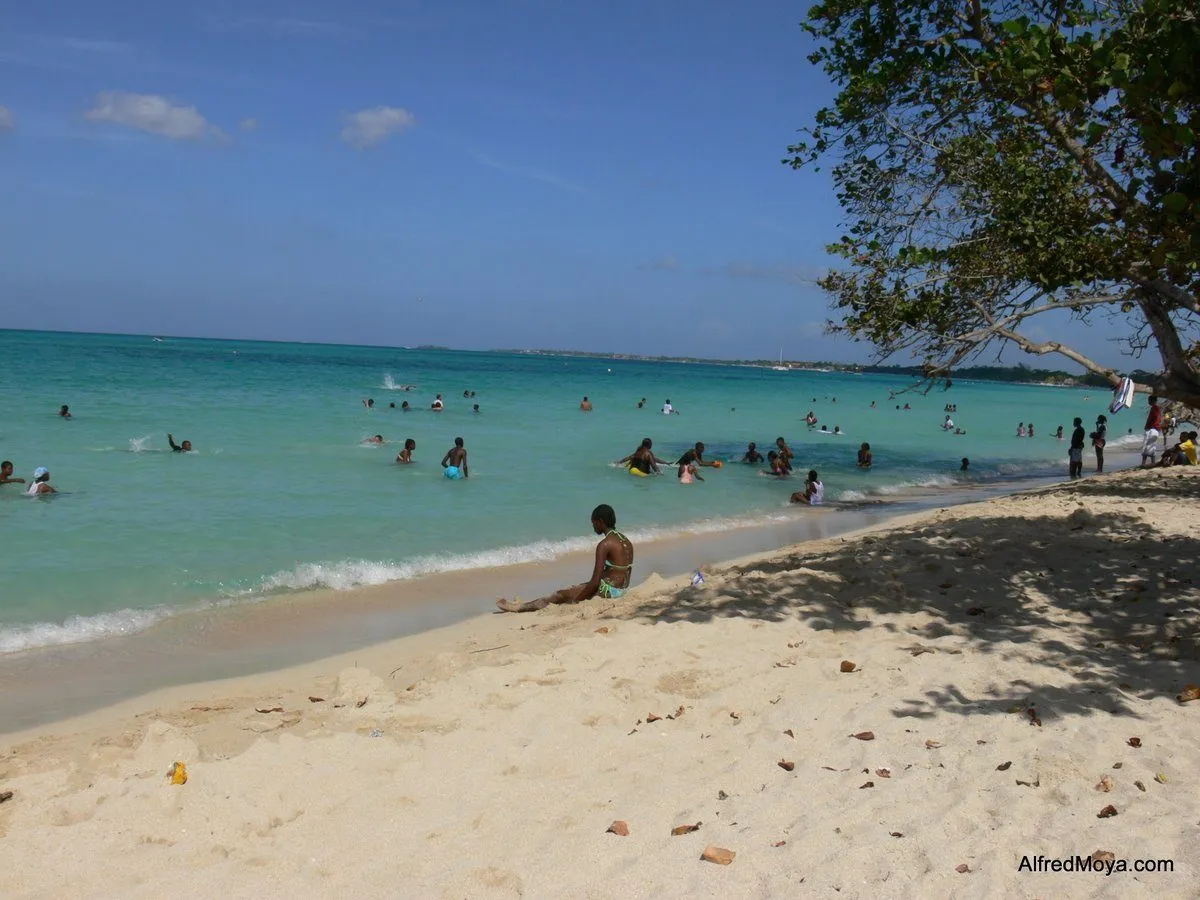
Photo: Negril Beach - panoramio — Alfred Moya · CC BY 3.0 · Resized for display.

These months suit a trip built around beaches, city sightseeing and daytime outings without the stronger summer heat. Plan the demanding walk or guided activity for the morning and leave the afternoon less crowded. For a winter beach holiday, the quality of the base and the ease of reaching it can matter more than trying to choose a theoretically perfect week.
Conditions still vary: a breezy or unsettled day can change swimming or a boat excursion, and the hills require more layers than the coast. Around Christmas and other busy holiday dates, reserve the essentials early if you need a specific room or family arrangement. Check actual opening dates for businesses affected by recovery, especially when booking a property advertising a future reopening.
April and May: the early wetter period
April is a transition worth considering if you have flexibility, while May belongs to the early rainfall peak in the national climate pattern. Organize an itinerary that can swap a beach or outdoor outing with a meal, museum or rest period. A small waterproof bag for documents and a change of light clothing can be more useful than carrying heavy rain gear everywhere.
For a multi-region route, avoid putting a long transfer, a timed entrance and a river activity on the same day. Choose accommodation where an unexpected wet afternoon is still pleasant. A covered terrace, comfortable room or nearby indoor visit can be worth including in the comparison. On departure days, ask the driver about road conditions after rain and keep the airport journey independent from the last sightseeing stop.
June to August: hotter days and a midsummer lull
Summer is a useful option for travelers who can pace activity around heat. The Sangster reference shows daytime maxima in the low 30s Celsius; humidity and sun exposure can make a walk feel more demanding than the number suggests. Pick an early start for city exploring, take a shaded lunch break and save a second major activity for another day.
July can be relatively drier within the wider wet season, but it remains in hurricane season. That distinction matters: a rainfall average and tropical-cyclone risk describe different things. For a family trip, choose a manageable base, reliable drinking water and flexible outings. If attending a festival, check its actual dates and venue as well as transport home; do not infer next year’s schedule from last year’s poster.
September to November: build in more flexibility
This is the later wetter part of the year, and the national rainfall pattern reaches a peak around October. Keep a route simple enough to adjust if an outdoor day is lost. A nearby alternative is often better than trying to recover the missed activity with a long drive the following morning. Confirm refund or rescheduling terms before prepaying boat, river or mountain outings.
November should not be treated as an automatic switch to dry weather on its first day. Check the parish you are visiting and allow a rain option. The Atlantic hurricane season continues through the end of the month. If a low price is the reason for choosing these dates, compare the flexibility of flights and accommodation as carefully as their initial cost.
Kingston, Port Antonio, the west and the mountains differ
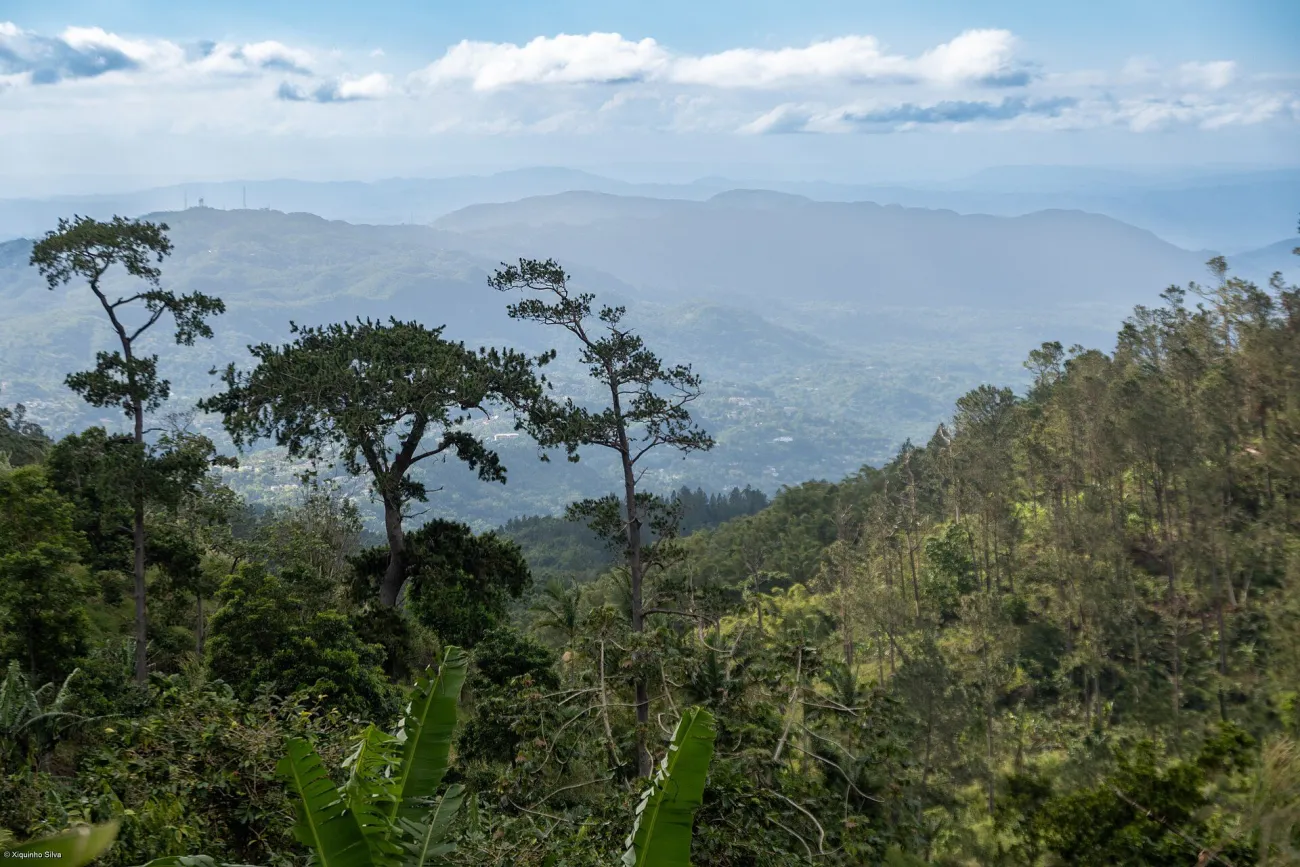
Photo: xiquinhosilva · CC BY 4.0 · Resized.

The Meteorological Service’s 1991–2020 parish averages show how much the eastern rain pattern differs. In January, Portland averages 413 mm against Kingston’s 41 mm; in November the figures are 538 mm and 138 mm. These are parish averages, not forecasts or readings for a particular Port Antonio or Kingston hotel. A green Port Antonio landscape is part of that climate, so pack for showers even on a winter escape. Use the Sangster rainfall column for its western station reference, with a separate rain plan for an eastern guesthouse.
Altitude changes the practical packing list. A hillside lodge or pre-dawn mountain outing calls for a warm layer and waterproof protection even when a coastal room needs a fan or air conditioning. Ask the host what the room is like at night and whether access becomes difficult in wet weather. Choose footwear for the ground you will cross, not just the average temperature at the nearest airport.
Hurricane season: 1 June to 30 November
ODPEM gives the official hurricane season as 1 June to 30 November. That is a planning period, not a prediction that a storm will affect every visit. Monitor the National Hurricane Center and Jamaica’s Meteorological Service as travel approaches, then follow local instructions if a watch or warning is issued.
Before paying, understand the provider’s cancellation policy and what your insurance covers for weather disruption. Store airline, accommodation and insurer contacts offline. If a storm threatens, ask the property about its procedure and transport arrangements early; do not leave decisions until the route is busy or services are restricted. The safety decision should follow actual warnings and access conditions, not a broad seasonal outlook.
Weather planning after Hurricane Melissa
Hurricane Melissa struck in October 2025, and recovery continues in parts of the island. A new season’s forecast does not tell you whether last year’s damage has been repaired. Check the Tourism Board’s current alerts and your property’s actual facilities, particularly water, power and road access. Ask about the specific dates you intend to stay.
For Blue Mountains plans, obtain current trail and cabin information directly from park management. A government report dated 3 October 2026 describes damage and newly funded repairs, without providing a reopening date. An evergreen hiking description or a scenic old photograph therefore cannot establish current access. Keep a city or lower-elevation alternative until the route is confirmed.
Choose the day’s activity from the conditions
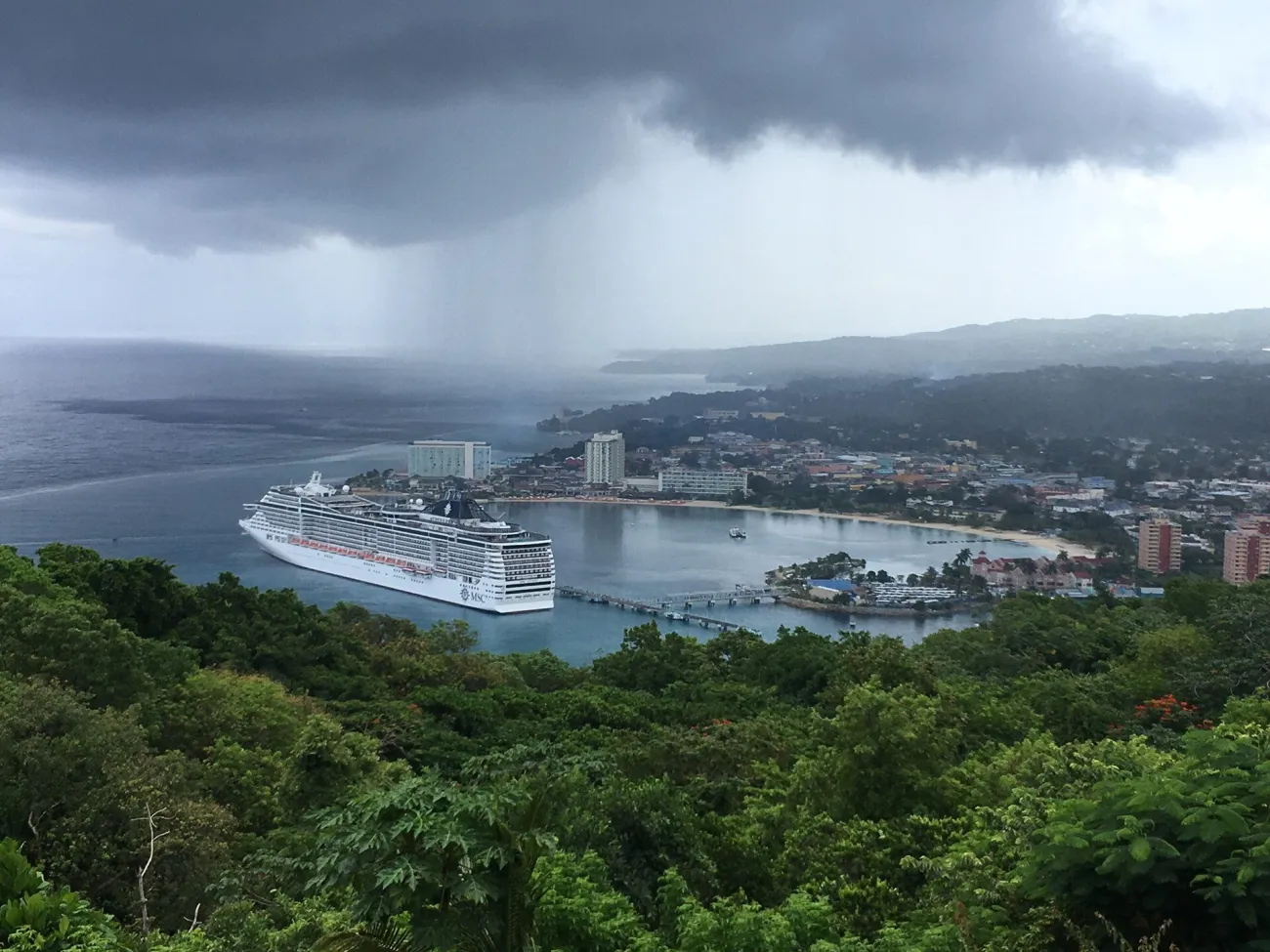
Photo: Vanderflappentoast · CC BY-SA 4.0 · Resized.

Check more than the rain icon. Boats and snorkeling depend on wind, swell, visibility and the operator’s assessment. Waterfall and river trips depend on flow and recent rainfall upstream as well as the weather where you stand. Mountain outings depend on visibility, ground conditions and the access road. A bright sky after heavy rain does not settle all those questions.
Ask an operator what would lead it to change or cancel the activity, and choose an alternative willingly when conditions are unsuitable. For photography, leave a second opportunity for an important landscape if your schedule permits. For walks, start with enough daylight to return without rushing. The things-to-do guide helps you mix experiences that do not all depend on the same weather window.
What to pack and what to check before an outing
For the coast, bring breathable clothing, sun protection, a hat, suitable footwear and a way to carry drinking water. Add a light rain layer and protection for electronics. For the hills, include a warmer top and shoes with grip. Pack a dry change for a water-based outing and check the operator’s own equipment requirements; a beach sandal is not a substitute for a secure walking shoe.
The evening before a longer journey, check the official forecast and ask about the actual road or meeting point. On the day, follow local advice and notice changing conditions. Keep the trip’s practical contacts in one place and leave an unhurried margin for the return. That approach lets the transport plan, accommodation choice and weather decisions support one another instead of competing for the same narrow window.
Best Time to Visit questions
What is the best month to visit Jamaica?
For a first trip prioritizing drier conditions, compare December to March, then choose dates around your route and available accommodation. There is no month that guarantees sunshine or calm seas across the whole island.
When is Jamaica hottest?
Coastal heat is strongest in summer in the historical Sangster reference, with average daytime maxima above 33°C in July and August. These are daytime station averages, not nighttime values, extremes or an all-island forecast.
Does the rainy season mean rain all day?
A monthly rainfall total cannot tell you how a particular day will unfold. Leave room to swap outdoor activities and check local forecasts. Recent rain also matters for river flow and road access even after the sky clears.
When does hurricane season end in Jamaica?
The official season ends on 30 November and starts on 1 June. Monitor current weather warnings for your journey rather than using the season’s start or end date as a safety guarantee.
Last updated: