
Medical care and travel insurance
The Canadian government does not pay for hospital or medical services for visitors, according to IRCC’s visitor health guidance. Arrange appropriate insurance before travelling. Read emergency medical, ambulance, evacuation and repatriation provisions instead of assuming a policy’s headline limit covers every expense.
Disclose relevant medical history accurately and check exclusions and stability periods for pre-existing conditions. Activities such as skiing, backcountry travel, climbing, paddling or wildlife excursions may need specific cover. A guided activity is not automatically covered by a standard policy, and signing a tour waiver does not create insurance.
Carry medication in appropriate labelled packaging and keep enough for delays, subject to import rules. Store the insurer’s assistance details offline and understand when prior authorisation is expected. In a serious emergency, seek immediate help rather than delaying essential care to compare costs. For non-urgent care, ask your insurer how to find an appropriate provider.
Everyday safety in cities and towns
Use normal urban precautions around busy transit hubs, nightlife areas and crowded events. Keep passports, payment cards and spare cash secure rather than in one easily lost bag. Do not leave luggage or electronics visible in a parked car, even during a short stop at a viewpoint or restaurant.
If a neighbourhood or situation feels uncomfortable, move to a staffed public place, use a licensed transport option and ask your accommodation for practical local advice. Avoid treating visible poverty or homelessness as a tourist spectacle. A person needing help is not a photo opportunity, and a broad neighbourhood label is less useful than current, specific information about your route.
At night, know how you will get back before ordering another drink or staying for a final performance. Check the last useful transit service rather than the network’s general opening hours. Keep control of drinks, travel with trusted companions where possible and use the vehicle and pickup details supplied by the booking platform or licensed operator.
Wildfires, smoke and severe weather
Wildfire effects can include smoke far from the fire itself, closures and changes to travel plans. Follow local emergency instructions and official park or road notices. A destination can be outside a fire zone while still having unhealthy air, so check air quality as well as the map of active fires.
The Air Quality Health Index provides health-risk information and advice. Children, older adults and people with certain health conditions can be more vulnerable. Adjust strenuous outdoor plans in response to official guidance and symptoms, and identify a suitable indoor alternative before you need one.
Do not drive towards a closure for a closer look or stop on a road to photograph an emergency. Keep fuel or charge reserves sensible, monitor your provider’s cancellation advice and use accommodation with flexible terms when conditions are uncertain. A travel plan should leave room to change regions or activities without an unsafe last-minute journey.
Winter roads, cold and mountain conditions
Winter driving is a separate skill from summer touring. Snow, freezing rain, darkness and fast-changing mountain conditions can make a route inappropriate even when the distance looks manageable. Check provincial road reports before departure and again when conditions change. If you are inexperienced, a train, shuttle or shorter city-based plan can be a better choice.
Ask a rental company exactly which tyres are supplied and whether they meet the requirements for the roads you intend to use. British Columbia’s visitor and rental-vehicle guidance explains why the route and season matter. An all-wheel-drive badge is not a substitute for suitable tyres, safe speed or the ability to stop.
Pack clothing for an unplanned wait outside or in a stopped vehicle, and carry appropriate supplies for the route. Tell someone where you are going. Do not walk onto frozen water because other people are present or a photograph shows skating there. Use an officially managed activity and current local advice; ice conditions are not established by air temperature alone.
Wildlife and outdoor decision-making
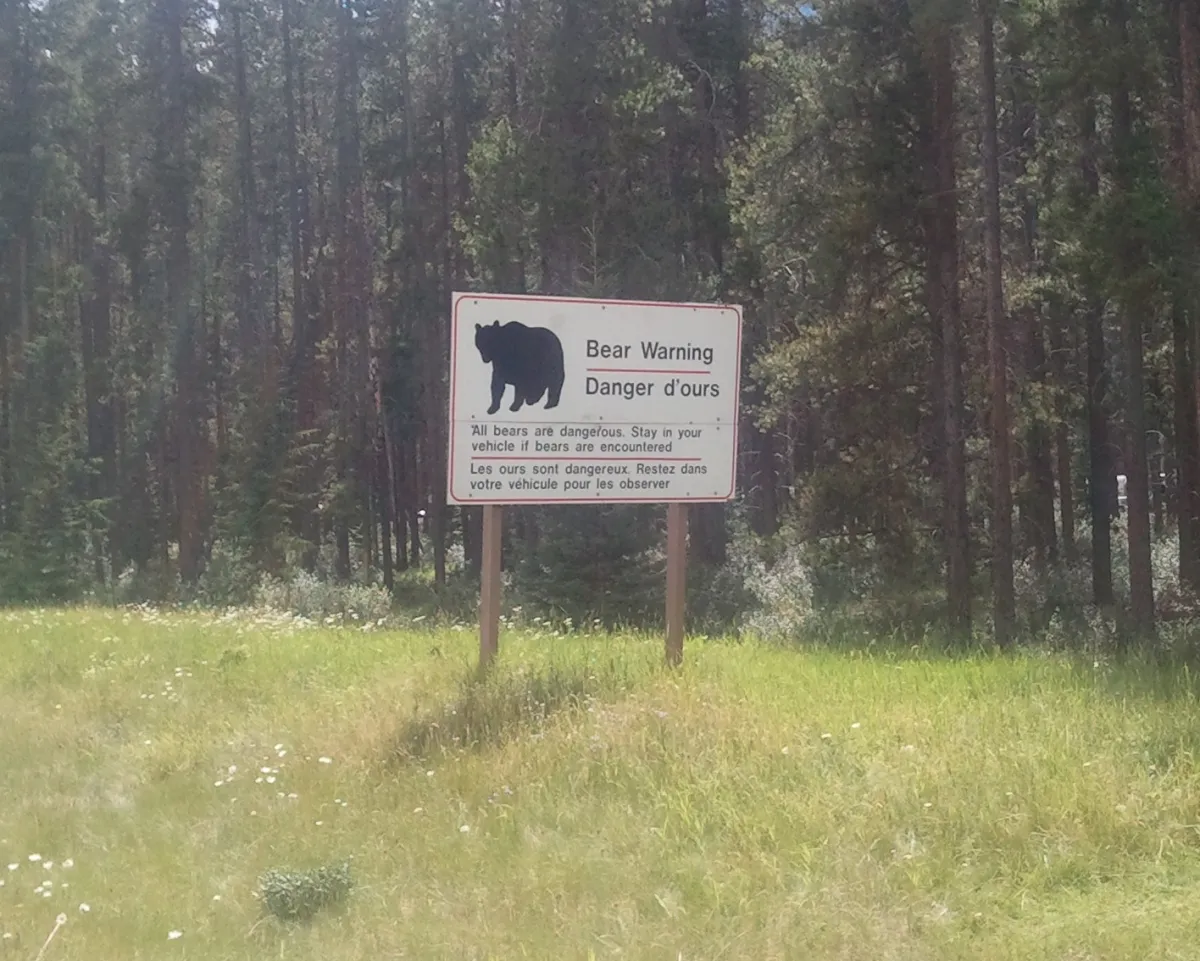
Wild animals are unpredictable even near a busy road, town or campground. Never feed, entice, surround or approach an animal for a photograph. Use a long lens from a safe position and give it a clear escape route. Stop only where it is legal and safe; a wildlife sighting does not justify blocking traffic.
For Banff, Parks Canada advises at least 30 metres from deer, elk, sheep and moose and 100 metres from bears, wolves, cougars and coyotes. Follow the park’s current wildlife guidance and any stricter local restrictions. If your presence changes an animal’s behaviour, increase your distance.
For hiking, obtain advice appropriate to the trail, season and group. Know how to store food and scented items securely, and carry suitable safety equipment. Learn correct bear-safety practices from the park or qualified guide rather than treating a spray canister as complete preparation. Check airline restrictions before attempting to fly with specialist equipment.
Water, trails and remote travel
Cold water is a risk even on a warm day. Wear a suitable personal flotation device for boating or paddling, and choose an activity matched to your ability. Wind, currents, tides and boat traffic can change the difficulty of a crossing. A short distance on a map does not establish safe swimming or paddling conditions.
At the coast, obey tide, surf and cliff warnings and stay back from unstable edges and driftwood in surf zones. At lakes and rivers, use designated swimming areas where available and follow local notices. Never assume a popular photograph shows a safe place to enter the water or stand near a waterfall.
For a remote outing, leave a route and return time with a responsible person, understand how a search would be initiated and carry the communication equipment the setting requires. Download maps but do not rely solely on a phone battery. Turn back when weather, daylight, fatigue or route-finding becomes doubtful; reaching a viewpoint is optional.
Insects, drinking water and everyday health
Ticks can occur in wooded or grassy areas, and risk varies across the country. The Public Health Agency of Canada recommends preventing tick bites and checking local information. Use an approved repellent as directed, dress appropriately and check yourself after outdoor time. Seek medical advice if you are concerned about a bite or symptoms rather than relying on an online photograph.
Health Canada’s insect-repellent guidance helps distinguish products and age-related instructions. Follow the label, particularly for children. Mosquitoes and blackflies can also affect comfort and the practicality of an outdoor stop; a head net or a different time of day may be useful depending on conditions.
Use the drinking-water advice supplied by the accommodation, municipality or park. A clear stream is not necessarily safe to drink, and a refill point can be subject to an advisory. Carry enough suitable water for the planned outing and know how to treat backcountry water when appropriate. Be specific about allergies when ordering food and ask if staff can actually accommodate the requirement.
If something goes wrong
Call 911 for an immediate police, fire or ambulance emergency. Explain where you are, what happened and whether there are immediate hazards. On an outdoor route, a trail name alone may not be enough: know the relevant access point, coordinates if available and the route your group followed.
For lost documents, transport disruption or a non-emergency theft, contact the appropriate local service, your insurer and your country’s consulate as relevant. Keep incident reference numbers and receipts. The useful contacts section helps organise those details before departure. A calm, well-documented response is easier when essential information is already available offline.
Frequently Asked Questions
Is Canadian public health care free for tourists?
No. The Government of Canada says it does not pay hospital or medical costs for visitors. Arrange suitable insurance and check the cover for your health history, activities and route.
Can I still visit if there is wildfire smoke?
Follow current official air-quality advice, emergency instructions and closure notices for the specific destination. Smoke can travel far from a fire. Adjust outdoor activity and have an indoor or alternative-route plan.
Are bears only a concern in remote wilderness?
No. Wildlife can appear near roads, towns and campgrounds. Follow park guidance, maintain distance and never feed or approach animals.
Is a rental SUV enough for winter driving?
No vehicle type guarantees safety. Check required and supplied tyres, road conditions, your experience and the rental terms. Choose another transport option when the route is unsuitable.


