
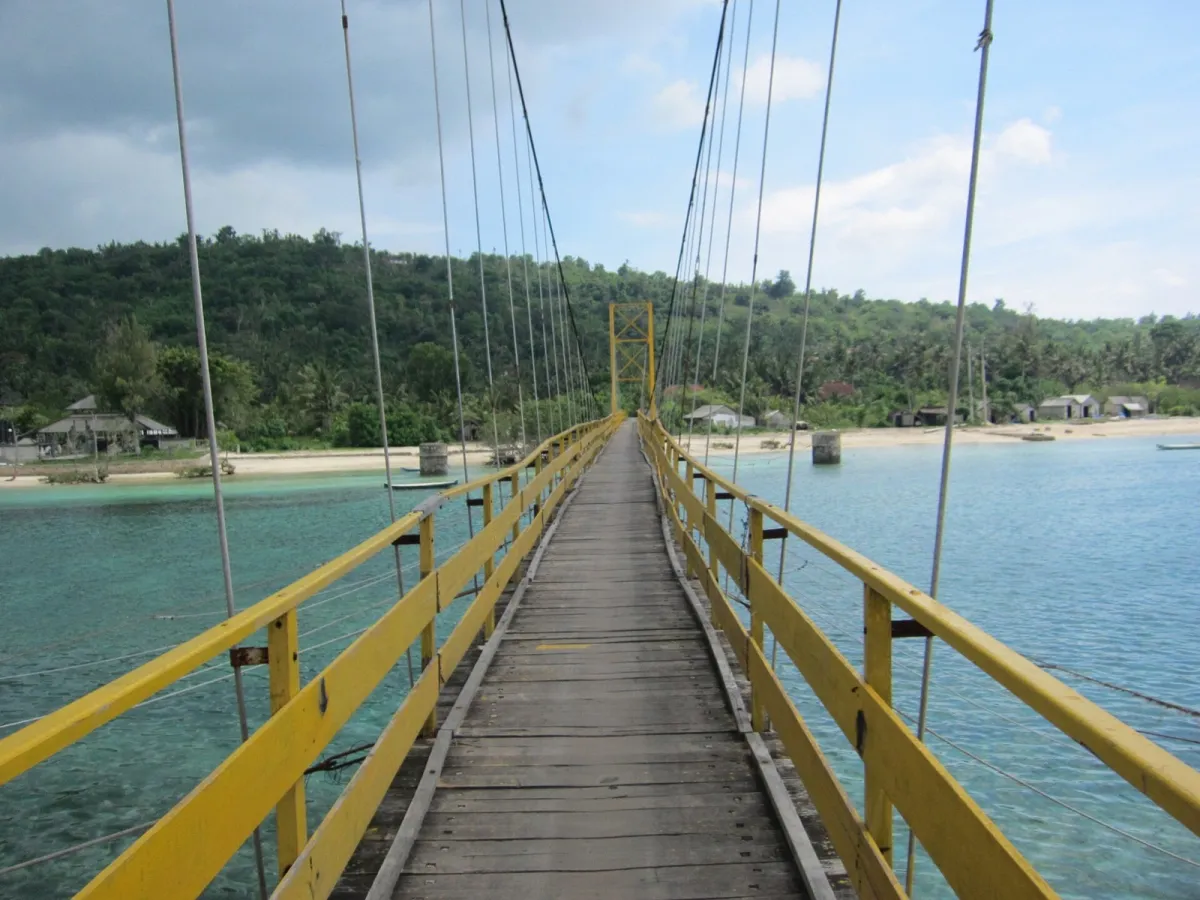
This consolidated guide brings together our 13 Bali location studies and 17 reference photographs in one place—covering coasts, highland lakes, working rice landscapes, cultural scenes and resort architecture. Photographs record a specific moment; they do not confirm today’s access, current room layouts, safe swimming conditions or permission to photograph a ceremony.
Compare Bali’s 13 Photo Spots
Use this quick-reference overview to match each location’s photographic focus with its access, light and etiquette constraints before planning a route.
On smaller screens, swipe or scroll horizontally to read the full table.
| Photo spot | Region & setting | Main framing focus | Key access & planning note |
|---|---|---|---|
| Kuta & Legian Beaches | Southwest coast · Open beach | Sunset shoreline reflections (Kuta) vs long beach life (Legian) | Keep Kuta and Legian names distinct; calm sky is not swimming advice; plan dark-return pickup |
| Nusa Dua Beach | Southeast peninsula · Coast | Sunrise sky, distant silhouettes, pavilion and palm border | Check permitted public beach access in daylight before an early start |
| Padang Padang Beach | Bukit Peninsula · Rocky cove | Limestone rocks, moving waves and compact cove geometry | Stepped approach through a narrow rock opening; carry a compact kit and keep hands free |
| Ulun Danu Beratan | Bedugul highlands · Lake temple | Temple pavilions, carved walls, flowers and Lake Beratan light | Distinct from Ulun Danu Batur (Kintamani); stay on marked visitor paths and respect rituals |
| Kintamani & Lake Batur | Bangli highlands · Caldera | Layered volcanic slopes, caldera lake and shifting highland cloud | Agree a lawful roadside stop with your driver; a viewpoint stop is separate from a volcano trek |
| Tirta Gangga Rice Fields | East Bali · Working farmland | Water-filled terraces and bund patterns framed through foliage | Countryside along Amlapura–Amed road (not Water Palace); ask before entering working fields |
| Amed Salt Maker | Northeast coast · Working coast | Environmental portrait among salt troughs in low coastal light | Working production area; ask permission before entering or making recognisable portraits |
| Balinese Dance (Ubud) | Ubud · Stage performance | Ensemble gesture, costumes and dramatic contrast under stage light | Confirm venue photography and flash rules before sitting; do not block other spectators |
| Ogoh-ogoh (Ubud) | Ubud · Nyepi craft preparation | Painted sculptural scale and gesture during daytime preparation | Ask before visiting a banjar/workshop; keep clear of working areas and parade routes |
| Balinese Architecture | Island-wide · Traditional detail | Layered thatched roof texture, eaves shadow and garden framing | An open gate is not public entry—ask occupants before entering domestic courtyards |
| RIMBA by AYANA Pool | Jimbaran · Private resort | Pink bougainvillea canopy contrasted with blue poolside water | Private hotel grounds (no implied public access); confirm rules and avoid capturing guests |
| Bulgari Resort Bali | Bukit Peninsula · Private resort | Stone steps & circular vessels plus main pool framing the ocean | Private property; arrange access in advance, keep stairs clear and respect swimmer privacy |
| Conrad Infinity Chapel | Tanjung Benoa · Wedding venue | Triangular glass geometry, dark reflecting pool and sea horizon | Active hotel wedding venue; contact Conrad Bali before visiting and stay clear of private events |
Choose a photographic day before choosing a lens
On smaller screens, swipe or scroll horizontally to read the full table.
| Setting | What to work with | Practical check |
|---|---|---|
| Lake and highland landscapes | Layered landforms, changing cloud and reflection | Weather, permitted standing area and time for visibility to change |
| Kuta–Legian west coast | Shorelines, people at a respectful distance and changing sky | Surf, public access and space to stay clear of water |
| Rocky coves | Coastal shapes and differences in height | Steps, tide, return route and a safe standing position |
| Rice-growing areas | Field patterns, work and irrigation structures | Permission, working paths and respect for crops |
| Dance and processions | Gesture, movement, costume and the surrounding community | Whether photographs are welcomed; audience and worship space |
| Resort architecture | Material, repeated forms, water and designed landscape | Guest or visitor access and consent for identifiable people |
Coast and islands: leave space for conditions
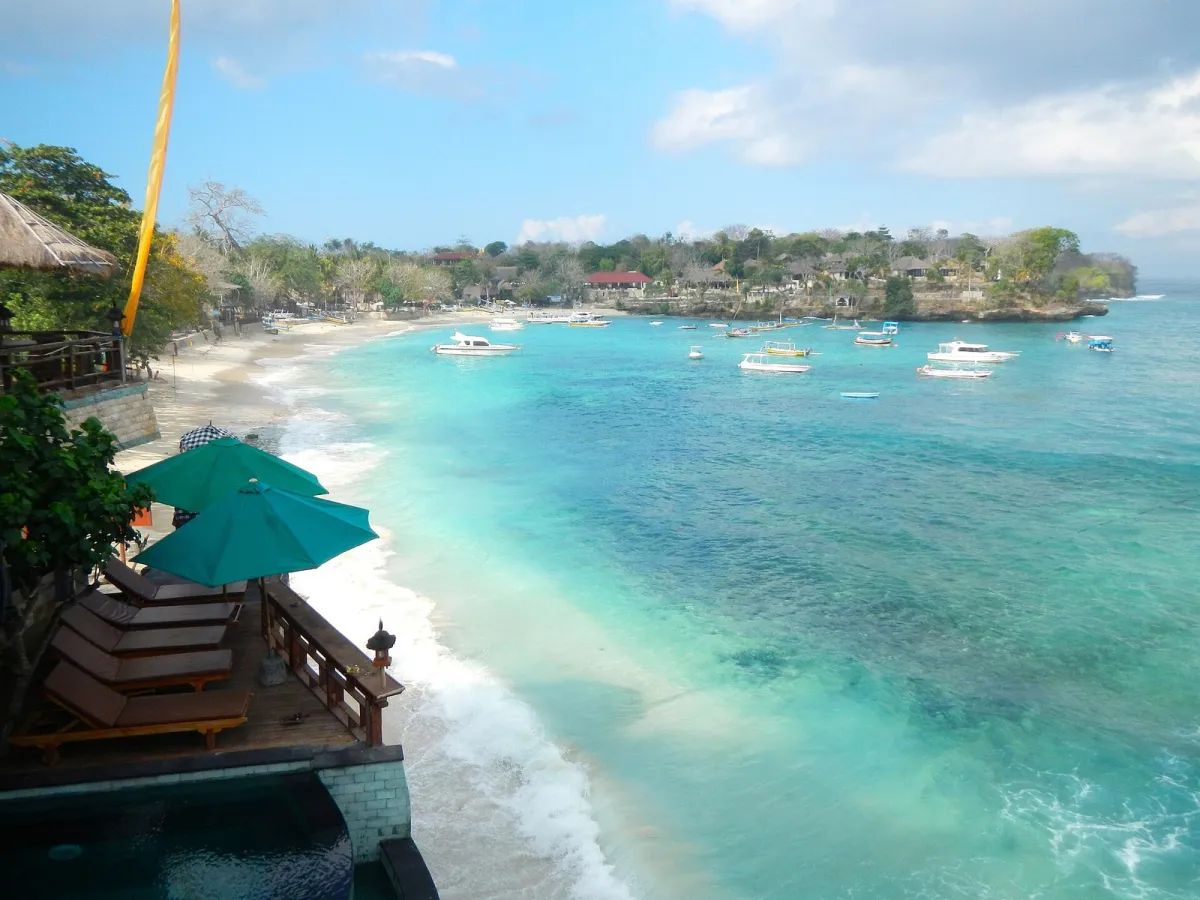
Long beaches and small coves need different plans. On the Kuta–Legian coast, a broader shoreline offers room to observe the relationship between sea, sky and everyday use. Nusa Dua introduces a sunrise silhouette setting, while at a rocky cove such as Padang Padang, the stepped approach and limited sand space become part of the outing. Keep bags and equipment clear of steps, paths and the waterline, and never treat a photograph of calm-looking water as swimming advice.
On the Nusa Islands, allow for the sea crossing and local road journey before planning light or a return. The yellow bridge between Lembongan and Ceningan is transport infrastructure as well as a recognisable subject—photograph from a safe spot that leaves the crossing clear, and do not build an island outing around a precise sunset if your boat schedule requires an earlier departure.
Kuta & Legian Beaches
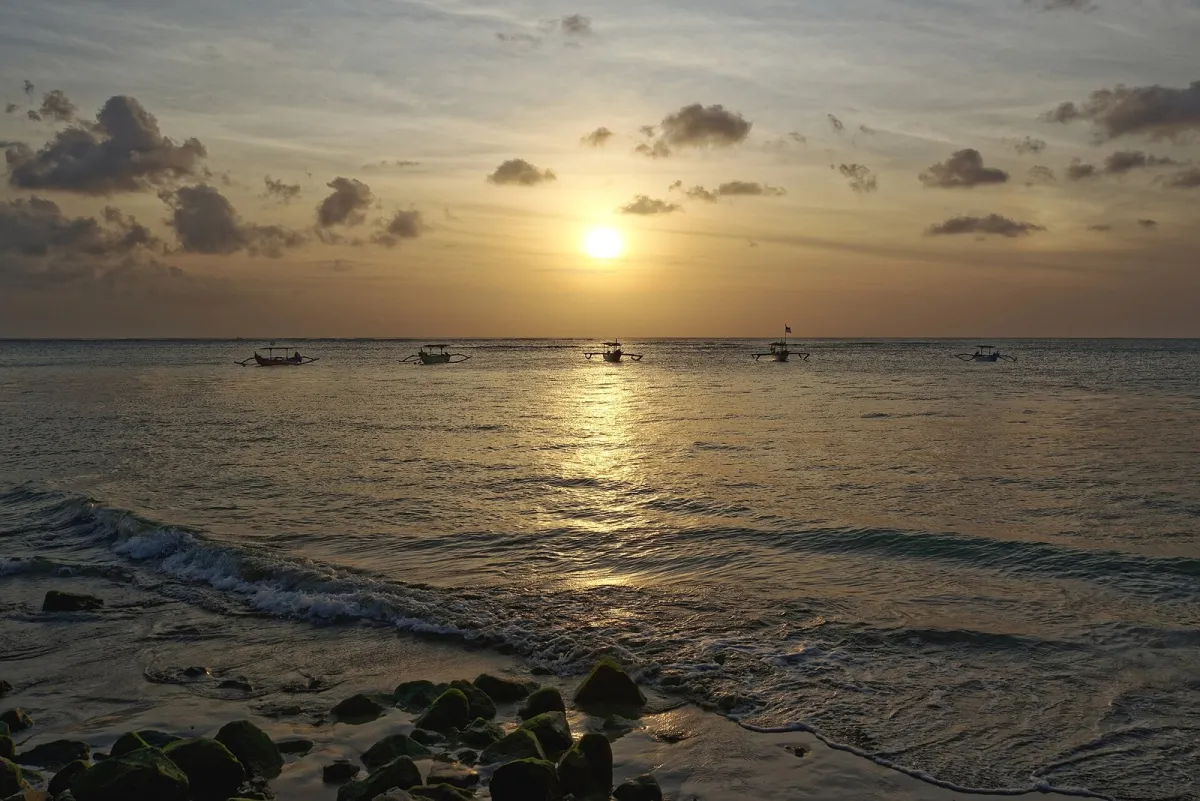
Kuta and Legian are neighbouring stretches of Bali’s southwest coast that answer two complementary photographic goals—changing sunset light over wet sand and shoreline rocks (recorded at Kuta in August 2022), and wider environmental scenes of beach seating, walkers and long breaking waves. At Kuta, use dark foreground rocks or receding surf to anchor the bright sky rather than shooting open horizon alone, and keep watching as cloud bands shift after sunset.
Legian Beach: Shoreline Diagonals and Everyday Activity
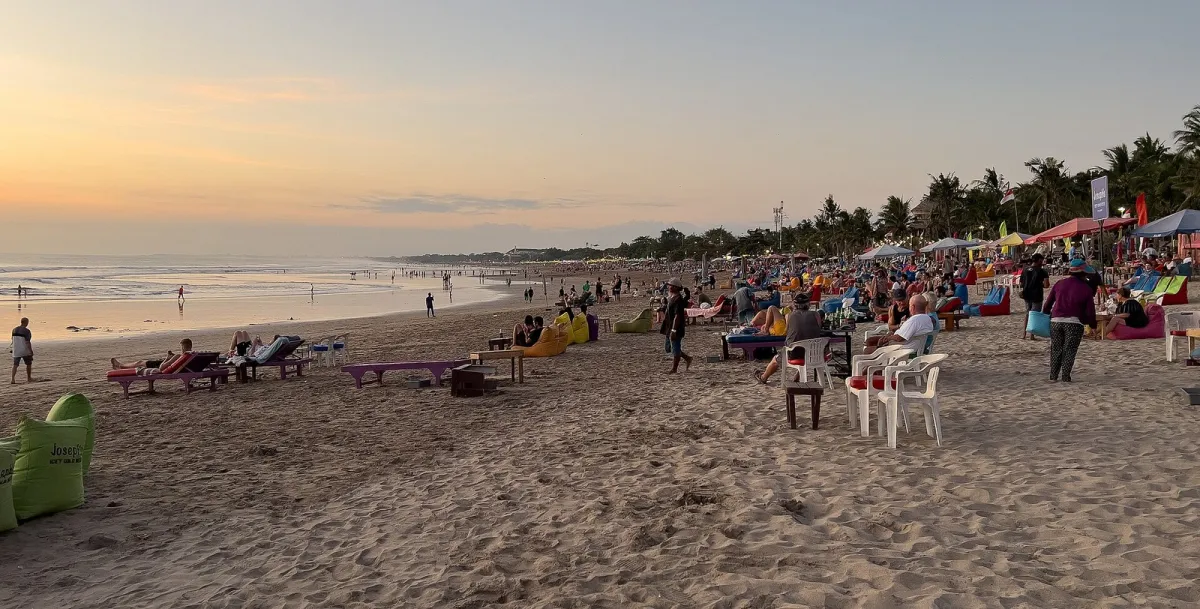
Recorded in 2023, Legian Beach (placed between Kuta and Seminyak by Indonesia Travel) shows how the long diagonal of surf and rows of beach seating can organise a lively scene without waiting for an empty shore. Keep place names accurate in captions rather than calling every southwest-coast shot “Kuta”, never rearrange beach chairs as props without asking, and agree on a recognisable pickup point before dark. Compare coastal conditions in our Beaches and Surfing guides.
Nusa Dua Beach
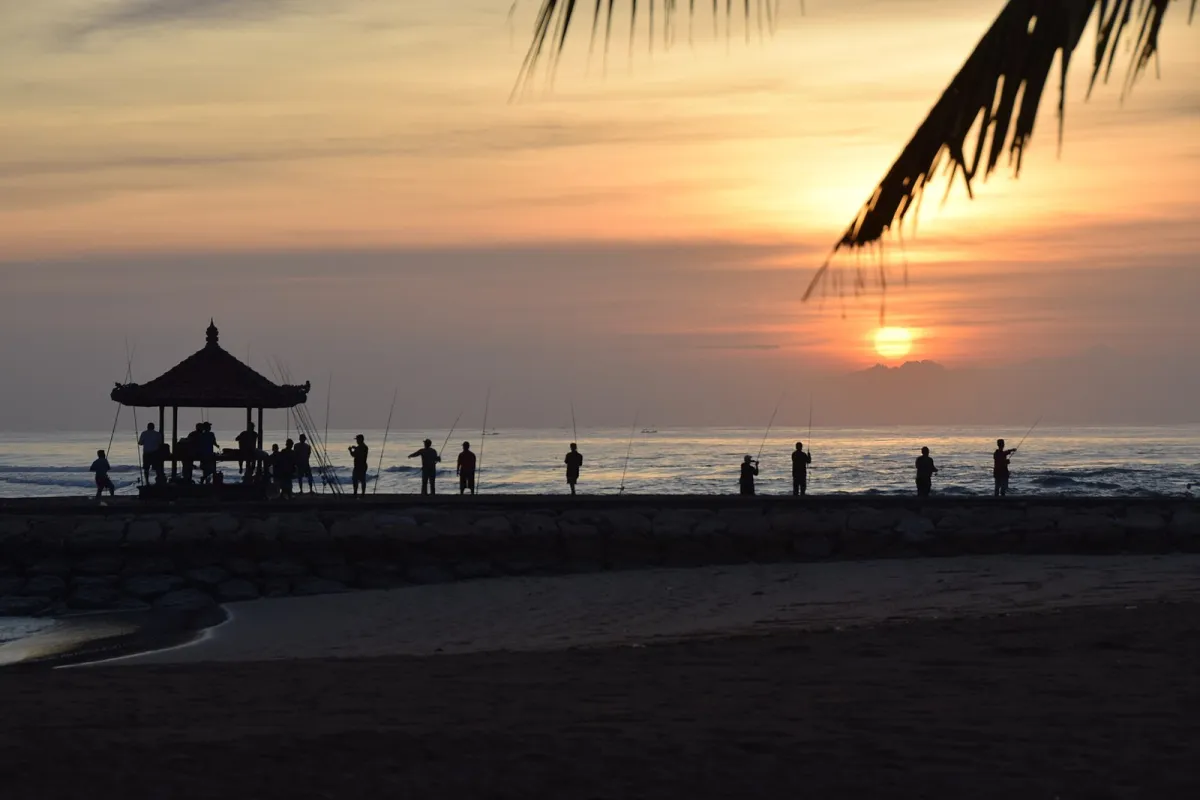
At Nusa Dua (recorded in July 2016), small distant silhouettes of fishers, a fixed coastal pavilion and a touch of palm foliage at the frame edge give scale and place to a warm sunrise sky. Wait for natural separation between distant figures rather than directing strangers, and step slightly aside if a stray palm frond crosses the sun.
Because Nusa Dua’s planned tourism area combines resort frontages with public approaches, verify a permitted public beach entrance in daylight before an early sunrise outing. Work from stable dry ground and never treat quiet sunrise light as a tide or swimming report.
Padang Padang Beach
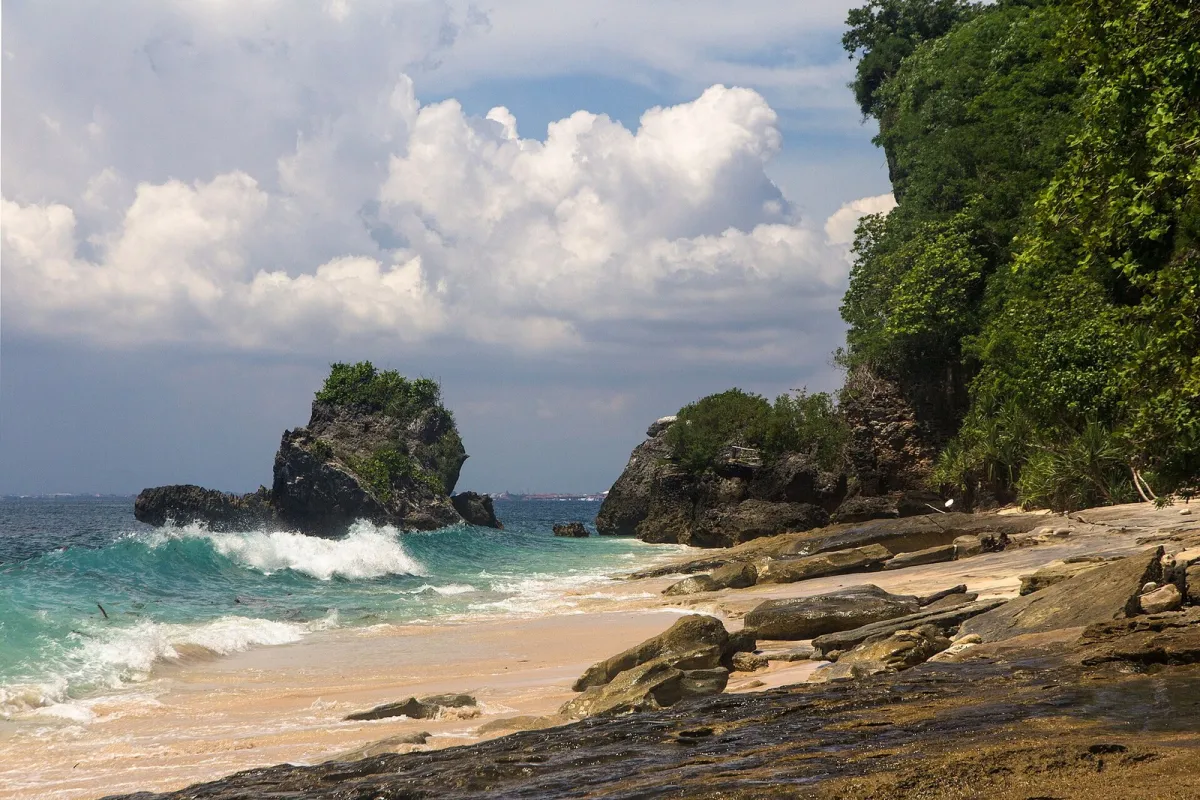
At Padang Padang (recorded in March 2016), solid limestone rocks and offshore formations anchor the moving water of a compact Bukit Peninsula cove. Shift your stance slightly so foreground and offshore rock silhouettes stay separated with breathing room of sea around them, and decide whether a crisp shutter speed for breaking waves or a gentle blur best fits safe dry footing.
As Indonesia Travel notes, reaching the cove involves a stepped descent through a narrow rock passage: carry a compact kit, pack the camera away before climbing back up so both hands remain free, and avoid blocking visitors passing in the opposite direction. Tide height and crowds change how much dry sand is available, and a scenic frame does not indicate beginner-friendly surf.
Lakes, calderas and working rice landscapes
Lake Beratan, the Kintamani volcanic caldera and east Bali’s working rice fields offer distinct highland and rural subjects. Time in one region gives you practical alternatives when haze, cloud or rain obscures a distant slope—use our Best Time to Visit guide for seasonal flexibility while remembering that no date guarantees clear mountain skies.
Ulun Danu Beratan
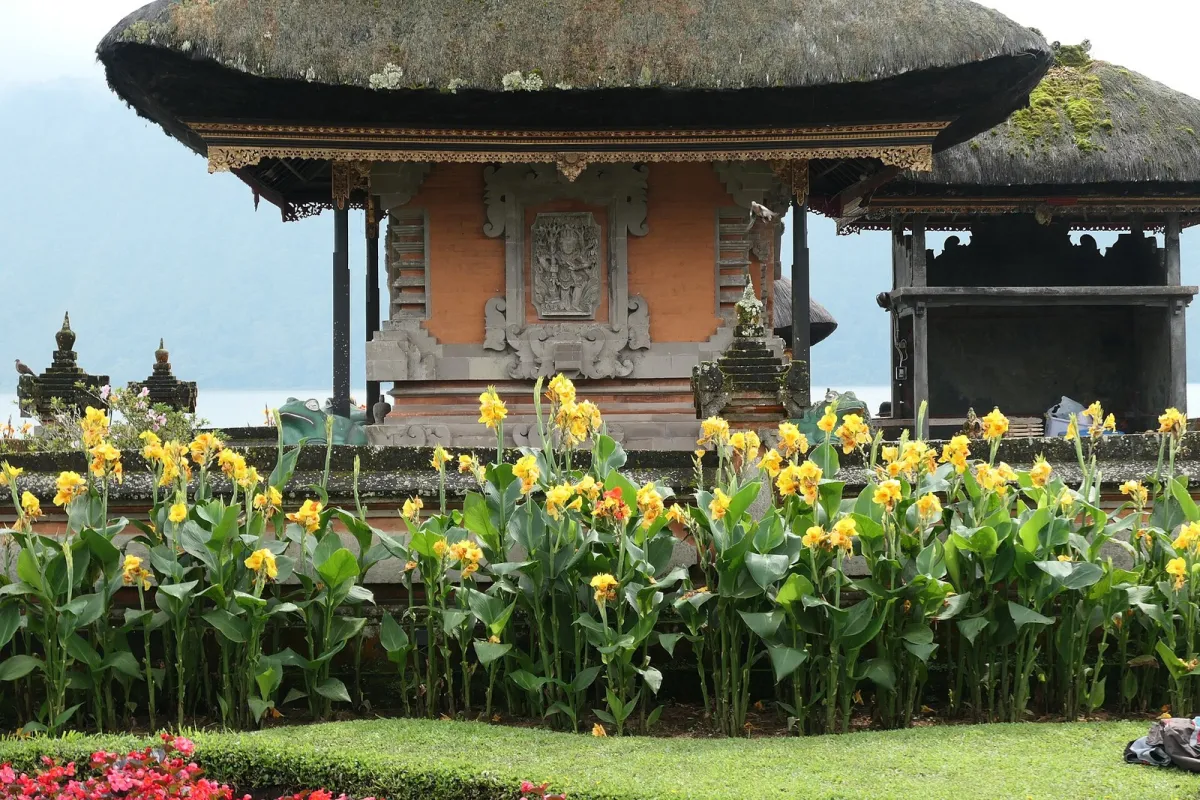
Located beside Lake Beratan in the Bedugul highlands (Indonesia Travel), Ulun Danu Beratan offers far more than a single isolated meru shrine shot. As this 2022 photograph shows, pairing garden flowers in the foreground with carved orange walls, thatched rooflines and soft highland light creates a layered architectural study—even under overcast skies.
Keep the place name exact: Ulun Danu Beratan belongs to Lake Beratan (Bedugul) and is completely distinct from Pura Ulun Danu Batur in Kintamani. Stay strictly on marked paths—never step into planted beds or restricted sacred spaces for a cleaner angle—and review Temple Etiquette before visiting.
Kintamani & Lake Batur
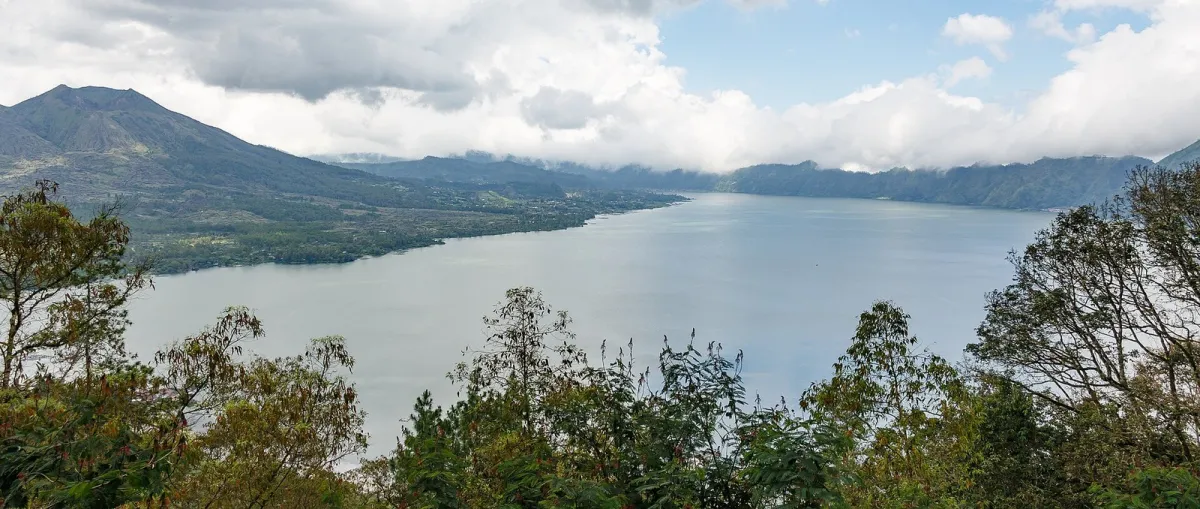
“Kintamani” names the wider highland area enclosing the volcanic caldera of Lake Batur and Mount Batur (Indonesia Travel). In a wide panoramic frame like this 2015 study, selective near foliage, the broad water basin and far caldera ridges create depth—check the horizon level carefully and let shifting highland clouds simplify distant slopes rather than chasing spotless blue skies.
Arrange a lawful, stable viewing stop with your driver in advance instead of pulling over on a narrow road bend, and bring an extra layer for cooler highland air and passing rain. Treat a scenic viewpoint stop and a Mount Batur climb as separate commitments—check current volcanic alerts and trail conditions independently, and compare broader routing in our Day Trips and Parks & Outdoor Activities guides.
Tirta Gangga Rice Fields
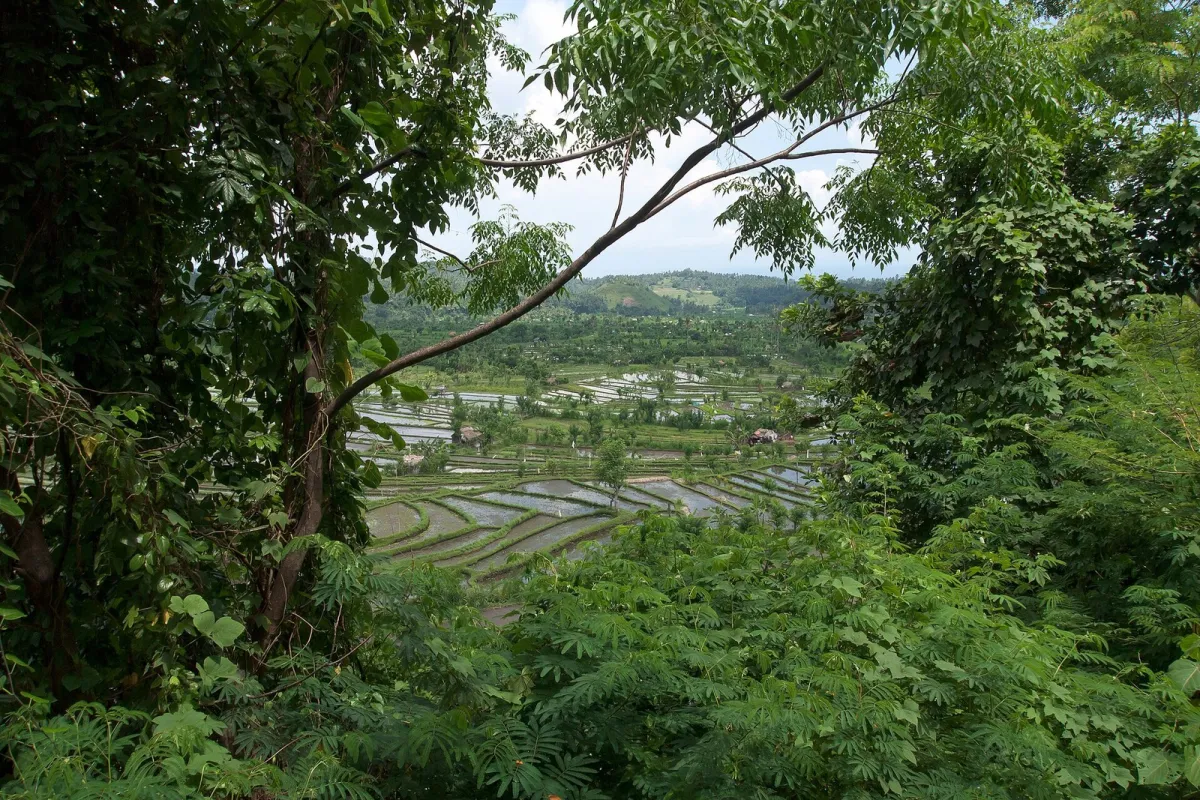
Recorded in 2010 along the Amlapura–Amed road in east Bali, this countryside scene shows how natural foliage can frame curved water-filled rice plots and sky reflections across a working valley—distinct from the ornamental pools and stepping stones inside Tirta Gangga’s water palace (covered in Attractions).
Treat terraces as active farmland: keep to public paths, ask before crossing narrow bunds or irrigation channels, and never damage crops to clear a sightline. While UNESCO’s Bali Cultural Landscape listing explains Bali’s wider subak irrigation heritage, do not label every rice terrace across the island as part of the listed World Heritage property unless confirmed for that exact site.
People, performances and cultural space
Begin with the person and the setting. Ask before making a close portrait, accept a refusal cleanly and keep clear of working routes and religious ceremonies. Read Temple Etiquette and Responsible Travel before photographing within religious or community spaces.
Amed Salt Maker
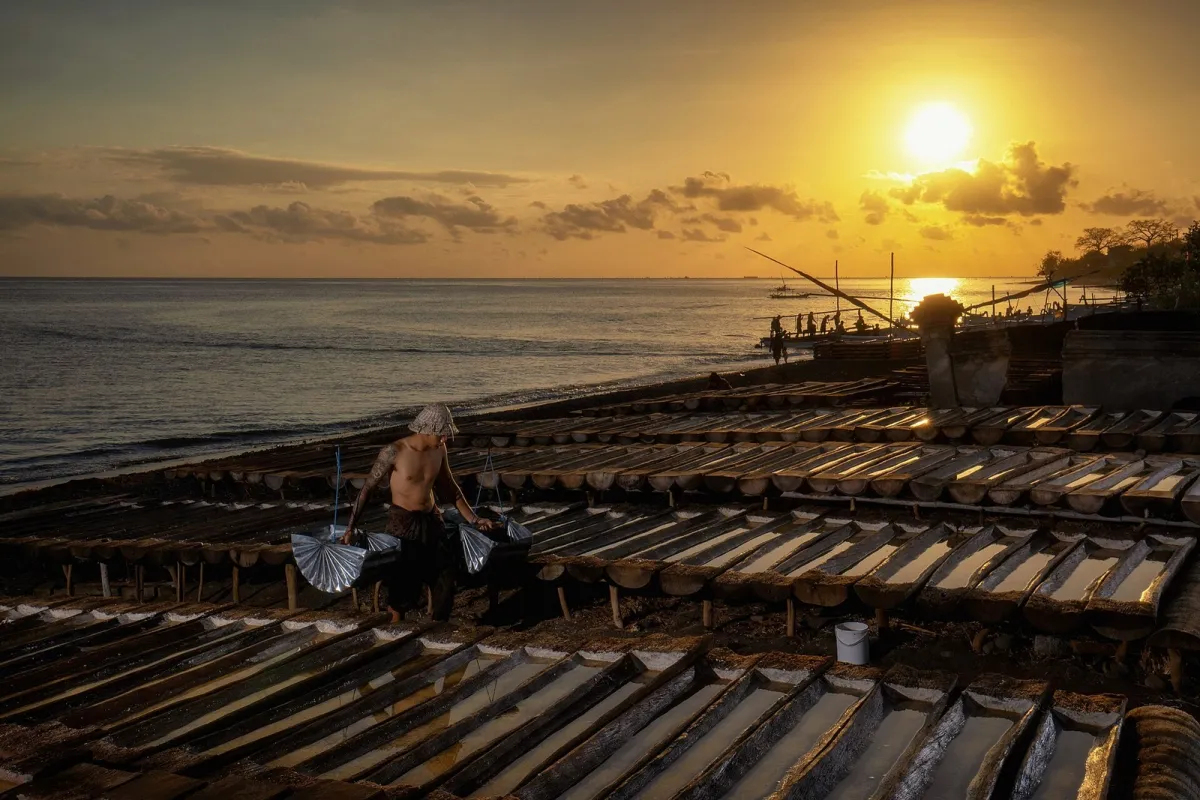
This 2020 coastal scene in Amed shows how an environmental portrait—combining rows of shallow evaporation troughs, low coastal light and the open sea beyond—explains traditional salt production better than a tight posed close-up. Indonesia’s Ministry of Marine Affairs and Fisheries recognizes Garam Amed Bali as a geographically indicated marine product, grounding the craft without generalizing one unnamed worker to all Balinese people.
Rows of troughs are an active workplace, not an open public studio. Start with a conversation before raising your camera, ask where visitors may stand, never step over or touch troughs, and do not assume buying salt automatically grants portrait consent.
Balinese Dance (Ubud)
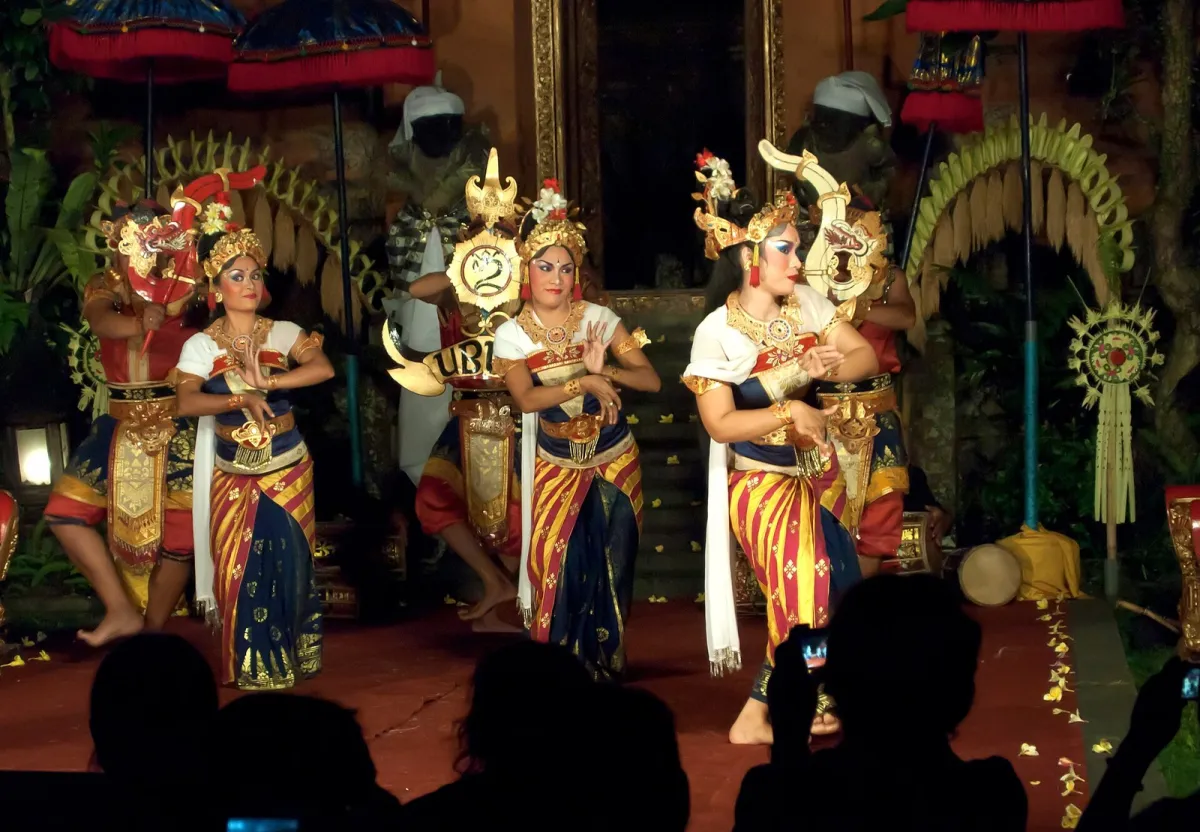
Recorded in Ubud in 2010 (with source notes referencing Ramayana and Baris elements, though the original filename contains “Legong”), this ensemble view illustrates how bright costumes stand out against dark stage backgrounds. Watch a movement sequence before shooting so hands and faces separate cleanly, let dark theatrical backgrounds stay naturally dark, and choose your shutter speed deliberately for crisp gestures or subtle hand motion.
Confirm the venue’s programme, flash policy and seating rules before the show begins, keep gear out of neighbouring spectators’ sightlines, never follow performers backstage without permission, and keep captions faithful to the specific performance you attended.
Ogoh-ogoh (Ubud)
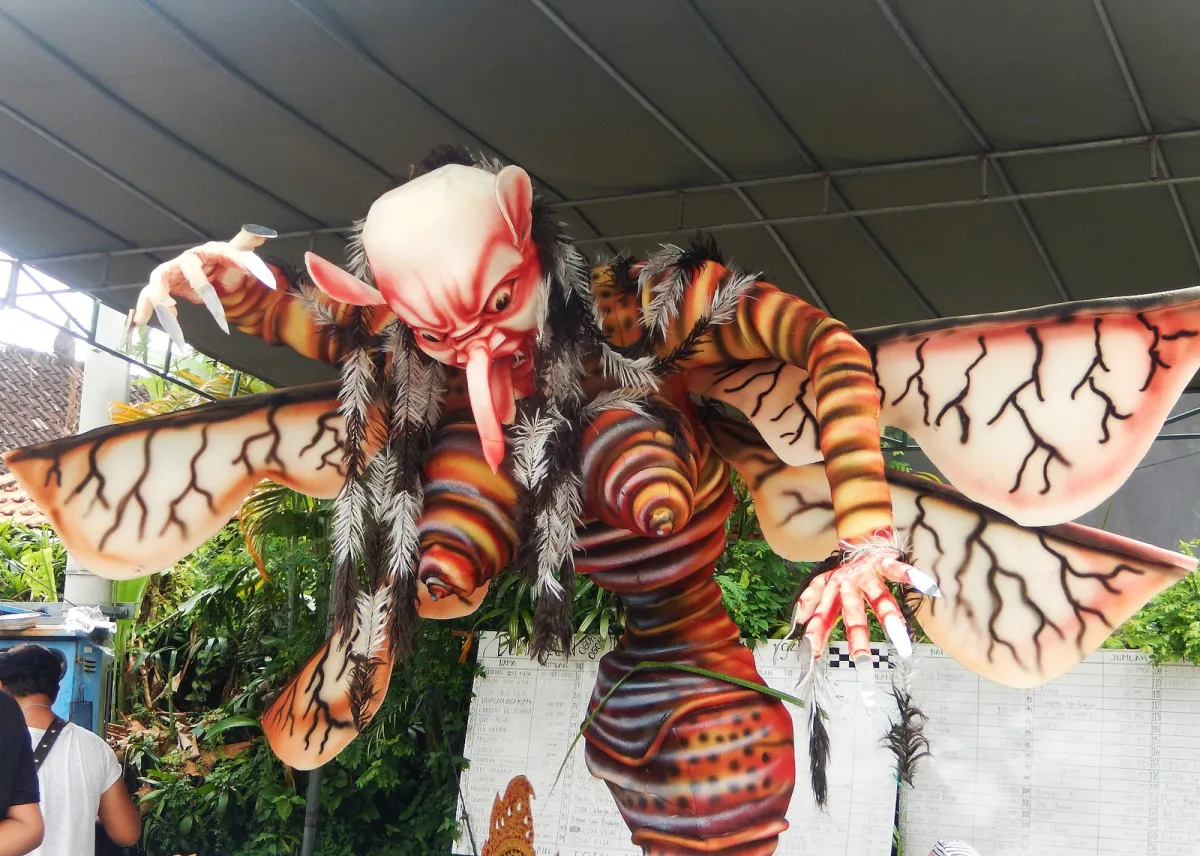
As explained by the Buleleng cultural authority, ogoh-ogoh effigies belong to the community preparations surrounding Nyepi. This 2018 Ubud frame shows a stationary figure during daytime setup rather than a moving night parade, making it ideal for studying painted detail, gesture and sculptural scale without crowd motion.
Ask before entering a banjar or workshop preparation area, never touch painted surfaces or supports, and avoid inventing a mythological character name unless confirmed locally. If you attend an evening parade, check current routes and Nyepi silence-day logistics in our Festivals & Events guide and stay clear of carriers.
Balinese Architecture
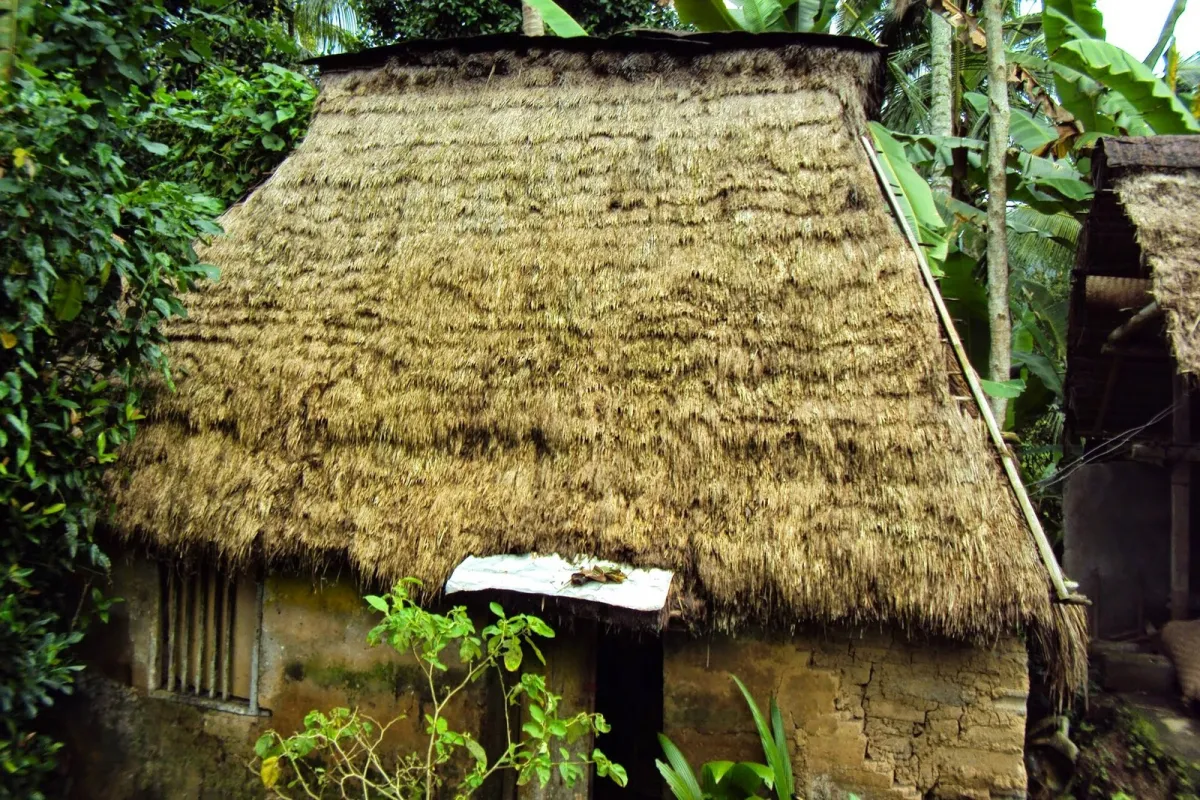
Architectural details—like this 2009 study of a traditional thatched roof and shaded eaves surrounded by greenery—offer quiet, descriptive frames when portraits feel intrusive. Keep complete roof edges intact inside the frame, pair one wider context shot with tighter surface details, and use side light for texture or cloud cover for even tonal records.
Never assume an open compound gateway is public visitor space: a gateway may lead into a private family home, workshop or domestic shrine. Ask occupants clearly which architectural detail you hope to photograph, and avoid guessing botanical roof materials or calling a domestic structure a public temple. Explore wider cultural context in History & Culture.
Resort architecture: access and the image’s limits
Hotel photographs can study materials, landscaping and ocean framing without acting as accommodation promises or day-pass offers. Confirm guest or visitor access directly with each operator before bringing camera gear, keep circulation paths clear, avoid identifiable photos of swimmers or guests without consent, and use our separate Bali Hotels and Where to Stay guides for booking decisions.
RIMBA by AYANA Pool
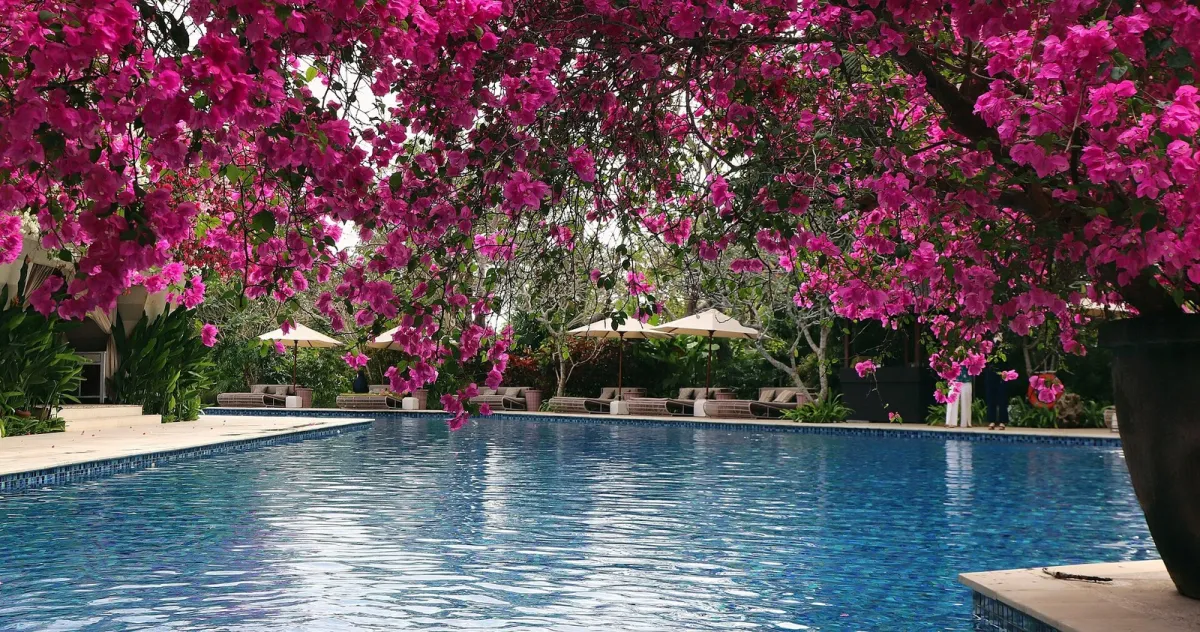
Recorded in 2022 at RIMBA by AYANA in Jimbaran, this frame pairs a canopy of bright pink bougainvillea with a clean strip of blue pool below—an effective resort-detail approach that relies on colour and texture without needing other guests in view. In bright tropical sun, expose carefully so pale paving does not wash out while petals and water tiles keep detail.
This is private hotel property, not a public photo spot: check current facilities, guest categories and photography policies directly via RIMBA by AYANA’s official page before planning casual or organised shoots.
Bulgari Resort Bali
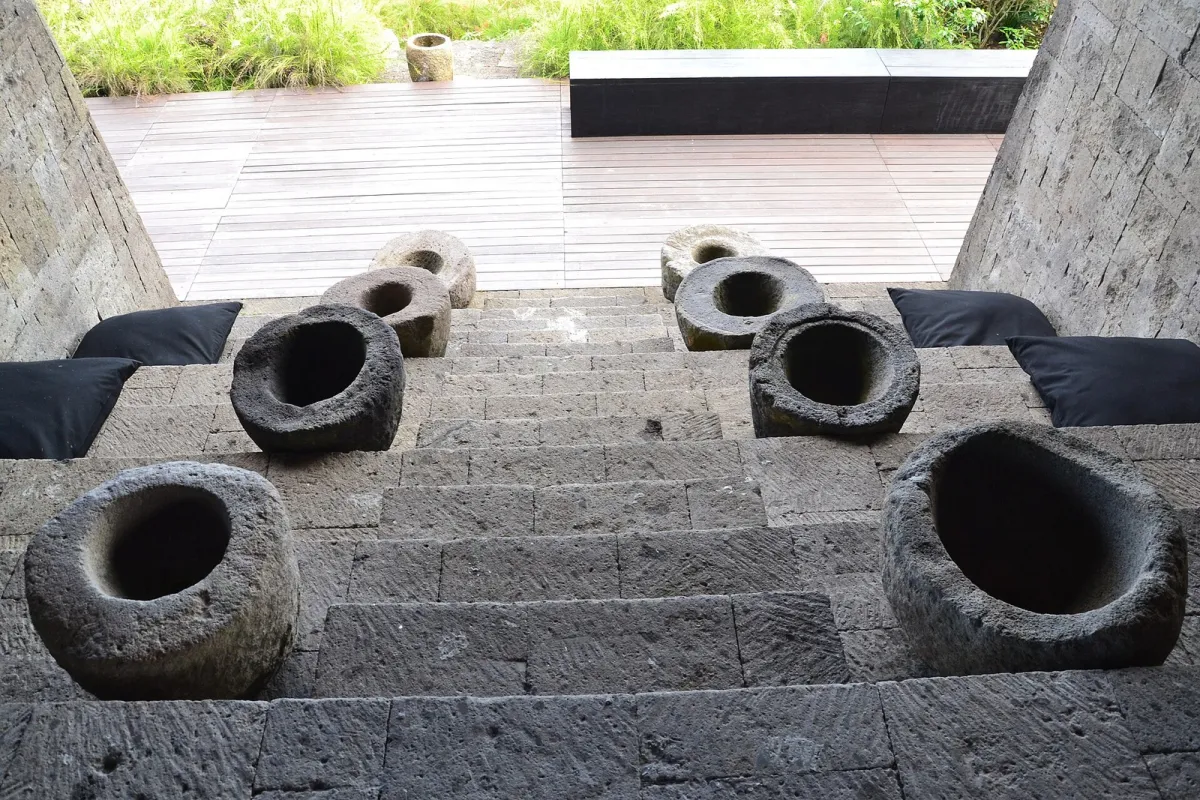
Two 2012 studies show how a single resort visit can pair intimate material geometry with wider coastal scale. In the stone-step view above, repeating stair treads lead the eye cleanly while rounded vessels break the linear rhythm—check frame corners for stray bright slivers and keep stairways unobstructed for passing guests and staff.
Main Pool: Layers of Deck, Water and Ocean
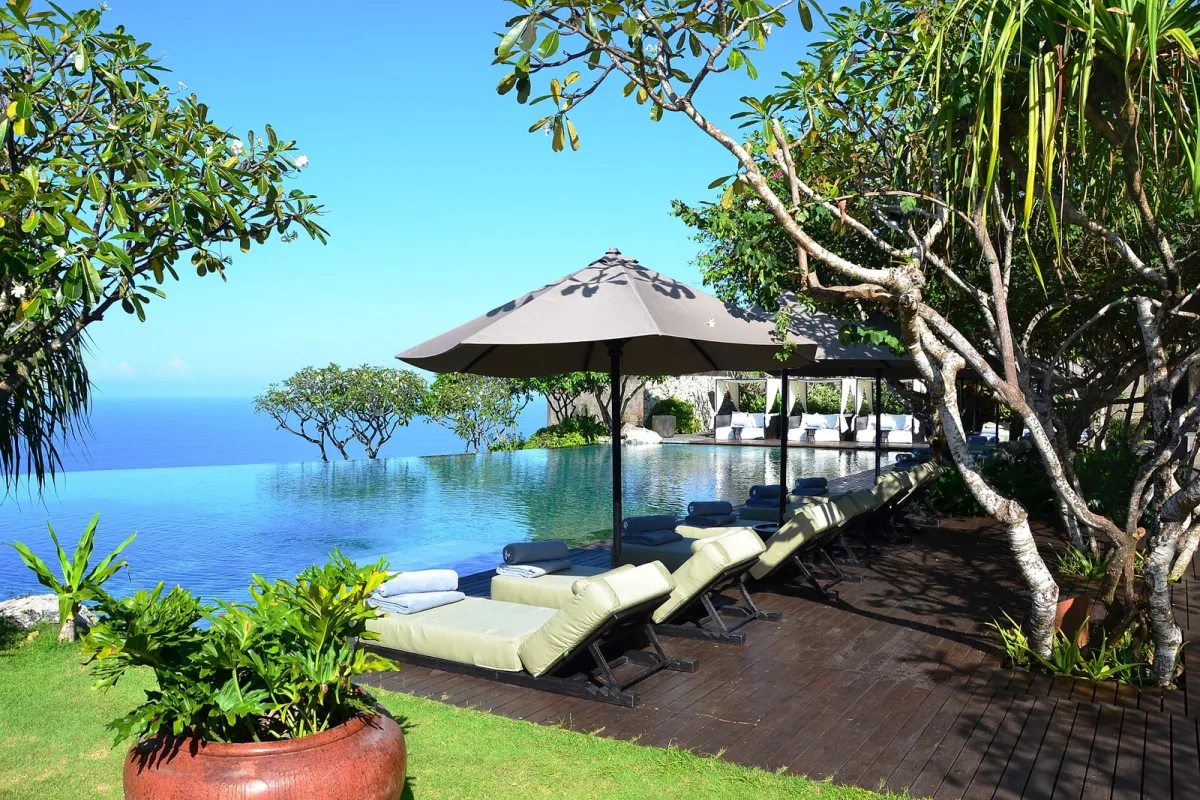
Around the main pool, distinct edges between timber deck, rectangular pool water, trees and the Indian Ocean beyond keep the layers readable; reflections vary with wind and light, so treat this historic view as a composition guide rather than a guaranteed mirror surface. Verify current guest, dining or photography arrangements directly through Bulgari Resort Bali, keep gear dry and away from wet pool edges, and never photograph swimmers without permission.
Conrad Bali Infinity Chapel
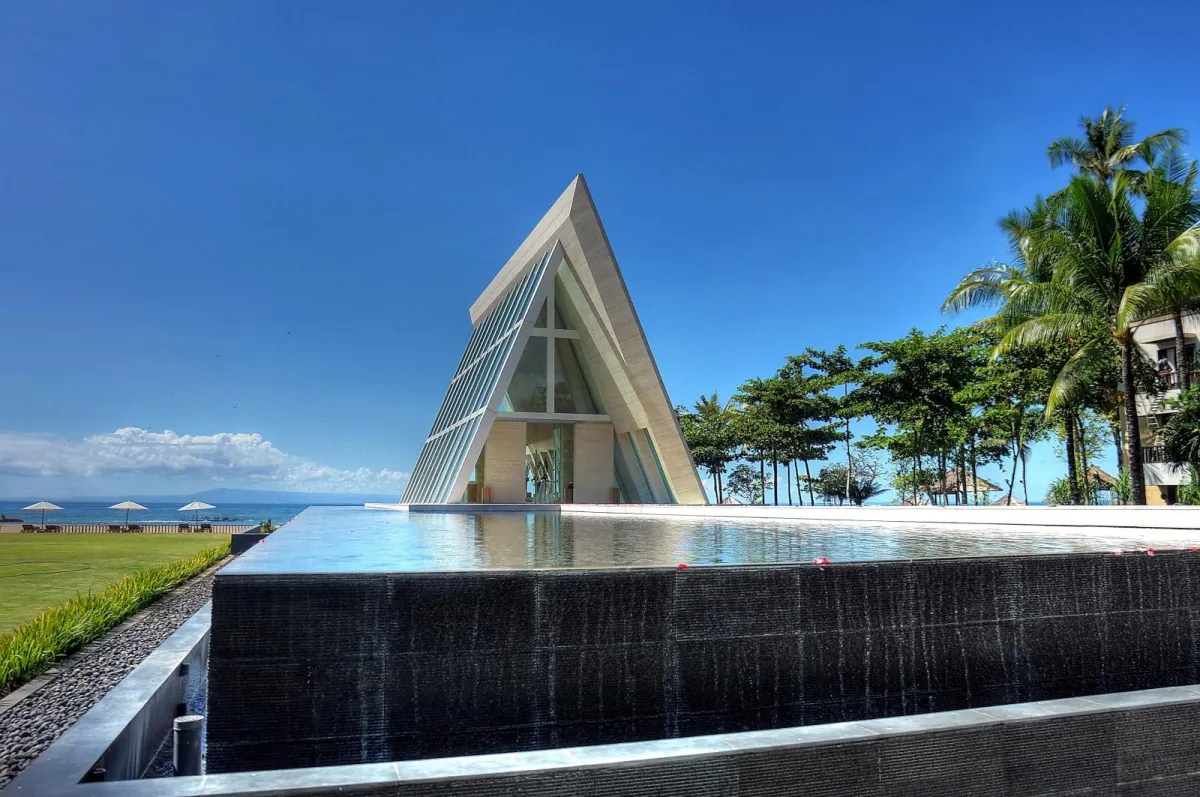
Identified on Hilton’s official Conrad Bali weddings page, Infinity Chapel combines sharp triangular glazing with a dark-tiled reflecting pool, beachfront palms and sea horizon. In Robert Montgomery’s 2009 oblique frame (tagged HDR by the photographer), the dark pool edge anchors the bright sky and pale roofline—when shooting in strong contrast, check that both bright glazing and dark foreground retain detail.
Because Infinity Chapel is an active hotel wedding venue, contact Conrad Bali in advance to clarify whether you are requesting casual exterior photographs or a tripod/organised session, and always follow staff guidance around private ceremonies.
Carry equipment for the journey you are making
Choose a kit you can carry comfortably on the actual route. A compact camera or phone may suit a busy procession or a walk with many steps better than a heavy bag. Protect equipment from rain, spray and sand, keep a dry backup for important documents and avoid leaving gear unattended in a parked vehicle. Plan charging and storage before an early departure.
A tripod changes the amount of space you occupy, so ask whether it is allowed and avoid blocking other visitors. Professional shoots, models, larger equipment and drones can need separate permission. Check the relevant authority, landowner and site rules; ordinary visitor admission is not a general filming or flight permit. A small camera does not remove the need for courtesy.
Save location and source notes with your pictures, especially when several similar temples, beaches or performances appear in one trip. Record what you know and leave unknown details unknown. Accurate captions preserve the usefulness of the photograph long after the journey.
Frequently asked questions
Should I copy a precise camera position from a photograph?
Only if you can reach a permitted and safe standing position without disturbing people, work or worship. The original camera position may be unknown or no longer accessible.
Can I photograph every ceremony I encounter?
Ask locally and follow instructions. A public procession, a visitor performance and a private religious event have different expectations; access does not automatically mean permission for close photographs.
Do I need a drone to photograph Bali landscapes?
No. Ground-level views can offer strong compositions without the permissions and restrictions associated with flight. Check all relevant drone and site rules if you plan to fly.
Do hotel photographs confirm current rooms and facilities?
No. The individual source dates and image descriptions record a particular scene. Confirm current facilities, the booked room category and access directly with the operator.
Is Ulun Danu Beratan the same temple as Ulun Danu Batur?
No. Pura Ulun Danu Beratan sits beside Lake Beratan in the Bedugul highlands, whereas Pura Ulun Danu Batur belongs to the Kintamani and Lake Batur volcanic caldera area.
Are the Tirta Gangga rice fields inside the Tirta Gangga Water Palace?
No. The countryside terraces along the Amlapura–Amed road are working farmland outside the ornamental Water Palace complex; ask permission before stepping off public paths, and do not assume every terrace is part of a listed UNESCO property.
Are Kuta and Legian the same beach, and does a calm sunset mean safe swimming?
Kuta and Legian are neighbouring stretches of Bali’s southwest coast (Legian lies between Kuta and Seminyak) and should be captioned accurately. A calm-looking sunset or sunrise photograph never confirms safe surf, tide or currents—always follow current beach signs and lifeguard instructions.
Sources and Current Checks
Verify current access, cultural guidance, and hotel or venue photography policies directly with official Indonesian authorities and operators before your visit: Indonesia Travel (Legian) · Indonesia Travel (Nusa Dua) · Indonesia Travel (Padang Padang) · Indonesia Travel (Ulun Danu Beratan) · Indonesia Travel (Kintamani) · UNESCO Cultural Landscape of Bali · Ministry of Marine Affairs & Fisheries (Garam Amed Bali) · Buleleng Cultural Authority (Ogoh-ogoh) · RIMBA by AYANA · Bulgari Resort Bali · Conrad Bali Weddings (Infinity Chapel).


