
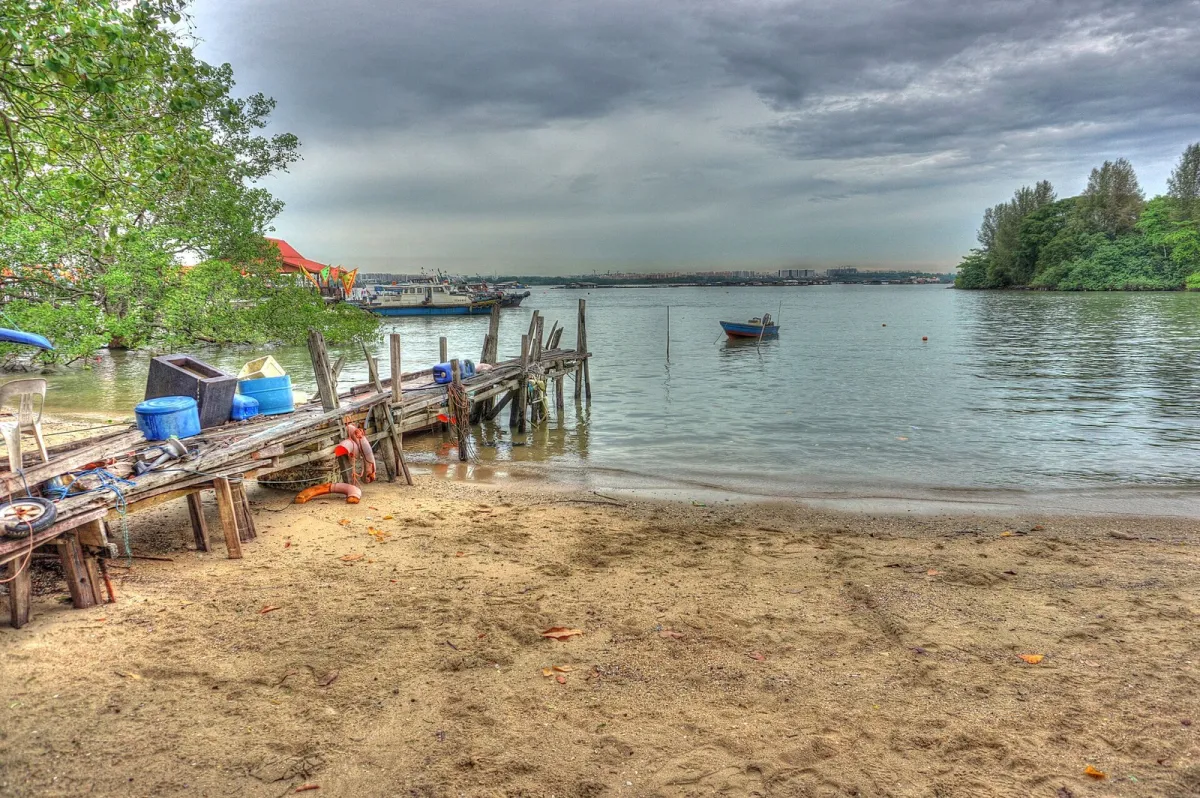

All ten of Singapore’s featured photo spots are consolidated on this page so you can compare them side by side: Downtown & Marina Bay skyline, Singapore Harbour, Chinatown shophouses, Buddha Tooth Relic Temple, former Nagore Dargah Shrine, St Andrew’s Cathedral, former Hill Street Police Station, National Gallery Singapore (former Supreme Court & City Hall), Orchard Road and Sentosa Island coast. Dated images are visual records, not a guarantee of present-day access, building use or skyline composition — check current official visitor information before planning a shoot.
Compare Singapore’s 10 core photo spots
| Photo spot | Primary subject | Area & access starting point | Key planning check |
|---|---|---|---|
| Downtown & Marina Bay | CBD towers, bay reflections & evening light | Marina Bay public waterfront promenade | Public paths work without a paid deck; check tripod rules |
| Singapore Harbour | Working port cranes, vessels & maritime scale | Lawful public coastal viewpoints | Working terminals are restricted; 2012 Keppel image is historical |
| Chinatown (Temple St) | Conserved shophouse rows & daily street activity | Chinatown MRT / South Bridge Road side | Ask before close-up portraits; keep shop doorways clear |
| Buddha Tooth Relic Temple | Layered temple rooflines & Chinatown street façade | South Bridge Road (near Maxwell MRT) | Distinct from Thian Hock Keng; follow dress & interior photo rules |
| Nagore Dargah Shrine | Twin-tower Sufi shrine & Indian Muslim heritage | 140 Telok Ayer Street | Commemorative shrine & heritage centre (not a mosque); verify hours |
| St Andrew’s Cathedral | Neo-Gothic white façade, tower & grounds | Civic District (near City Hall MRT) | Active Anglican worship; separate from Cathedral of the Good Shepherd |
| Former Hill Street Police Station | Long civic façade & colourful shutter rhythm | Hill Street / Civic District pedestrian crossings | Former station (not a police counter); stay off road junctions |
| Former Supreme Court & City Hall | National Gallery Singapore civic & interior architecture | Padang / St Andrew’s Road, Civic District | Not the working Supreme Court; check exhibition photography rules |
| Orchard Road | Commercial corridor, tree cover, reflections & movement | Orchard or Somerset MRT (choose section first) | Mall interiors have private security rules; displays are seasonal |
| Sentosa Island Coast | Coastal shoreline, paths & distant shipping horizon | HarbourFront transfer to Sentosa | Leave lightning-shelter & return-transfer buffers; check swim signs |
Scroll horizontally on smaller screens if needed.
Skyline, waterfront and harbour photography
Begin by deciding which side of the bay gives the composition you want. A view towards the central business district differs from a view towards Marina Bay Sands. Walk the public promenade to understand foregrounds and obstructions before setting up. Bridges, reflected lights, trees and people can be useful elements rather than distractions that must always be removed.
Blue hour often provides a balance between illuminated buildings and a sky with visible colour, but cloud, rain and visibility determine the actual result. Arrive with time to choose a safe position and keep paths clear. Avoid assuming that a tripod is permitted everywhere: venue rules, crowd management and commercial-photography conditions may differ from ordinary handheld use.
Downtown Singapore skyline & Marina Bay waterfront
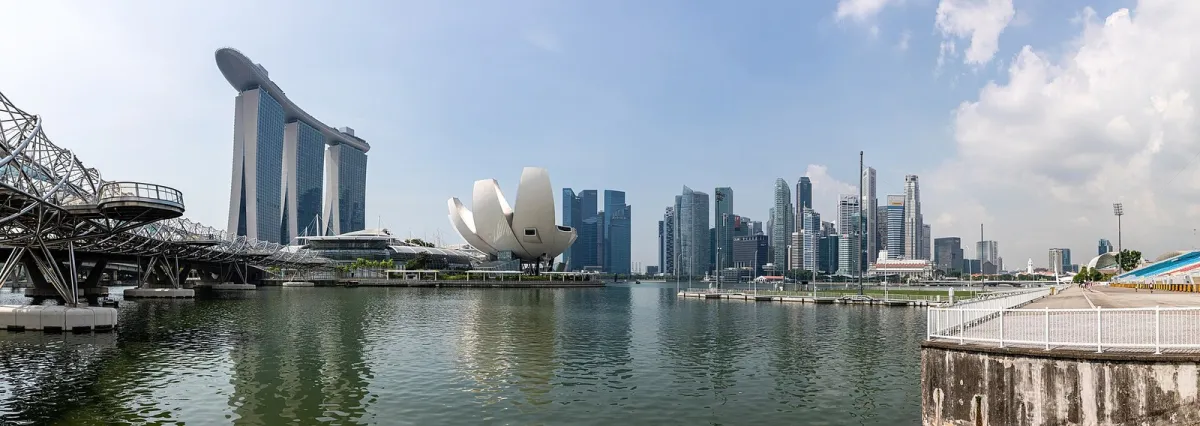

Choose a clear foreground — water, a promenade edge or a bridge — before the light fades so the central towers keep their sense of scale rather than becoming an abstract pattern. A public waterfront promenade provides strong skyline compositions without requiring a paid observation deck, which offers a different elevated angle with its own admission and equipment rules.
Because the skyline evolves with new construction, treat the 2019 Marina Bay photograph as a dated record of one angle rather than proof of an identical panorama today. At dusk, watch bright signs and water reflections when checking exposure, keep walkways clear for pedestrians, stop shooting if lightning warnings require shelter, and plan your return MRT station or pickup before staying late.
Singapore Harbour & working port landscapes
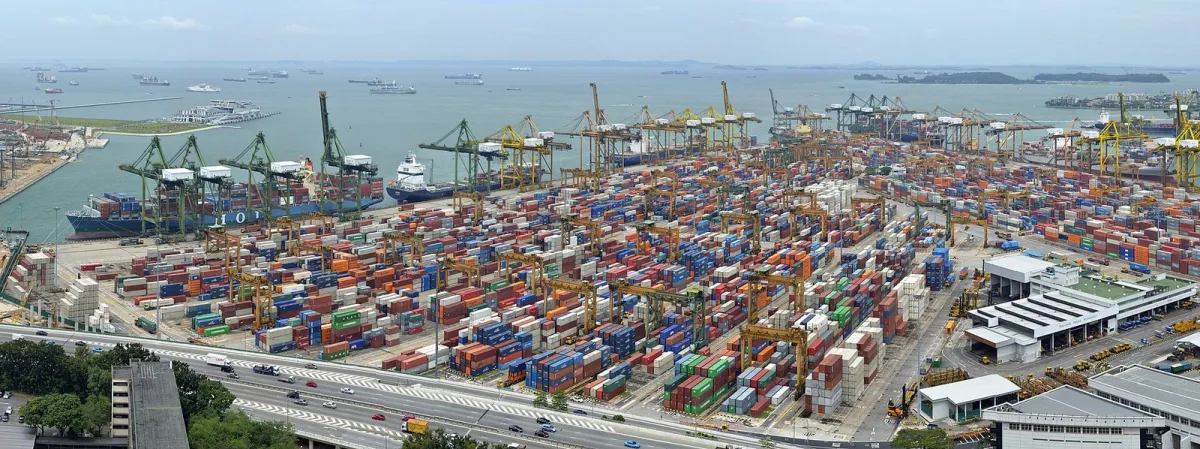

Singapore’s harbour is part of an active maritime economy with a visual language — cranes, container stacks, working vessels and coastal horizons — completely distinct from Marina Bay’s visitor promenade. The 2012 Keppel Container Terminal image is explicitly a historical port view; port facilities relocate and evolve, so never read an older harbour photograph as a current terminal-access map.
Use lawful public viewpoints only and treat every working-port boundary, barrier and security notice as a real restriction. If you book a harbour boat trip, distinguish a public sightseeing route from working maritime services and check the operator’s boarding and photography rules. Haze, rain and backlight soften distant structures over water, so check visibility beforehand and protect gear from humidity and spray.
Heritage streets: façades and lived-in neighbourhoods
Chinatown, Telok Ayer, Kampong Gelam and Katong–Joo Chiat each offer a different relationship between buildings and daily activity. Choose a short sequence of streets and look for changing light, repeated shutters, covered walkways and the contrast with taller buildings beyond. A meaningful photograph can include the street’s present use rather than trying to make the area look empty.
Colourful houses on Koon Seng Road are homes, not public studios. Stay on public paths, keep doorways clear and avoid placing props or people on private steps. In commercial streets, ask before photographing a worker close up or entering a shop with a large camera. Buying something does not create unlimited permission, but genuine engagement can make a visit more respectful and interesting.
Chinatown shophouses & Temple Street
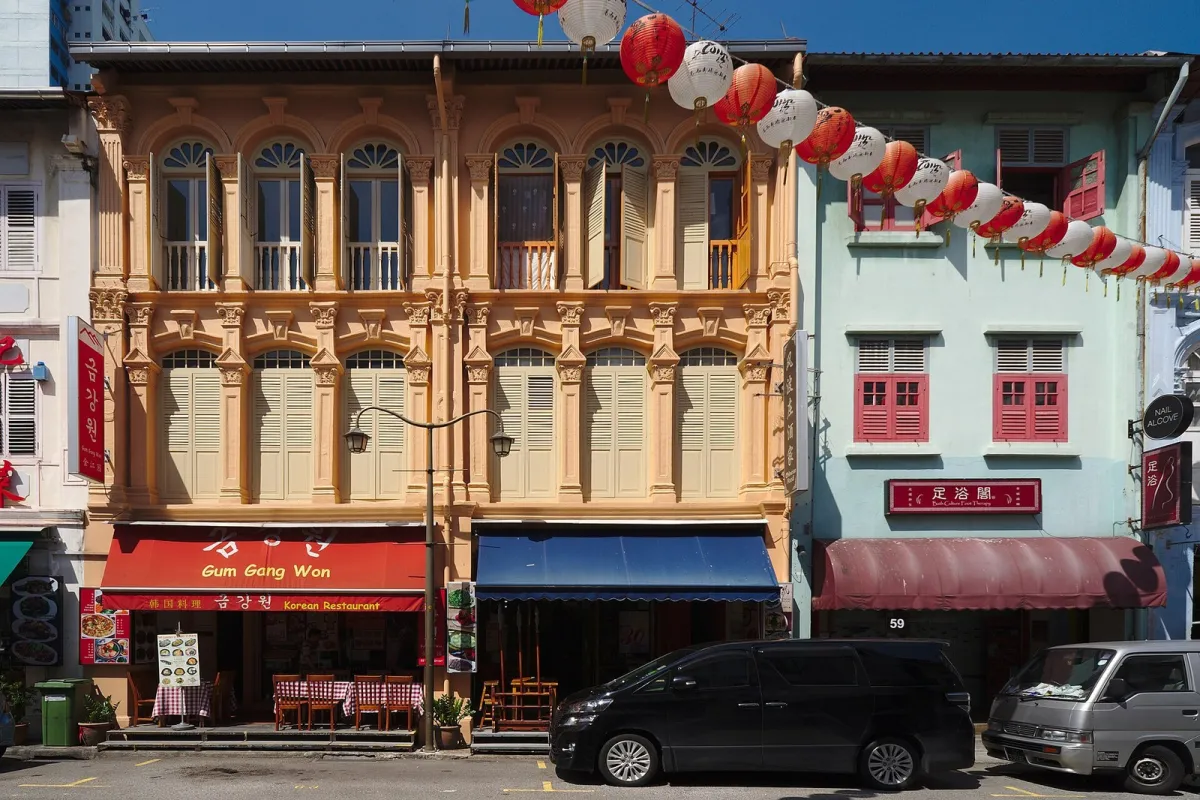

Photograph Chinatown as a working district where conserved shophouses sit alongside active shops, cafés, deliveries and worship. A row of repeated narrow frontages, upper-floor shutters and five-foot walkways explains Temple Street better than a tight crop of one coloured window. Conservation preserves the architectural shell, not necessarily the original business inside, so describe what you see and check URA heritage records for history.
Pair one compact cluster of streets — around Chinatown MRT, South Bridge Road or neighbouring Telok Ayer — with time for a meal rather than rushing across districts. Never block a shop doorway, move displayed goods or hold up a queue for a frame; if someone declines a portrait, put the camera away and move on.
Religious buildings and architectural details
Read the site’s current visitor instructions before entering. Some spaces welcome visitors while others are reserved for prayer or ceremonies. Modest clothing, shoe removal and photography restrictions vary between traditions and individual sites. A camera lens pointed from a doorway can still intrude on worship; use judgement as well as posted rules.
For architecture, try a wider establishing view before details. Columns, rooflines, windows and carved elements are easier to interpret when the viewer understands the building around them. Confirm a building’s identity from reliable place information as well as the photograph: Buddha Tooth Relic Temple, Thian Hock Keng, Nagore Dargah and St Andrew’s Cathedral each have distinct religious and historical identities.
Buddha Tooth Relic Temple (Chinatown)
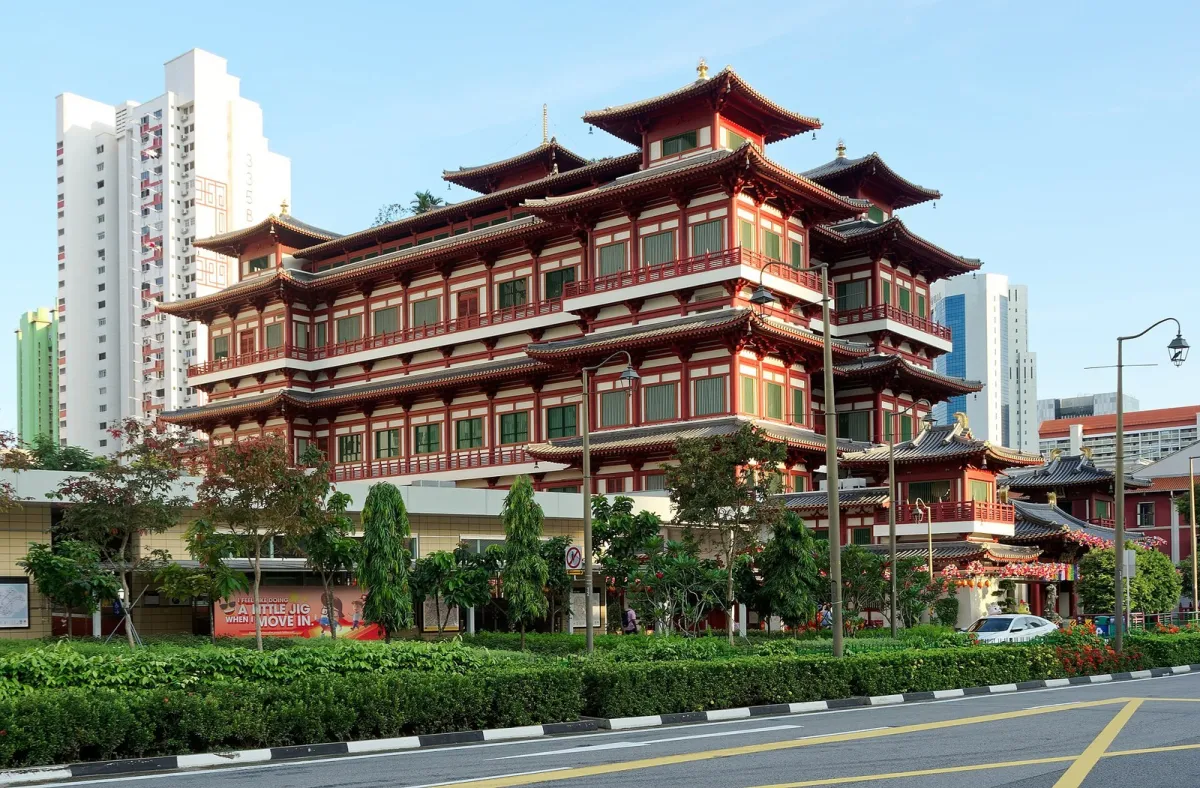

Located on South Bridge Road near Maxwell MRT, Buddha Tooth Relic Temple and Museum stands out from surrounding Chinatown shophouses through its scale and layered rooflines. Start with a full exterior view from a safe public pavement rather than stepping into traffic to straighten vertical lines; a wider lens helps in the confined street, and early or late daylight is usually more comfortable than midday heat.
Do not confuse the temple with nearby Thian Hock Keng or other Chinese-style religious buildings, which follow different traditions and histories. Always verify current dress codes, opening arrangements and interior photography restrictions on arrival, keep entrances clear for worshippers, and never walk into a ceremony or reserved space for a picture.
Former Nagore Dargah Shrine (Telok Ayer)
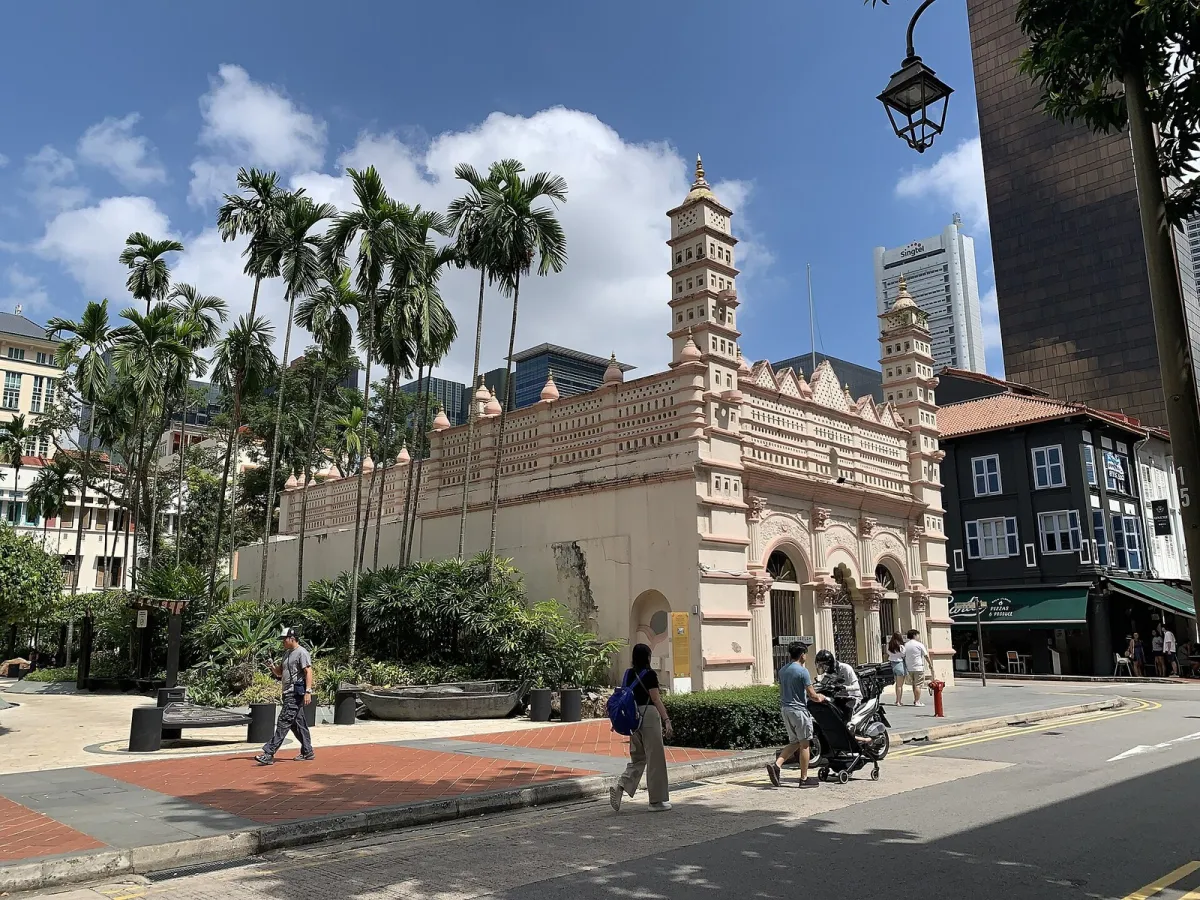

Identified by the National Heritage Board at 140 Telok Ayer Street, the former Nagore Dargah commemorates the Sufi saint Shahul Hamid of Nagore and reflects the heritage of southern Indian Chulia migrants. Avoid labelling it simply as a mosque: it is a commemorative shrine that now houses the Nagore Dargah Indian Muslim Heritage Centre.
Step back on the public pavement to show its twin tower-like forms, arches and street position before moving in for details. Because conservation work, scaffolding and heritage-centre opening arrangements can change after the 2025 exterior photograph, verify visitor hours directly if going inside matters, and weave it into a slow Telok Ayer walk alongside other distinct community landmarks.
St Andrew’s Cathedral (Civic District)
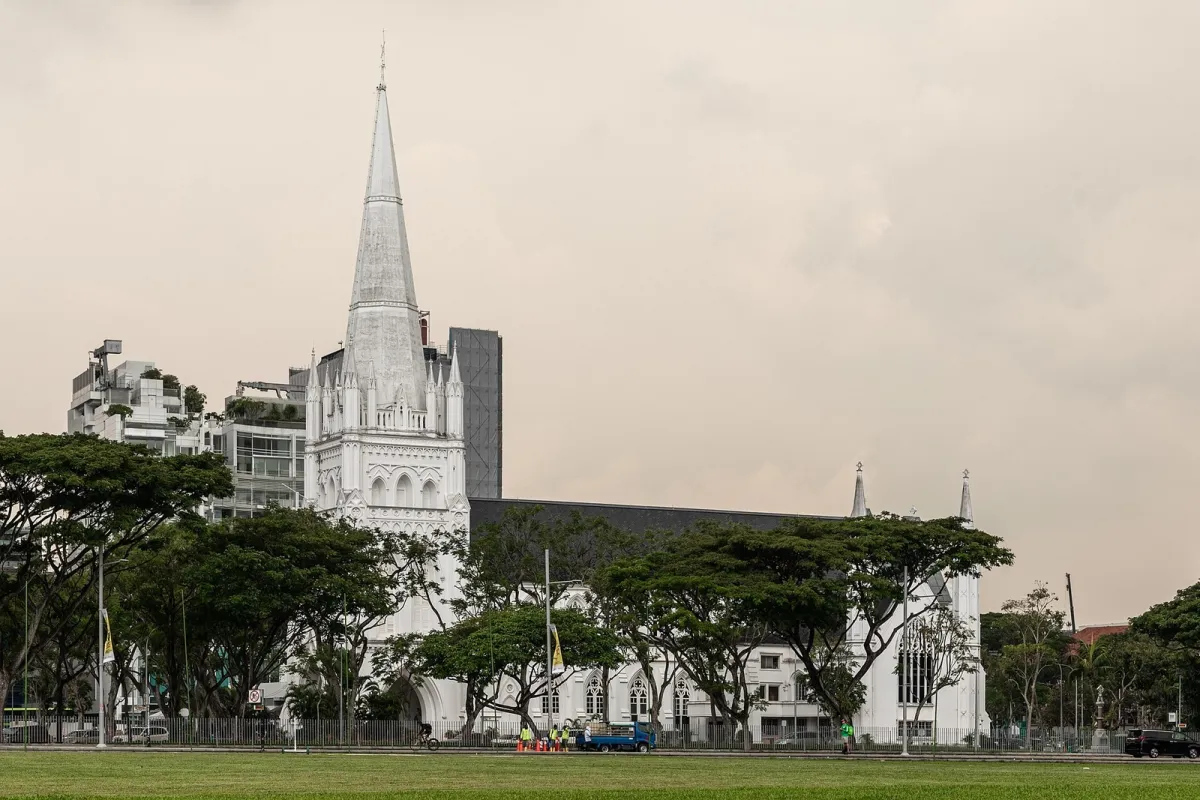

St Andrew’s Cathedral is an active Anglican place of worship whose Neo-Gothic white façade, tower and surrounding lawn form a central Civic District landmark. Confirm its exact identity in notes and captions — it is a separate institution and building from the Cathedral of the Good Shepherd.
Establish the full relationship between the tower, nave and grounds from public paths without entering restricted lawns or stepping onto the road. Bright white exterior surfaces contrast sharply with darker interiors, so check highlights carefully, keep cameras silent around services, avoid flash where prohibited, and verify current access if events or maintenance affect the grounds.
Civic District landmarks and historic architecture
Singapore’s Civic District pairs colonial-era public buildings with river views, the Padang and modern towers beyond. Grouping nearby exteriors with an air-conditioned gallery stop lets you adapt smoothly when equatorial midday sun or a sudden shower interrupts outdoor shooting.
Former Hill Street Police Station
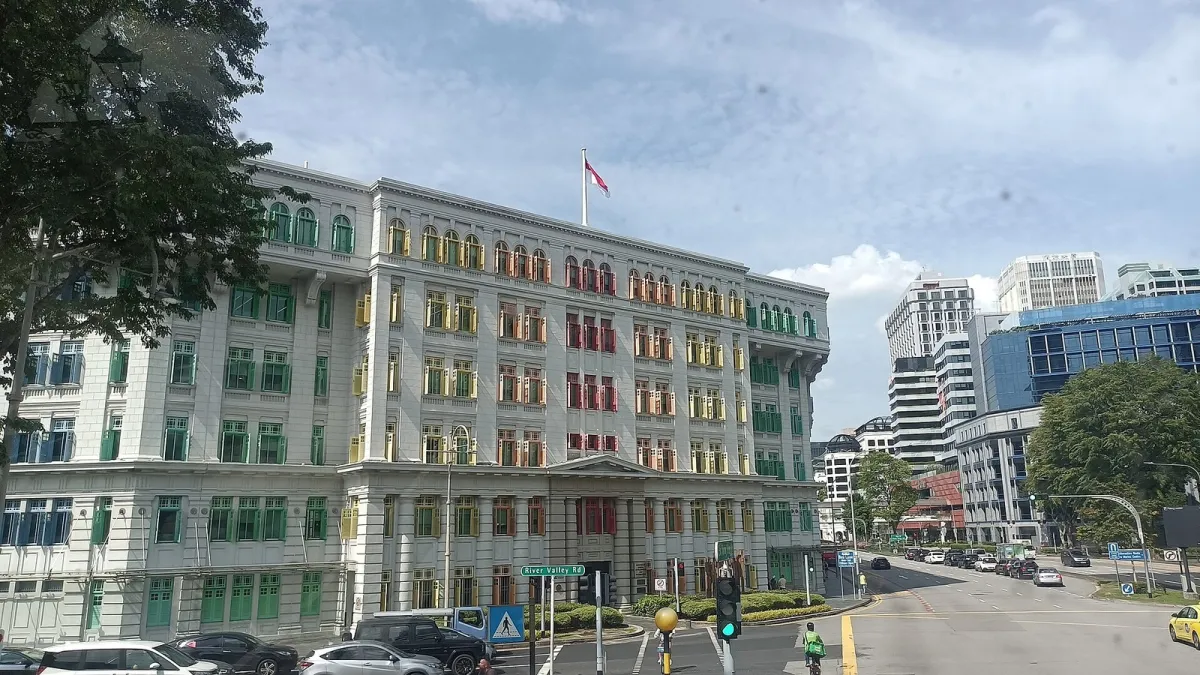

The former Hill Street Police Station draws photographers for its long façade and rows of brightly coloured shutters, yet its name is historical — it is no longer a working public police counter. Check current building access before attempting to enter interior office or cultural spaces, and treat an establishing wide view plus a tighter shutter-pattern frame as a stronger pair than a single cropped colour shot.
Hill Street carries busy urban traffic, so frame exclusively from pavements and pedestrian crossings rather than stepping into a junction for symmetry. Wet pavements after rain can deepen the shutter colours and add reflections once conditions are safe, but step indoors immediately if lightning develops.
Former Supreme Court & City Hall (National Gallery Singapore)
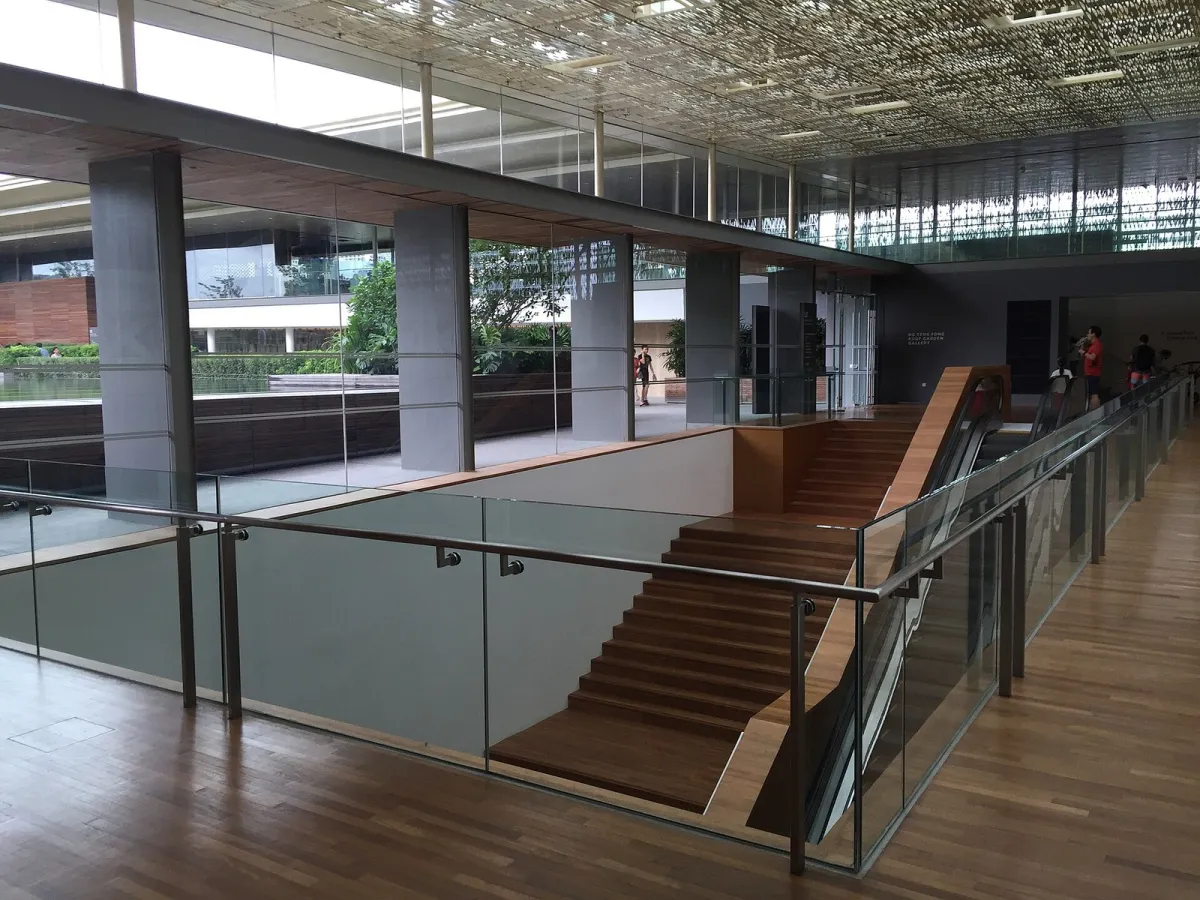

The former Supreme Court and City Hall now operate together as National Gallery Singapore; the country’s current working Supreme Court is a separate nearby building. Keep that distinction clear when captioning older or new photographs, and pair an exterior Padang view with time inside to read how modern circulation bridges the historic wings.
The 2016 City Hall Wing photograph documents one interior space on Level 5, not today’s temporary exhibitions or access to every historic courtroom. Check current ticket coverage and photography rules before entering — permissions for handheld photos, flash, bags and tripods can differ between public circulation areas and specific galleries.
Orchard Road, greenery and the coast
Commercial boulevards, formal gardens and coastal areas require different preparation from an urban heritage walk. Look for a subject within the larger landscape: a reflection, street movement, a plant form or the relationship between people and open space. Stay on permitted paths and do not move plants or disturb wildlife to improve a composition.
Orchard Road streetscape
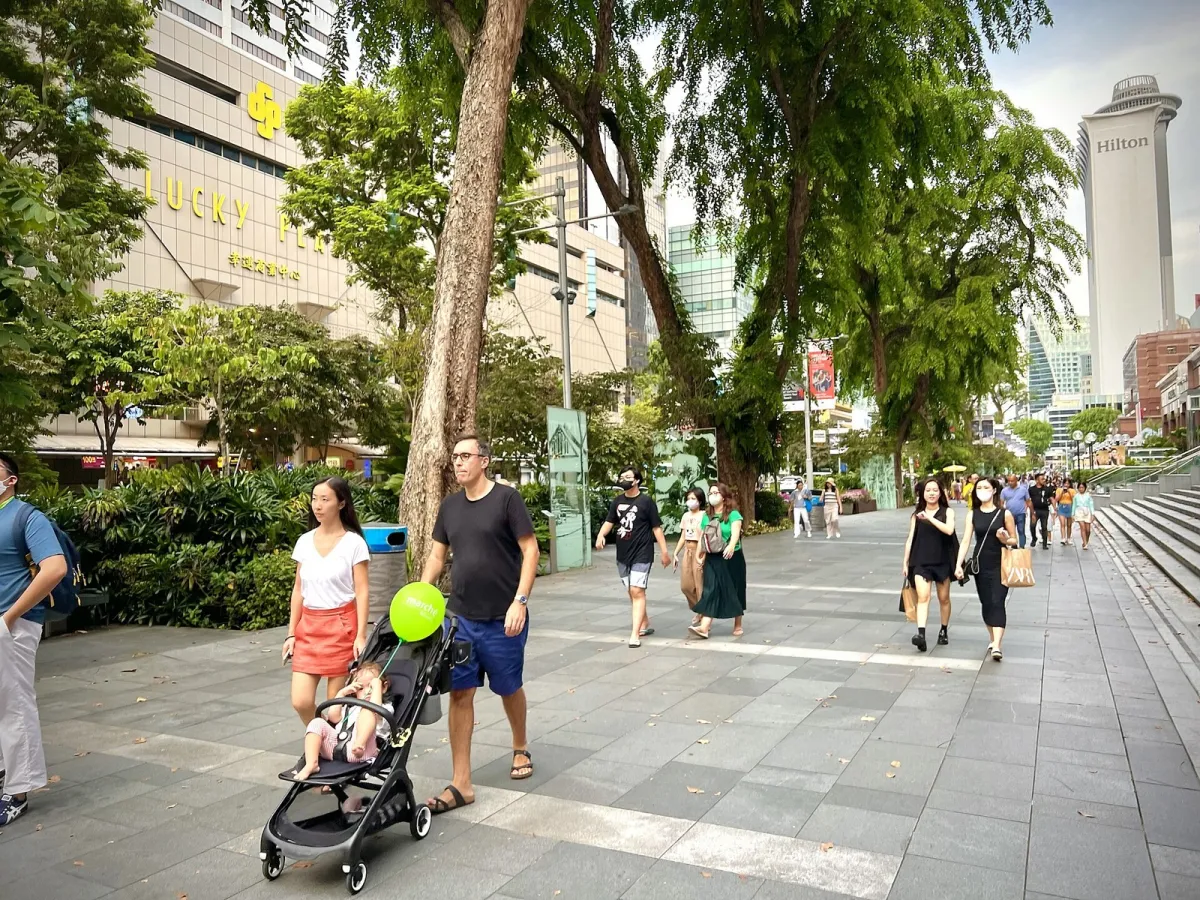

Orchard Road is a long shopping and hotel corridor rather than one building, so pick a specific section and MRT station — such as Orchard or Somerset — before starting out. Focus on a deliberate theme such as pedestrian movement, tree canopy, glass reflections or evening neon contrast instead of photographing every shopfront indiscriminately.
Keep walkways and escalator entrances unobstructed, ask before close-up portraits, and remember that privately managed mall interiors enforce their own security and photography rules. Seasonal installations such as Christmas lighting change every year, so verify current dates rather than treating an older street photograph as this year’s schedule.
Sentosa Island coast & beaches
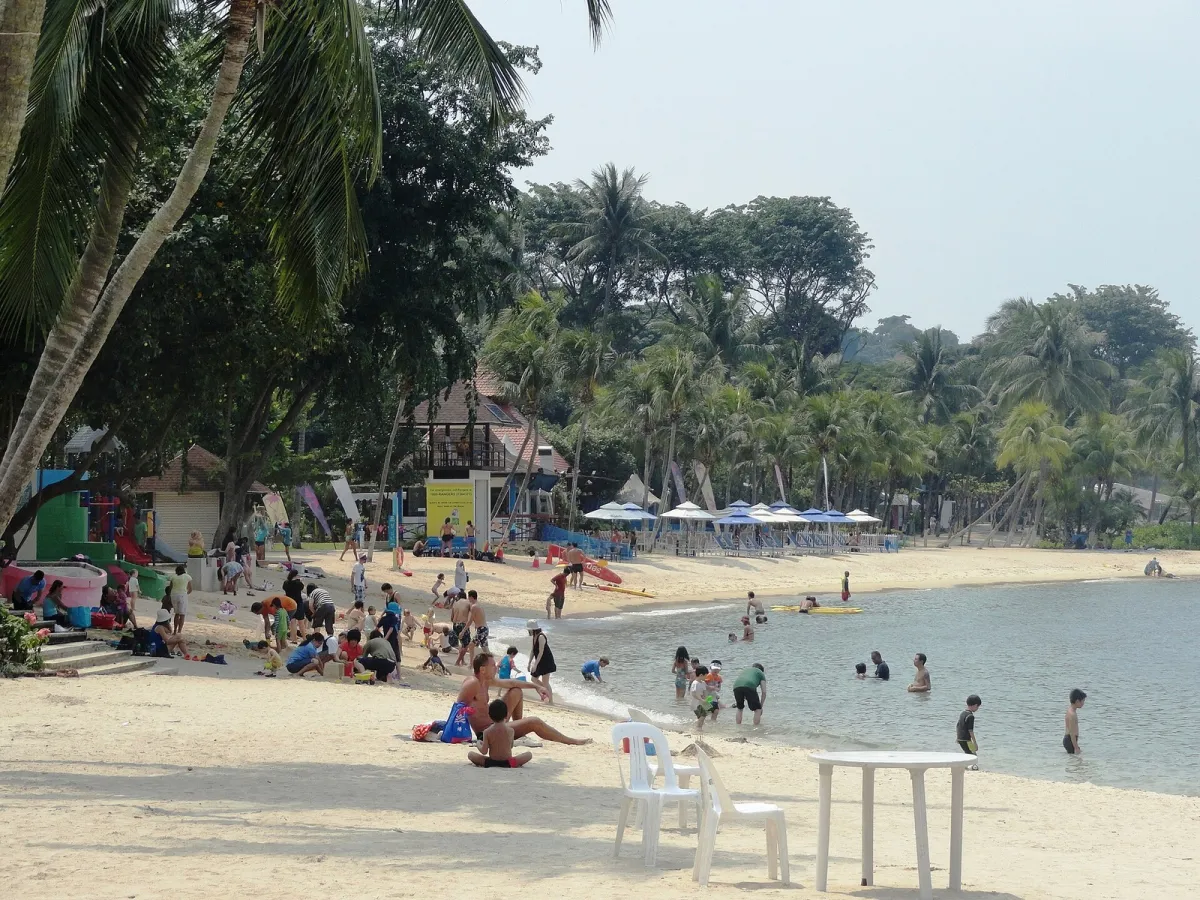

On Sentosa, frame the background as deliberately as the sand: Singapore’s coast borders a busy maritime strait, and anchored vessels on the horizon are an honest part of the scene. Early or later daylight makes walking more comfortable, while tides, maintenance and crowds alter the shoreline compared with older frames. For wider coastal choices beyond a photo stop, see our Singapore beaches guide.
Decide upfront whether your trip is a coastal photo walk or a ticketed theme-park or aquarium day, as moving between attractions and transferring back through HarbourFront takes time. Follow posted swimming and lifeguard notices, protect electronics from salt and sand, and move to proper indoor shelter — never under a palm tree or open pavilion — as soon as thunder develops.
Light, rain and practical equipment
| Condition | Useful subjects | Precaution |
|---|---|---|
| Early daylight | Heritage streets, gardens and quieter public spaces | Check access hours and changing shadows |
| Bright midday | Architectural details, indoor cultural visits where permitted | Manage heat and strong contrast |
| After ordinary rain | Reflections and saturated surfaces | Watch slippery paths and protect equipment |
| Dusk and evening | Waterfront lights and city transitions | Keep routes clear and plan the return journey |
| Thunderstorm warning | Indoor alternatives | Leave exposed locations; do not wait outside for dramatic lightning |
Scroll horizontally on smaller screens if needed.
A phone or a small camera can cover much of a Singapore trip. Carry the equipment you can comfortably use in humidity and rain. A cloth, a protective bag and spare battery capacity are often more useful than a heavy lens you rarely take out. Moving between cold interiors and humid air can affect equipment; follow the manufacturer’s care advice and avoid rushing to wipe internal condensation.
Do not treat an illustrative exposure suggestion as the settings used in an existing photograph. Motion, focal length and stabilisation change what is practical. Review your own results and adjust. For people, consent and context matter more than a technically perfect frame taken intrusively.
Two manageable photo routes
River and Civic District: begin with an overview of the Singapore River and former Hill Street Police Station, then continue towards St Andrew’s Cathedral and National Gallery Singapore for an indoor cultural break if midday light turns harsh. Finish on the Marina Bay waterfront at dusk only if weather and energy allow, using the MRT to shorten walking sections.
Chinatown and Telok Ayer: start with the shophouse streetscape along Temple Street, continue to Buddha Tooth Relic Temple on South Bridge Road, and walk across to 140 Telok Ayer Street with time for a hawker meal. Keep temple interiors separate from the public street walk and save Orchard Road or Sentosa for another session.
Permission and the use of photographs
Permission to visit a place does not automatically permit commercial photography, drone use or publication of every image. Check the operator’s rules and the relevant aviation requirements separately where applicable. This guide does not grant permission to fly a drone. Keep a record of the source, photographer and licence when using a photograph made by someone else.
Think about the story of a small photo sequence before choosing equipment. For a heritage district, one establishing street view, one architectural detail and one respectful image of everyday activity can work together. For the waterfront, a broad view and a closer frame of reflections may be enough. Avoid making ten almost identical exposures simply because the skyline is famous; a deliberate change in subject or light gives the collection more purpose.
When sharing photographs, distinguish a descriptive caption from a claim about access. “Photographed from the waterfront” is different from promising an exact publicly accessible position. Keep any recorded source date with a historical image, and do not suggest that a photographer’s presence proves a current visitor entitlement. These distinctions are especially useful around religious buildings, private developments and working harbour areas.
Singapore photography FAQ
Do I need a paid observation deck for Singapore skyline photos?
No. Public Marina Bay waterfront promenades provide strong skyline views without admission. A paid observation deck is an optional elevated angle with its own ticket and equipment rules.
Can I photograph inside every temple, mosque or cathedral?
No. Follow each site’s posted rules, dress codes and worship times, keep cameras silent near services, and ask when interior permission is unclear.
Are Nagore Dargah and Buddha Tooth Relic Temple the same as nearby mosques or Thian Hock Keng?
No. Former Nagore Dargah at 140 Telok Ayer Street is a commemorative Sufi shrine now housing the Nagore Dargah Indian Muslim Heritage Centre, not a mosque, and Buddha Tooth Relic Temple is a separate institution from Thian Hock Keng. Confirm each site’s identity and address before visiting or captioning.
Are the former Supreme Court and Hill Street Police Station still active public offices?
No. The former Supreme Court and City Hall now form National Gallery Singapore (the current working Supreme Court is a separate nearby building), and the former Hill Street Police Station is a conserved landmark rather than a public police assistance counter.
Can I enter a working container terminal to photograph Singapore’s harbour?
No. Working port terminals are restricted operational zones; the 2012 Keppel photograph is a historical view. Photograph Singapore’s maritime landscape only from lawful public viewpoints or authorised sightseeing vessels.
Do dated photographs prove current access, displays or swimming conditions?
No. Dated photographs preserve a particular moment — skyline construction, conservation scaffolding, Orchard Road seasonal displays and Sentosa beach or weather conditions all change. Always check current official notices on your travel date.
Sources and Current Checks
Official place and heritage references consolidated on 26 November 2026. Verify current opening hours, ticketing, conservation notices and weather advisories for your visit date.
Visit Singapore · Buddha Tooth Relic Temple (Visit Singapore) · Singapore Neighbourhoods (Visit Singapore) · URA Historic Districts · URA Former Hill Street Police Station · NHB Roots: Former Nagore Dargah · NHB Roots: St Andrew’s Cathedral · National Gallery Singapore Architecture & History · Sentosa Official Visitor Site · Maritime and Port Authority of Singapore (MPA)