
Sign in
For Photos4Travel editors and team members.
Jamaica · Food & Drink
Jamaican Food & Drink: What to Eat and How to Order
A Jamaican menu becomes easier to read once you recognize the sides as well as the headline dishes. A jerk plate might arrive with rice and peas, festival or breadfruit; a patty can become a substantial quick lunch with coco bread. Breakfast may be a warm plate of ackee, saltfish and ground provisions. Each meal has its own flavours and textures.
Use this guide to decide what to try, what to ask before ordering and how to fit meals into the day. Choose food stops close to your actual route. A famous jerk address on the other side of Jamaica can consume far more time and money than the lunch itself. Opening hours and menus remain decisions to confirm with the restaurant you choose.
Jerk: choose the cooking, then choose the heat
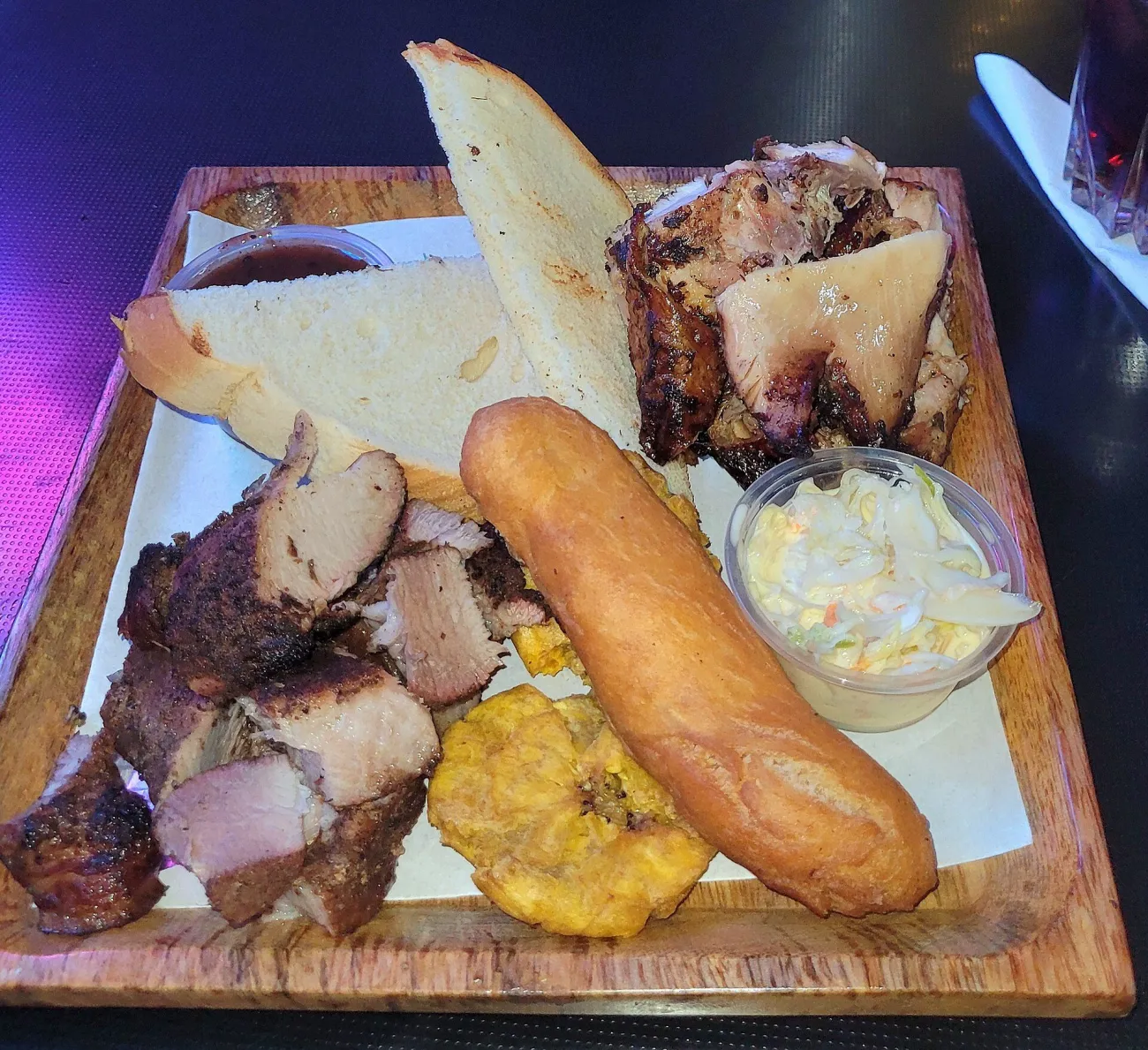
Photo: Xaymacan · CC BY-SA 4.0 · Resized.

Jerk is associated with seasoned, smoke-cooked meat, especially chicken and pork. Pimento, thyme, scallion and Scotch bonnet pepper are familiar elements, but cooks have their own mixtures and methods. A bottle of hot sauce on the table does not tell you how much heat is already in the marinade. Ask whether the meat itself is mild enough for you before asking for extra sauce.
For a first plate, choose one meat and a side you recognize, then add something new. Festival is a slightly sweet fried accompaniment; bammy is made from cassava; breadfruit has a different, starchy character. If portions are unclear, ask how many pieces or whether a plate is intended for one person. A menu price for a quarter chicken and a weight-based pork order may not be directly comparable.
Boston Bay in Portland is strongly associated with jerk, while jerk stands and established restaurants operate across the island. The tourism board’s food guide is a useful introduction. Choose a vendor that is trading, handles food carefully and fits your route.
For a Portland outing, Boston Jerk Centre is the tourism board’s named starting point in Boston Bay. Make it a stop on a day already spent in the area, and confirm which vendors are trading and how their pork or chicken orders are priced.
Ackee, saltfish and the Jamaican breakfast plate
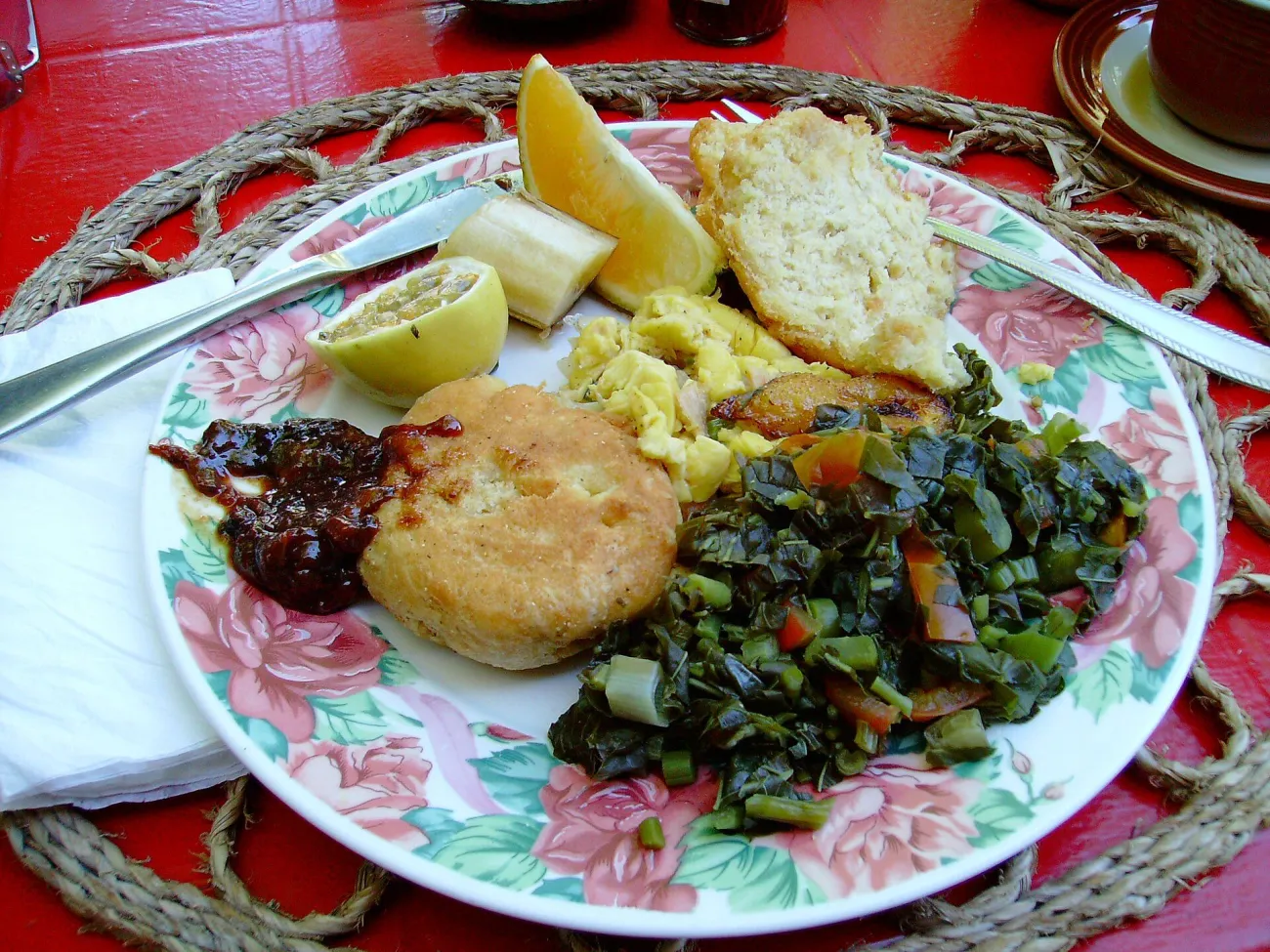
Photo: Jamaican breakfast ackee saltfish callaloo — Karolyn · CC BY 3.0 · Resized.

Ackee and saltfish is Jamaica’s national dish. Prepared ackee has a soft texture and is cooked with salted fish and seasonings; it is not scrambled egg, despite a superficial resemblance. At breakfast it may share a plate with callaloo, green banana, yam, dumpling or fried plantain. Ask what comes with the order so you do not buy a second helping of the same starch by mistake.
For a gentler first breakfast, share a plate and add fruit or bread. Saltfish can be pronounced in flavor and saltiness, while the accompaniments vary between kitchens. Vegetarian diners should ask for ackee cooked separately without fish and confirm how its accompaniments are prepared. A meat-free looking side may also have been cooked in stock.
Eat ackee as a properly prepared dish from a reputable kitchen. Do not pick unfamiliar fruit or try to reproduce the preparation from a brief travel description. This guide is about ordering meals, not identifying safe wild foods. A food allergy or individual medical restriction needs a clearer conversation with the kitchen than a general request for something local.
Patties, coco bread and spice bun
Patty and coco bread: a filling quick lunch
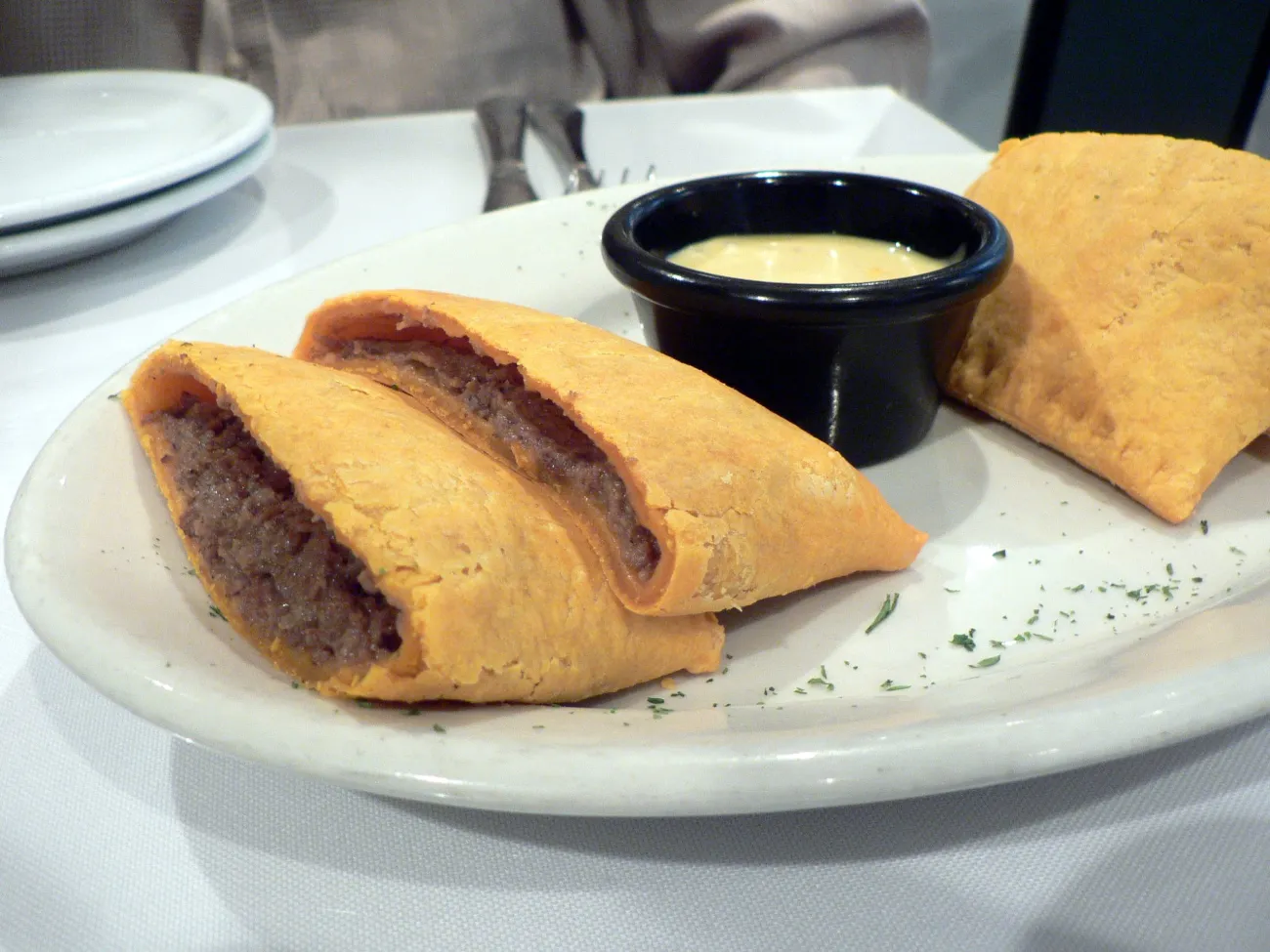
Photo: Beef patty (2053394161) — stu_spivack · CC BY-SA 2.0 · Resized.

A Jamaican patty is a filled pastry, often with a seasoned beef filling, although chicken, vegetable and other versions exist. Coco bread is the soft bread commonly paired with it. Buy one item first if you are unsure about appetite: adding bread changes a snack into a much more filling meal. Fillings sold under the same short name can differ in heat and ingredients.
In Kingston, the tourism board lists Devon House among its patty stops. Pair it with a planned heritage visit, checking the bakery’s current opening and the fillings available that day.
A patty stop works especially well on a day with a museum, road transfer or short shopping visit. Carry water and choose a comfortable place to eat away from the road. Hot filling can stay hot after the pastry feels comfortable to hold; give it time before the first bite.
For travelers with dietary restrictions, inspect the actual menu and ask about the pastry as well as the filling. Vegetable does not automatically mean vegan, and a display case is not a guarantee of separate handling. If the answer is uncertain, choose a meal the kitchen can explain clearly. A photograph of a label or ingredient list can make a complicated conversation easier.
Spice bun for a sweeter stop
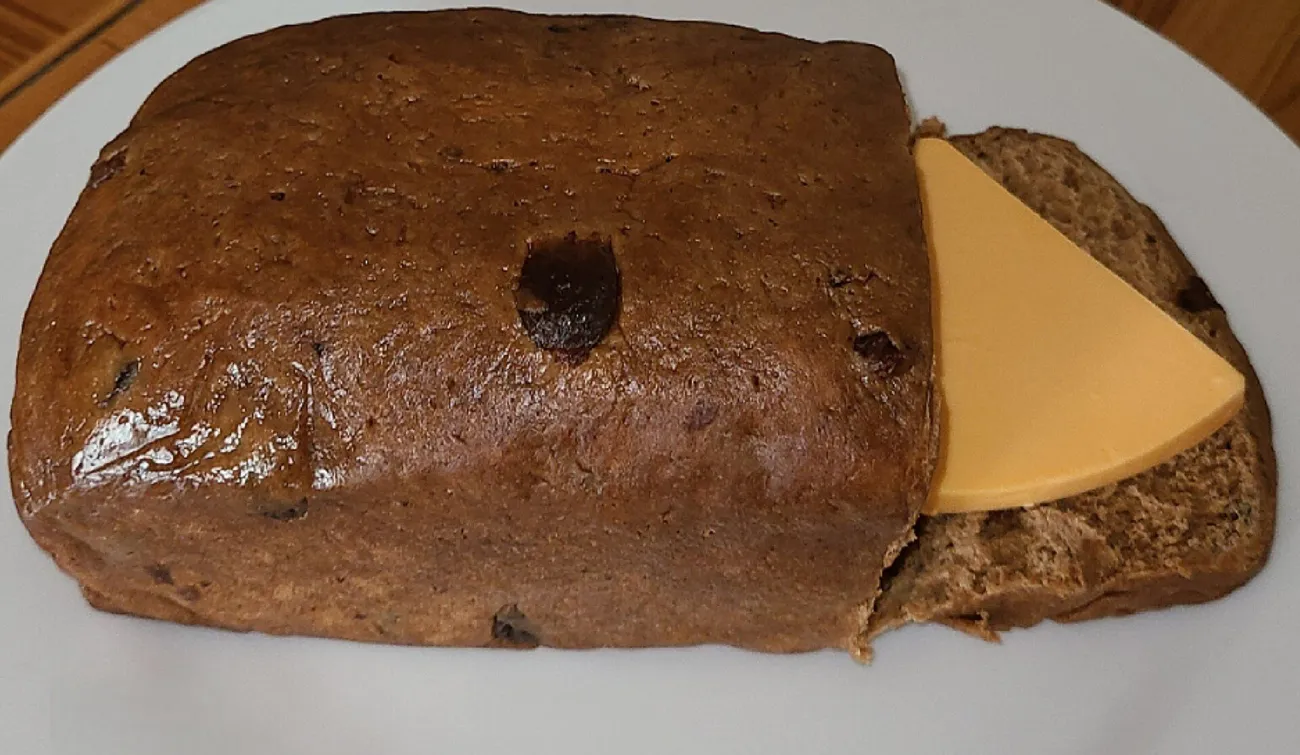
Photo: Xaymacan · CC BY-SA 4.0 · Resized.

For a sweeter snack, look for a slice of Jamaican spice bun or a locally made coconut sweet when available. Ask about the ingredients if nuts, dairy or other allergens matter to you. A small bakery stop can fit between nearby visits without needing another restaurant reservation.
Seafood, curry and slow-cooked dishes
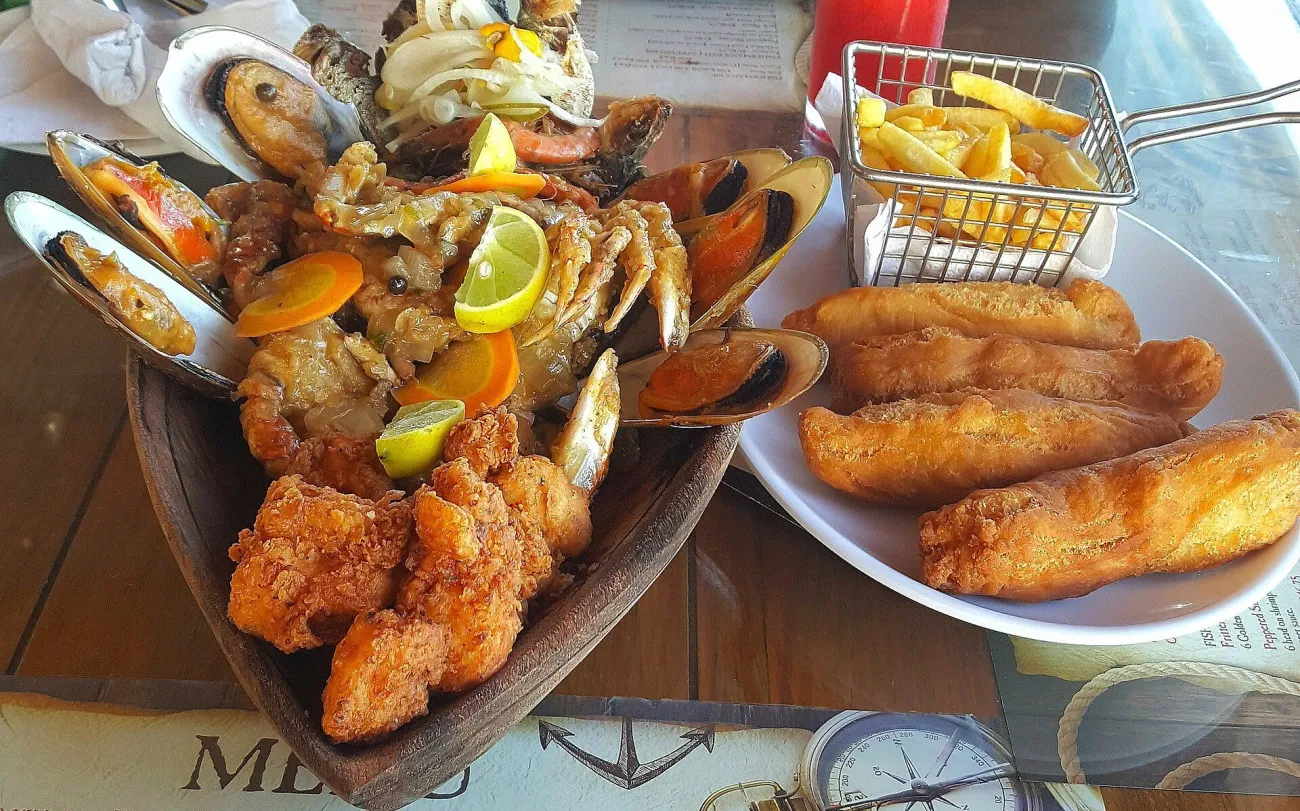
Photo: Xaymacan · CC BY-SA 4.0 · Resized.

Escovitch fish brings together cooked fish and a sharp vegetable dressing; curry goat, brown stew chicken and oxtail offer other ways to explore Jamaican cooking. A stew can be a better choice than a mixed sampler if you want to understand one dish properly. Rice and peas usually means rice cooked with beans.
Before ordering whole fish, ask which fish, what size and how the price is calculated. A price per weight is different from a fixed-price plate. Ask which sides are included and whether the fish is served whole with bones. For children, ask the kitchen for a manageable portion and check it carefully for bones.
Availability of lobster, conch and other seafood depends on the species, season and lawful supply. Do not assume that every item on an old online menu is currently available or appropriate to buy. Ask what the kitchen has today. Travelers who do not enjoy seafood still have plenty to explore through chicken dishes, vegetable preparations, soups and ground provisions.
Ital food and the questions dietary travelers should ask
Ital cooking is connected with Rastafarian food traditions, with an emphasis on natural ingredients; individual practice varies. It can be a rewarding starting point for plant-based meals, but the label alone does not settle every ingredient question. State exactly what you avoid: meat, fish, dairy, eggs, particular nuts or cross-contact. The more specific the restriction, the less useful a broad label becomes.
Build an order from vegetables, beans and ground provisions when the preparation is clear. Ask whether rice, soup or callaloo contains fish, meat stock or other ingredients that matter to you. All-inclusive hotels may offer more menu choice, yet a buffet still requires care around shared utensils. Contact accommodation before arrival if food arrangements are central to the booking.
Carry a short written explanation of a serious allergy and know where your medication is. A server’s willingness to help does not establish that a small kitchen can guarantee separation. If a place cannot answer confidently, choose another meal or another restaurant. Plan enough time for these decisions so hunger does not force an avoidable compromise.
Coffee, rum and drinks without alcohol
Blue Mountain coffee is a recognizable Jamaican purchase, but the wording on a package matters. A blend, coffee-flavored product and a clearly identified origin coffee are different purchases. JACRA explains its role in coffee licensing and the protected brands. Read the producer, origin and composition, and keep the receipt when buying a higher-priced bag.
Rum is another major part of Jamaican food culture. A distillery visit, a carefully made mixed drink and a bottle bought as a gift serve different interests. If tasting is part of the day, use a driver and leave the next road journey to someone else. Do not assume that a sweet cocktail is weak or that an all-inclusive package removes the need to pace drinks.
For an evening without alcohol, look for fresh juices, coconut water, ginger drinks or sorrel when available. Ask whether a particular punch contains rum and whether ice or drinking water comes from a source suitable for visitors. A hot afternoon is a good reason to order water alongside a sweet drink. Keep drinking water in the day’s routine alongside coffee and other drinks.
Build a good eating day without overbooking it
A practical food day might start with a Jamaican breakfast at your accommodation, a patty lunch between nearby stops and a more relaxed dinner. On another day, make a jerk lunch the main event and leave the evening lighter. This gives each meal enough attention without turning every day into a food challenge or a sequence of long taxi trips.
Confirm the currency, included sides, tax and service arrangements before ordering a larger meal. Menus in visitor areas may quote US dollars, Jamaican dollars or both. A bare dollar symbol needs clarification. Pay in the currency agreed, check the bill calmly and avoid assuming that tipping customs are identical at every restaurant or included in every package.
After a disrupted season, verify that the particular restaurant is operating, not merely that its hotel or town is open. Keep a backup meal near your accommodation for the first evening. For the broader budget use Travel Costs & Money; for a late return after dinner, use the transport and safety guides before choosing the venue.
Food & Drink questions
What Jamaican food should I try first?
Start with a jerk plate, ackee and saltfish breakfast, or a patty with coco bread. Choose according to your appetite and dietary needs; ask about pepper in the preparation and which sides are included.
Is all Jamaican food very spicy?
No. Dishes and kitchens vary. Pepper can be present before table sauce is added, so ask about the actual recipe rather than relying on the dish name or appearance.
Can vegetarians eat well in Jamaica?
Yes, with clear ingredient questions. Ital places, vegetable dishes, beans and ground provisions offer useful choices, but confirm stocks, fish, dairy and cross-contact where relevant.
Can I take Jamaican coffee or rum home?
Check your home country’s current customs and airline rules, buy properly labeled products and keep receipts. Duty-free purchase does not automatically remove arrival-country allowances or restrictions.
Last updated: