
Sign in
For Photos4Travel editors and team members.
Dominican Republic · Is the
Is the Dominican Republic Safe? Health & Useful Contacts
The useful question is not whether the Dominican Republic is simply “safe” or “unsafe”. A controlled resort entrance, a busy city street, an Atlantic swimming beach and a remote mountain road present different decisions. Choose your accommodation and transport carefully, keep a way to reach help, and adjust plans when conditions change.
On this page · 8 sections ShowHide
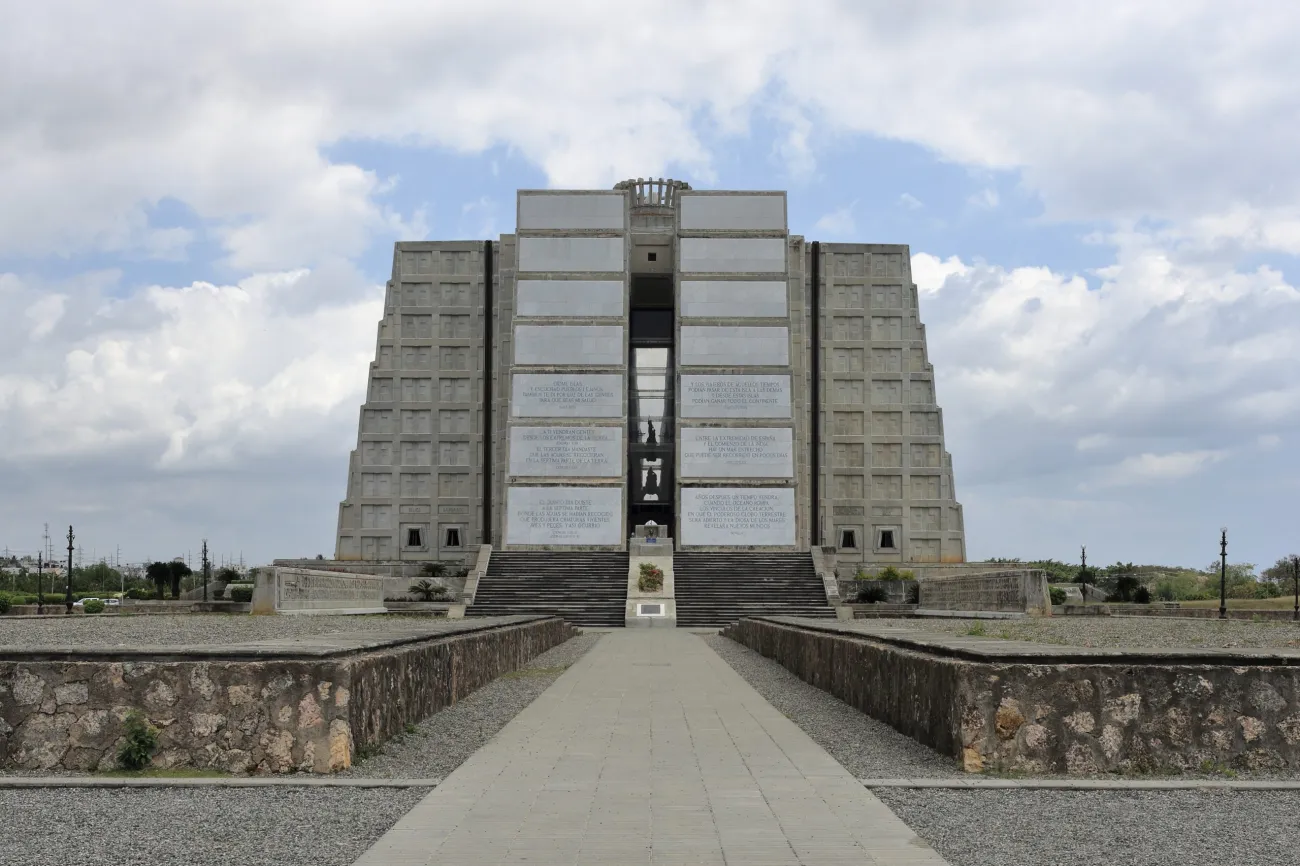
Photo: Martin Falbisoner · Santo Domingo - Faro a Colon.JPG · CC BY-SA 4.0.
Tourism infrastructure and security can make a visit easier, but they do not remove crime, traffic or medical risks. This guide focuses on the situations a visitor can prepare for: an evening out, a road transfer, a day on the water, a sudden illness and the first steps after losing something important. It also brings the useful contacts together so you know which organisation to approach.
Crime awareness in cities and tourism areas
The US State Department’s Dominican Republic advice identifies crime as a concern, including violent crime. A resort’s private security should not be read as a promise about the surrounding streets or an unfamiliar place you visit later. Avoid displaying jewellery, a large amount of cash or an expensive phone while working out directions.
In Santo Domingo or Santiago, decide how you will get back before the evening begins. Ask your accommodation about the specific walking route rather than relying on a neighbourhood’s reputation alone. A lively square can be close to a quiet street with very different conditions after businesses close. If you change venue, reassess the return journey rather than extending the original walking plan indefinitely.
Keep bags close in queues and transport terminals, and separate a spare card from everyday cash. Do not leave valuables on a beach towel while swimming. If you are robbed, do not resist; move somewhere secure, seek local help and block stolen cards or devices when it is safe to do so. A description of a suspect is useful to police, but pursuing someone can create another risk.
Transfers and road safety
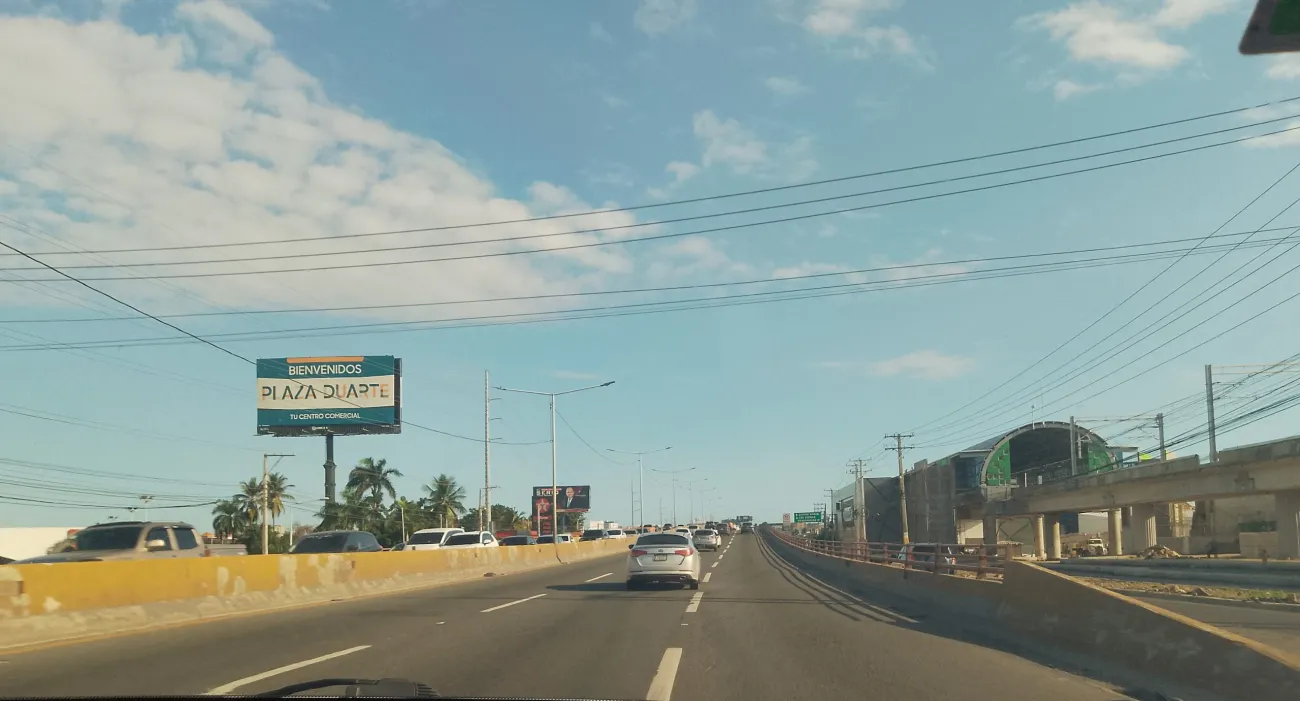
Photo: Markocortesa2 · Elevado de Manoguayabo Autopista Duarte.jpg · CC0 1.0.
The UK government’s safety guidance highlights serious road risks and the hazards of driving outside main cities after dark. Make the final approach part of your booking decision. A cheaper room reached by an unlit road can create a more difficult evening return than a well-located room with a clear entrance.
For a prearranged transfer, establish the driver or company name, meeting point, vehicle size and total price. Check that the vehicle can carry both passengers and luggage without blocking seating. Families should reserve an appropriate child seat rather than assuming one will be waiting. A vehicle advertised as accessible needs specific confirmation about steps, wheelchair space and the passenger’s transfer needs.
Rental-car terms deserve a separate check: driver age, accepted licence, deposit, excess, exclusions, assistance and any restrictions on roads or vehicle use. A card deposit is money you need available even when it is not ultimately spent. Do not let an attractive daily rate obscure the total contract or make a night drive necessary immediately after a long flight.
Swimming, boats and outdoor activities
Beach appearance does not establish swimming conditions. Lifeguards and rescue equipment may be absent, and conditions can change between adjacent beaches. Read local warnings, ask staff about the particular swimming area and leave the water when instructed. A calm photograph is not evidence that the sea will be calm on your day.
For a boat trip, ask about the operator, weather cancellation arrangements, lifejackets and the boarding method. Tell the organiser about mobility needs before paying. A short itinerary description may hide a step down to a boat, a beach landing or a stretch through shallow water. Check whether the trip is suitable for every person in your party rather than treating “family-friendly” as a technical access specification.
After heavy rain, reconsider rivers, waterfalls and trails even if sunshine has returned to the coast. Water can rise upstream while the immediate location looks dry. Follow closures and guide instructions; changing the day’s plan is more sensible than pressing on because a transfer has already been paid. For remote outings, tell your accommodation where you are going and keep enough battery for the return.
Health preparation and getting treatment
Review the CDC’s destination guidance with a travel-health professional before departure. Recommendations depend on the route and activities: malaria advice includes some resort areas, while mosquito precautions also address dengue and Zika. Do not conclude that staying in a resort removes the need for a medical discussion. Vaccination entry requirements are a separate question from recommended protection.
Before departure, check the route-specific yellow-fever document checklist in Visa & Entry. Give the clinician, airline and Dominican mission your recent countries and transit lengths, especially when Brazil or Venezuela forms part of the journey.
Use safe drinking water and sensible food hygiene, and protect yourself from sun and insects. Carry prescribed medicines in suitable packaging with supporting documentation where needed. Ask your clinician or pharmacist how heat and travel affect storage. If a medicine is essential, the presence of a pharmacy nearby does not guarantee the same product or formulation will be available.
The FCDO health guidance describes limited public facilities and potentially expensive private treatment. Arrange insurance appropriate to the activities you plan, and know how to contact its assistance service. A hospital may ask for payment or a guarantee; an insurance policy and immediate access to funds solve different problems. Keep emergency numbers and policy details available to a travelling companion.
Seek urgent medical assessment after a potentially serious animal bite or scratch, and tell the clinician what happened. Do not wait for the trip to finish because a wound looks small. Equally, a fever during or after travel deserves an accurate account of where you have been. This guide helps you prepare; treatment decisions belong to qualified medical staff.
Find medical facilities near your base
Before travelling, open the FCDO’s direct medical-facilities directory and identify options near your accommodation. The directory was updated on 27 January 2026; the examples below were checked against it on 18 November. The FCDO provides the list for information and does not endorse the providers.
Swipe or use the arrow keys to read the full comparison.
| Base | Directory example | Area listed |
|---|---|---|
| Santo Domingo | CEDIMAT | Plaza de la Salud, Ensanche La Fe |
| Bávaro / Punta Cana | Centro Médico Puntacana | Avenida España 1, Bávaro |
| Las Terrenas | Clínica Especializada Internacional Las Terrenas | Fabio Abreu, Villa de Las Flores, La Ceiba |
Save the chosen provider’s current telephone, address and location with your policy details. Ask your insurer which facilities and payment or pre-authorisation arrangements apply, and verify the service needed directly with the facility. A directory entry does not establish present capacity, treatment suitability or insurance acceptance. Keep the emergency instructions below available as well.
Useful contacts: which service to call
For an immediate emergency, start with 911 and give a precise location, the nature of the emergency and a callback number. Coverage and response arrangements vary. Have your hotel or host help contact the nearest appropriate service if a call cannot be connected, particularly in a remote area. Do not assume that a different international emergency number will route correctly.
Swipe or use the arrow keys to read all contact details.
| Need | Contact | What to have ready |
|---|---|---|
| Immediate emergency | 911 | Location, landmark, nature of incident and callback number |
| Tourist-police assistance | POLITUR: +1 809 222 2026; FCDO also lists +1 809 200 3500 | Town, accommodation and incident details |
| Immigration and extension enquiries | DGM: +1 809 508 2555, extension 2022 | Passport nationality, entry record and proposed departure |
| US consular assistance | US Embassy Santo Domingo: +1 809 567 7775 | Citizenship, location and local report details where applicable |
| Medical assistance or claim approval | Your insurer’s emergency assistance number | Policy number, hospital contact and proposed treatment |
The government’s POLITUR service page describes its tourist-police app and station information. Older tourism material may use the name CESTUR. Use current institutional contacts rather than treating an old name or office opening time as an emergency-response guarantee. For another nationality’s consular assistance, save your own embassy’s current contact before travelling.
If documents or belongings go missing
Move to a secure place and make a short record of what happened: where, when, the items involved and any transaction references. Ask police or tourist police how to obtain the report you need. Your insurer or embassy may require a report reference rather than a verbal account. Keep receipts for necessary replacement travel or accommodation, without assuming every expense will be reimbursed.
A lost passport can affect departure as well as arrival. Contact the relevant embassy or consulate and your airline; an emergency travel document can have route-specific restrictions. Do not buy a new non-refundable connection before checking which routes accept it. A copy of your passport helps establish the details but is not a substitute travel document.
Dominican Republic safety FAQ
Is staying in a resort enough to avoid all risks?
No. Controlled access helps with some situations, but road journeys, swimming, medical needs and activities outside the property still require planning.
What emergency number should I save?
Save 911 and POLITUR’s contacts, plus your insurer and accommodation. Do not assume uniform coverage or that a foreign emergency number always redirects correctly.
Is tap water safe to drink?
Use sealed bottled water or drinking water from a reliable purification source. Ask the accommodation how its drinking-water supply is provided.
Should I drive long distances after dark?
Plan intercity journeys in daylight where possible. Poor lighting, road hazards and unfamiliar approaches make a late arrival more demanding.
Do resorts remove the need for mosquito protection?
No. Review destination-specific health advice and your route with a qualified professional, and use suitable protection against bites.