
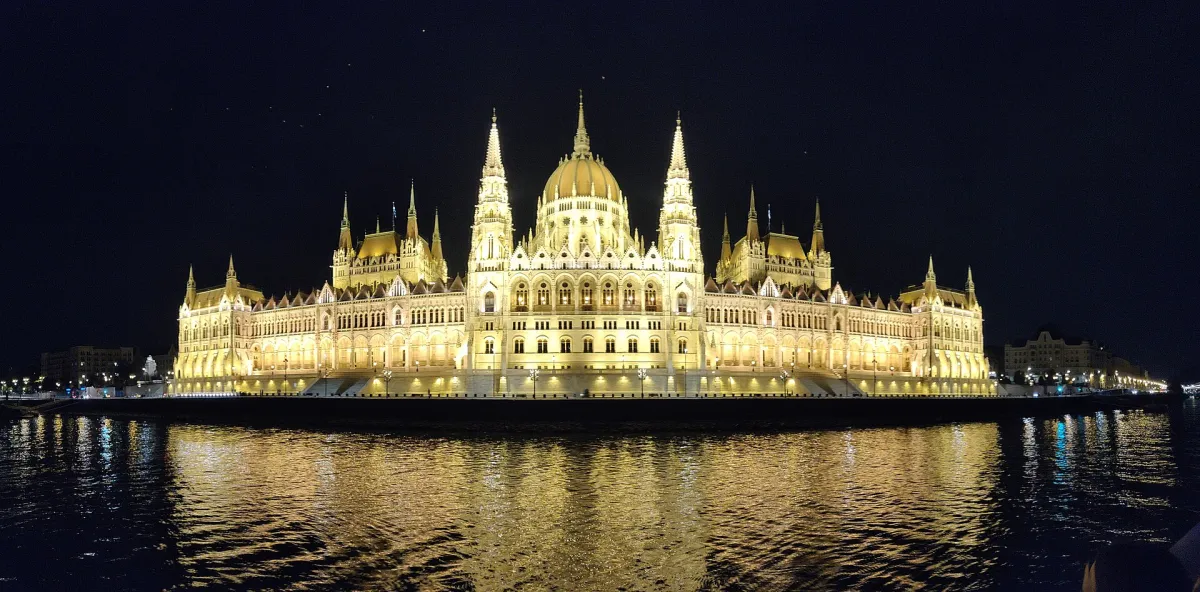
Where are the best photo spots in Budapest?
For a first visit, prioritise three subjects: Parliament from the Buda riverbank near Batthyány tér, Fisherman's Bastion for architecture and elevated views, and Chain Bridge for the relationship between the two banks. Use early daylight for a quieter Castle District visit and reserve an evening for the river. The official tourism board's photo guide also identifies these locations.
One good daylight walk and one well-chosen evening stop are easier to enjoy than a race between every viewpoint. The photographs below show individual compositions, including some older scenes. Their captions identify the source; today's signs, weather and access determine the photograph you can make.
Compare Budapest's main photography locations
| Photo spot | What to photograph | Suggested light | Pair it with |
|---|---|---|---|
| Parliament from Buda | Full riverside façade and reflection | Late daylight or blue hour | Buda riverbank walk |
| Fisherman's Bastion | Arcades, towers and the Pest skyline | Early daylight | Castle District |
| Chain Bridge | Suspension lines and a chosen skyline | Soft daylight or blue hour | Clark Ádám tér |
| Buda Castle | Palace silhouette above the river | Daylight or evening | Pest promenade for the distant view |
| Castle Funicular | Cars and converging rails | Daylight while operating | Castle Hill approach |
| Central Market Hall | Ironwork, aisles and market details | During active trading | Fővám tér and Liberty Bridge |
| Heroes' Square area | Monument, open square and museum façades | Soft or overcast daylight | City Park |
| Liberty Square | Memorials within their urban setting | Daylight | Pest-side architecture walk |
| National Museum | Columns, steps and garden setting | Daylight | Kálvin tér and the market |
1. Parliament: daylight detail and blue-hour reflections
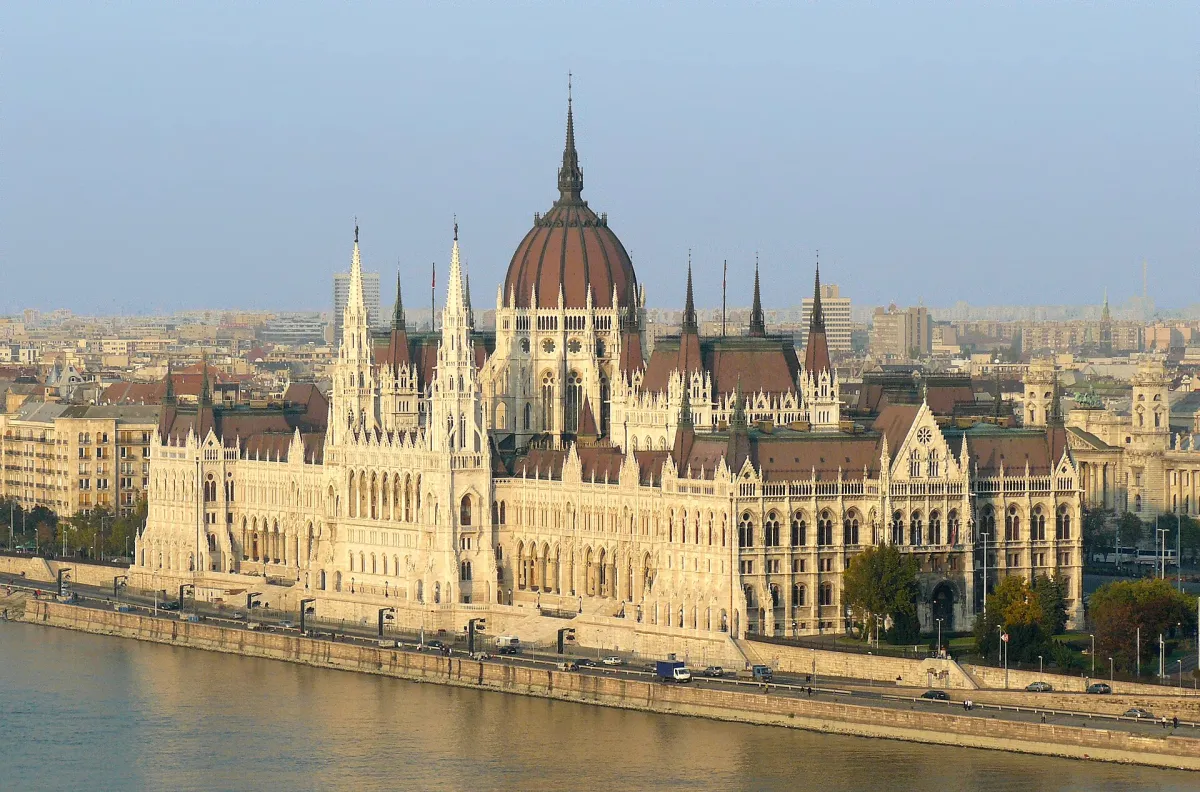
Where to stand: begin with the public Buda riverbank around Batthyány tér, looking across the Danube towards Pest. Move along the permitted pavement until the dome and the building's full width sit comfortably in the frame. The waterfront immediately beside Parliament gives architectural details, but it cannot produce the same straight-on view of the entire façade.
In daylight, leave breathing room above the dome and check that the horizon is level. A moderate focal length can simplify the view without forcing an exaggerated foreground. At blue hour, compare the bright stone with the remaining sky before lengthening the exposure. A boat may interrupt a reflection or add movement; choose which result you want.
The night photograph at the top of this guide illustrates the contrast between illumination and dark water. It does not establish a lighting timetable. Arrive while there is still daylight to find a safe position and an alternative frame, rather than relying on access to a lower embankment. An interior visit is a separate booking decision covered in Budapest's attractions guide.
2. Fisherman's Bastion: choose an arcade or a panorama
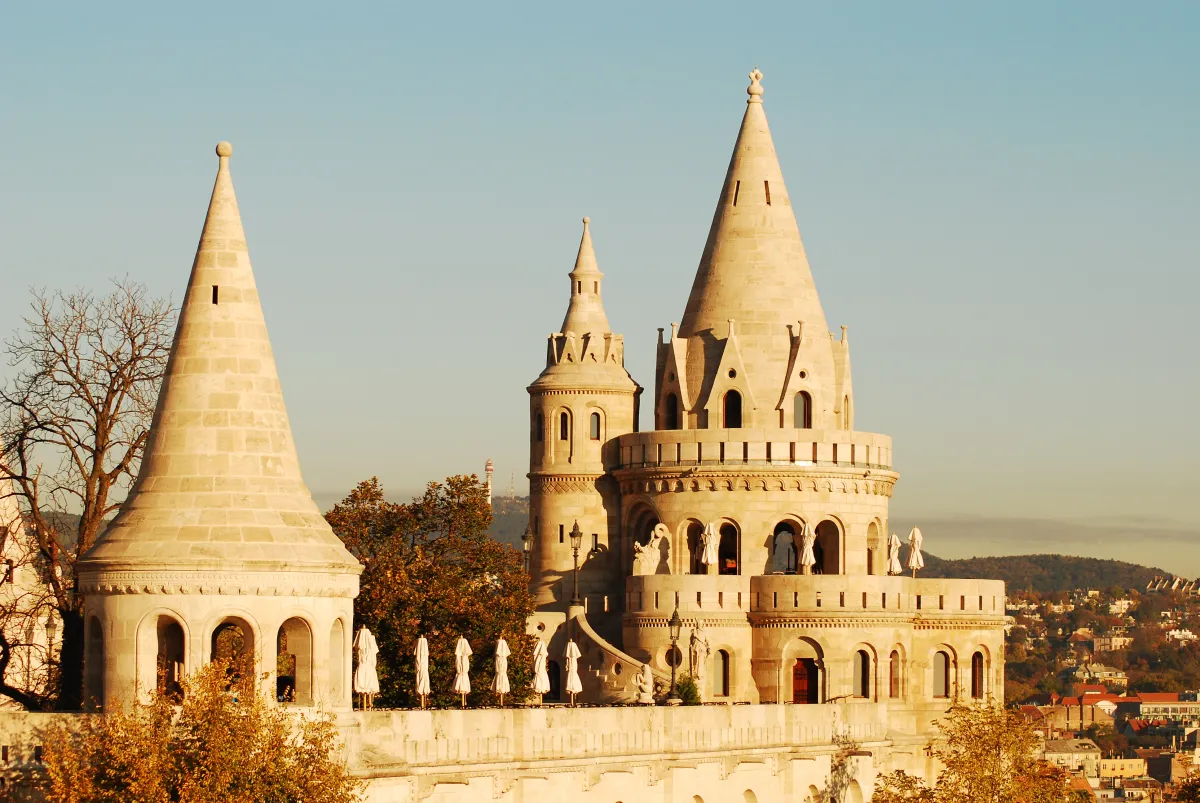
The pale towers and repeated arches offer two different photographs: an architectural study of the terrace, or a frame through an opening towards the river and Parliament. Decide on one before adding a person to the scene. A very wide lens can include everything while making the towers lean; step back where space allows and keep the camera reasonably level.
An early visit gives you more time to work with changing light, although an empty terrace is never guaranteed. Leave the passage clear while composing through an arch. Upper viewpoints, lower terraces and the neighbouring church have different access arrangements; check the current notices before planning around a specific opening.
The photograph here was taken in October 2010 and records the architecture in warm daylight. For a workable visit, plan the ascent as carefully as the frame. The hill approach, steps and cobbles matter when carrying equipment or travelling with someone who needs an easier route.
3. Chain Bridge: select the background before crossing
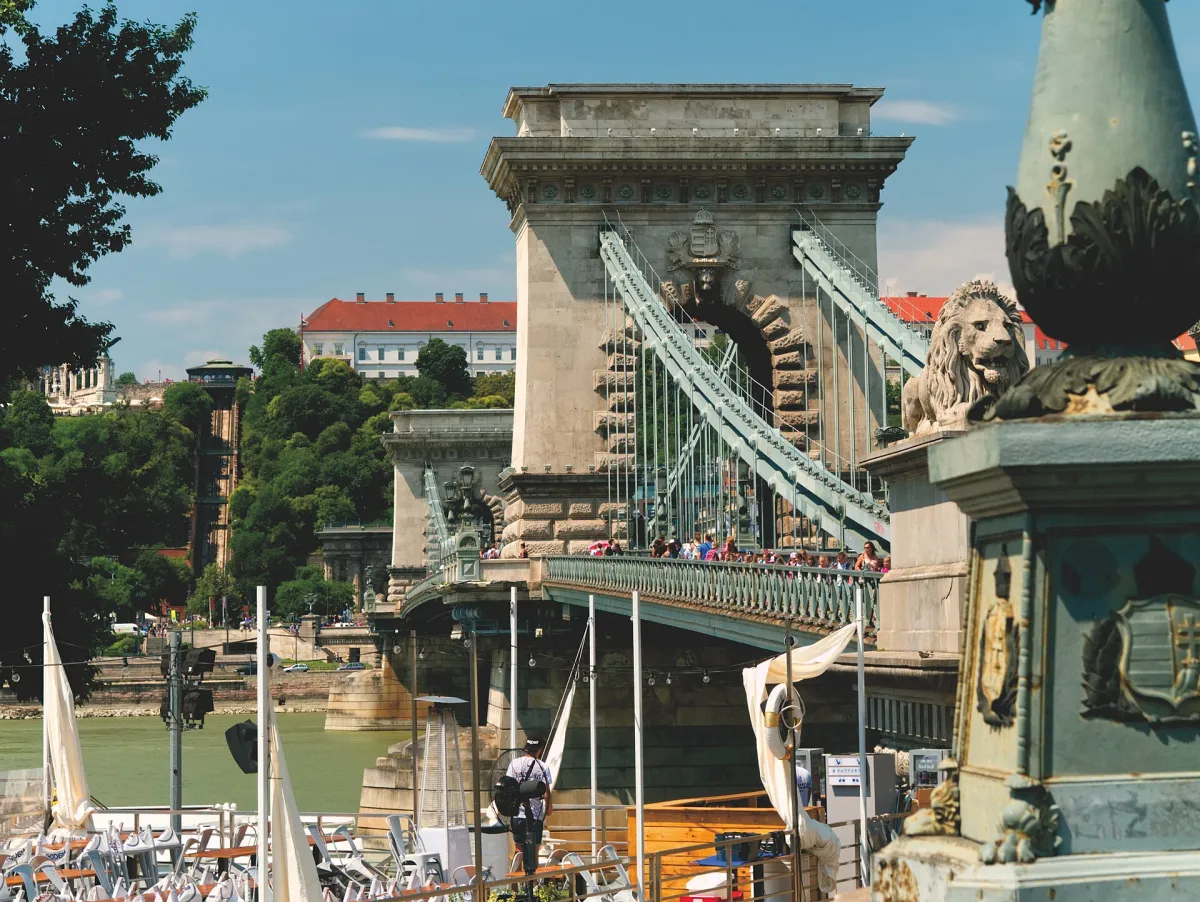
From the Pest side, look for a composition that connects the bridge with Castle Hill. From the Buda side, use the span and its structural lines to lead towards Pest. A small change of position can separate a stone tower from a building behind it; look at those overlaps before reaching for a wider lens.
Photograph lions, chains and repeated lamps as individual subjects when the full skyline is hazy. People can provide scale, but wait for a clear moment from the pavement rather than stopping the flow of pedestrians. The bridge still carries permitted vehicles and cycles: its restrictions on private cars do not make the roadway a photography platform. See the official Chain Bridge overview.
The image records the bridge before its recent restoration. Use it for composition ideas while following today's pedestrian signs and barriers. A handheld photograph is often the simplest choice on a busy crossing.
4. Buda Castle: photograph the hill and the palace separately
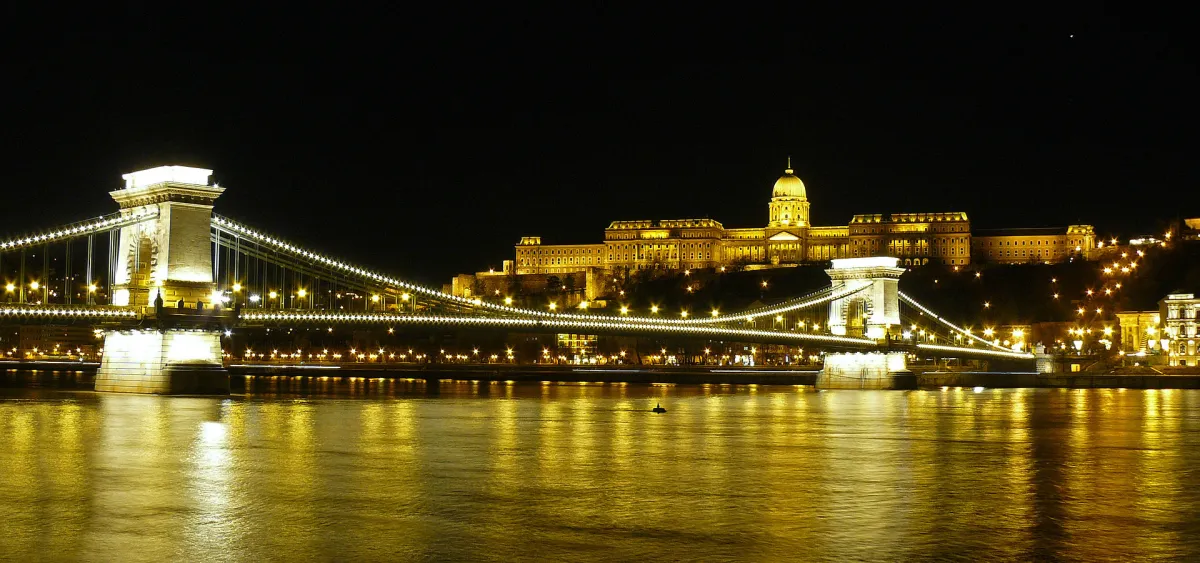
A photograph from within the Castle District tells a different story from a palace skyline made across the river. On the hill, concentrate on façades, courtyards and street layers. For the broad evening silhouette, choose a public Pest-side promenade position where the bridge and palace remain visually distinct.
At dusk, compare the exposure needed for bright bridge details with the darker roofline. Keep some sky if it helps describe the palace; a fully dark background produces a more graphic silhouette. Wind and passing boats change the reflections, so an exact copy of another photographer's frame is unlikely.
This night image dates to 2009. Its lighting and surroundings are historical context, and restoration can change present-day views or paths. Leave the hill visit and the opposite-bank evening photograph as separate blocks if combining them would mean rushing between banks.
5. Buda Castle Funicular: wait for the cars
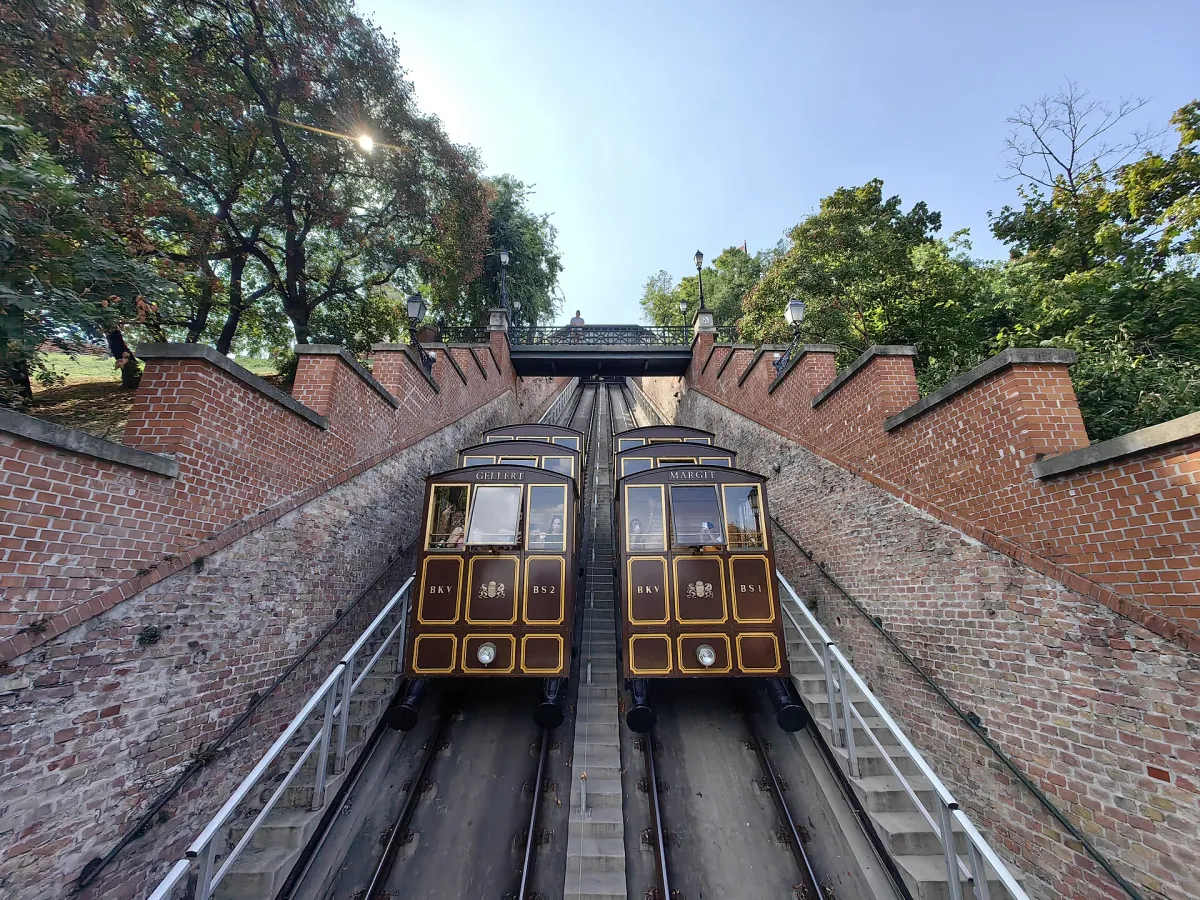
The Sikló at Clark Ádám tér is a compact subject: the paired cars, steep incline and converging rails are more useful than a crowded frame containing every nearby landmark. Compose from a permitted public viewpoint outside the track area and wait for the vehicles to enter the part of the frame you have chosen.
Use a shutter speed suited to whether you want the car sharp or moving. If shooting through a window, change your angle to reduce reflections. Keep clear of gates and boarding queues. Buying a ride and photographing the exterior are separate choices.
Check BKV's funicular notices before building the route around moving cars: maintenance and holiday arrangements can interrupt operation. If it is closed, the rails can still be an architectural subject where publicly accessible, but plan another way up or down the hill.
6. Central Market Hall: roof structure and working aisles
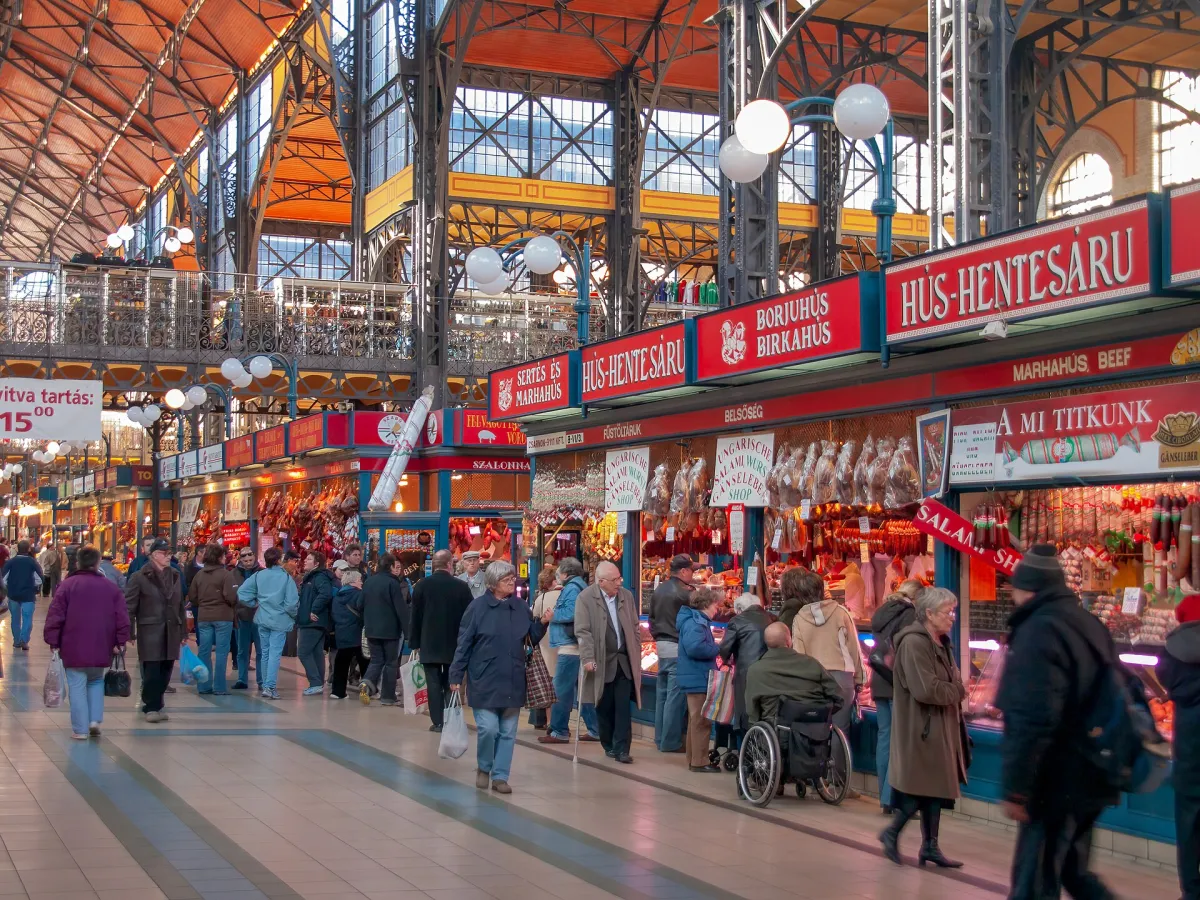
The Great Market Hall stands by Fővám tér on the Pest side of Liberty Bridge. Its interior rewards a broad view of the iron roof structure, followed by smaller studies of signs, produce and stall details. The official market overview explains the building and its setting.
Let the aisle create depth without standing in the middle of its busiest section. Before photographing a trader or a stall closely, ask. Check white balance where daylight and lamps mix, and use a shutter speed that keeps moving shoppers sharp if they are important to the image.
Choose an active trading period after checking the current opening day. Upper-level viewpoints may involve a different access route; ask staff rather than assuming every balcony is available. Pair the hall with the nearby river, or continue towards the National Museum. For meal choices, use the Budapest food and drink guide.
7. Heroes' Square and the Museum of Fine Arts
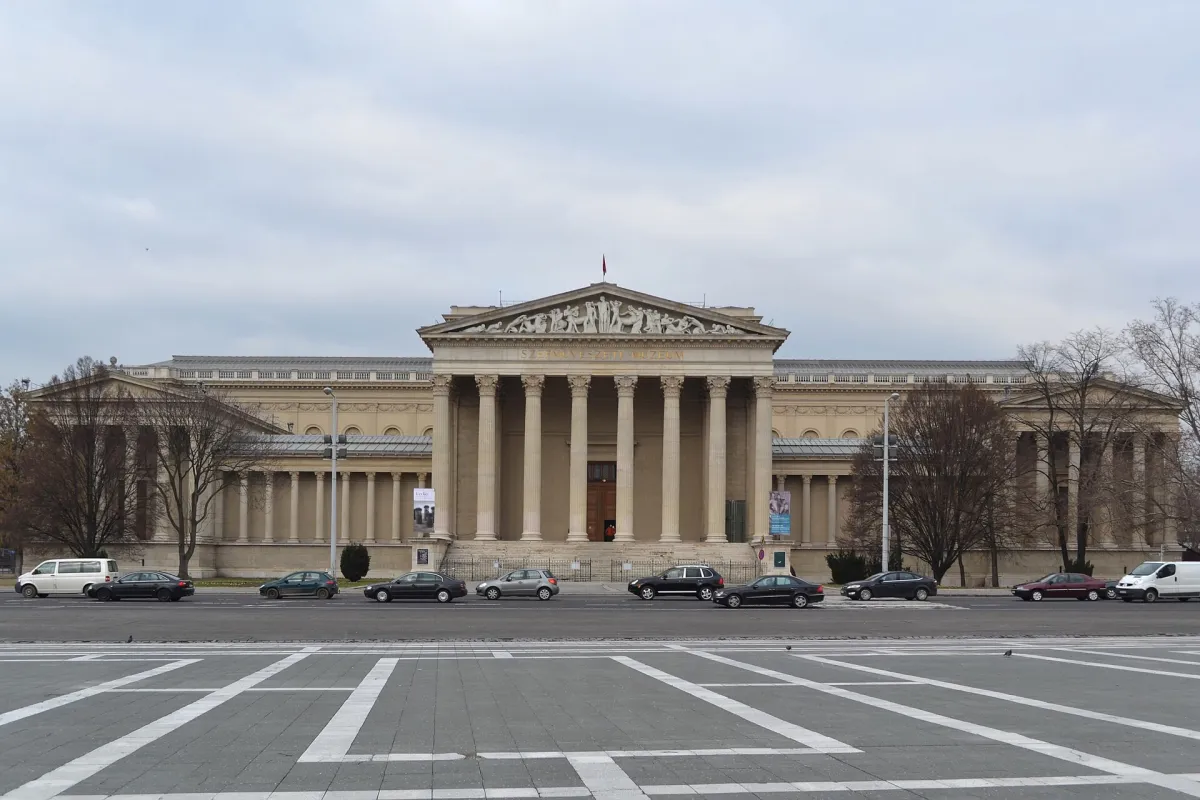
Keep the square's Millennium Monument and the Museum of Fine Arts distinct in your photographs and captions. The image above shows the museum façade beside Heroes' Square. A broad square composition needs the monument and open space; a museum study is about columns, steps and proportion.
For the façade, keep the camera level and allow the repeated columns to carry the composition. Soft light or an overcast sky can make the stone easier to expose evenly. Choose a safe pavement position and wait for traffic gaps from there.
This area makes a separate City Park photo outing, rather than a quick detour between two riverfront appointments. If the weather turns, an art visit is an option, with its own admission and photography conditions. Check the museum's rules before taking equipment into the galleries.
8. Lipótváros and Liberty Square: preserve the context
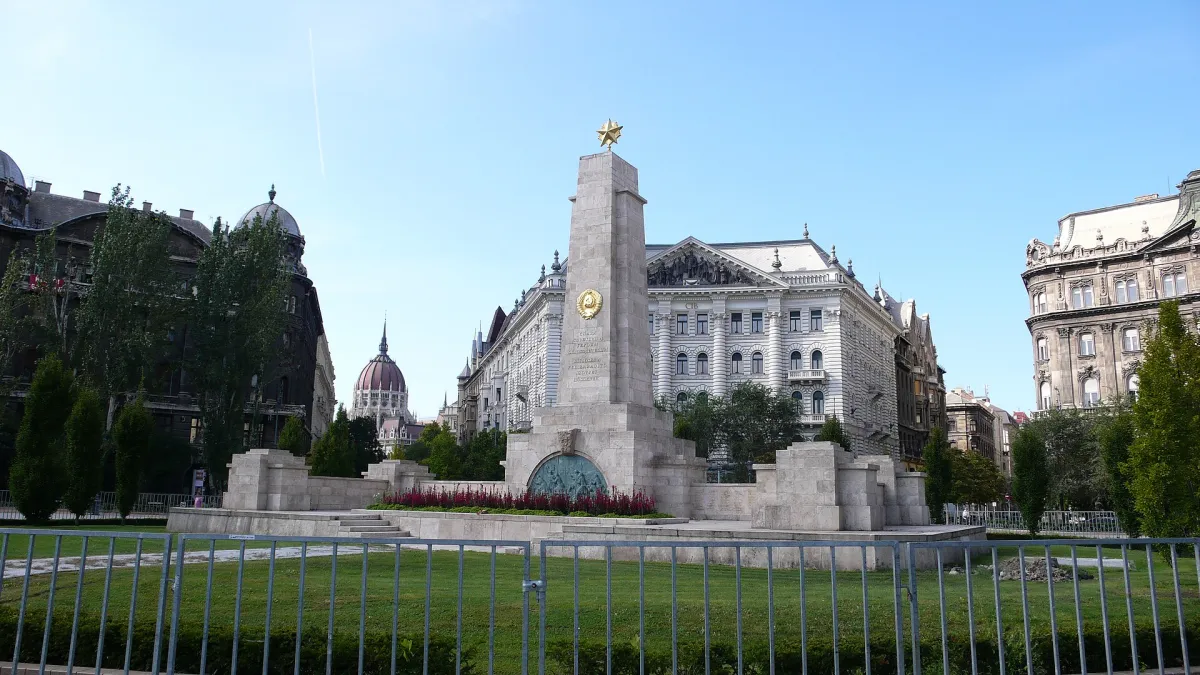
Szabadság tér, or Liberty Square, adds urban layers to a Pest-side architecture walk. Work with the relationship between memorials, trees and surrounding façades. A tighter frame can simplify an obelisk; a wider view explains where it stands.
The displayed photograph records the Soviet war memorial in 2008. Name that subject accurately rather than labelling it as a general view of all Lipótváros. Different memorials occupy the square, and the photograph does not establish today's barriers, planting or security arrangements.
Keep the setting respectful and let people move through without becoming involuntary subjects. Pair the square with the Parliament neighbourhood on a daylight Pest walk; reserve the full Parliament façade across the water for a Buda-side stop.
9. Hungarian National Museum: columns, garden and event context
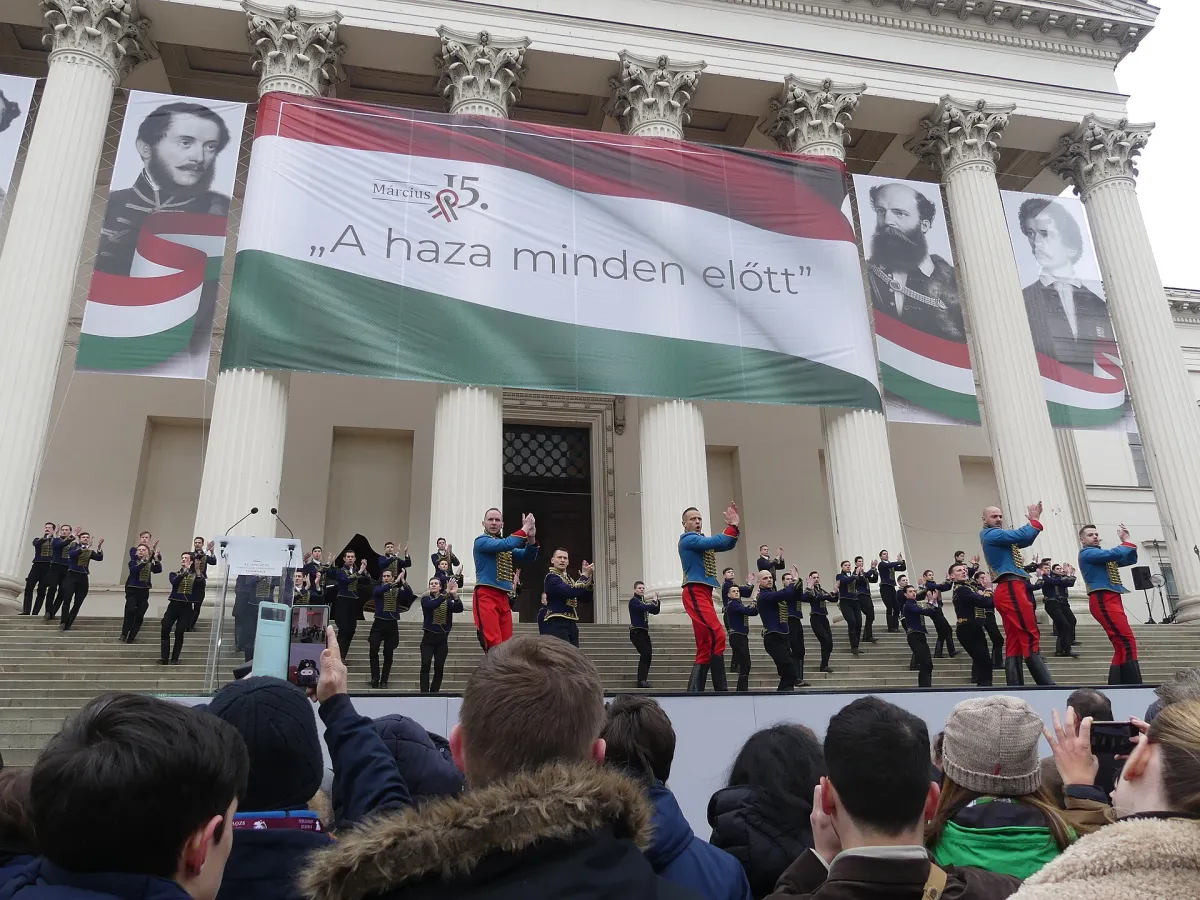
The museum's portico, broad steps and garden setting suit an architectural study. Start with a wide frame that explains the entrance, then simplify the columns or stone details. Avoid blocking the doorway while waiting for a clear foreground.
This photograph shows a national-holiday event in 2023. Banners, crowds and staging belong to that occasion; they are not a promise of the everyday view. If an event is happening during your visit, record its confirmed date and meaning in your caption.
Inside, the National Museum's house rules permit personal photography with equipment restrictions: flash, tripods and selfie sticks are prohibited, and photography is forbidden in the Coronation Mantle exhibition room. Commercial use requires permission. Follow any additional notices in the exhibition you enter.
Three manageable Budapest photo walks
The following time allowances are editorial estimates for an unhurried photo outing, including stops. They exclude meals, long queues and museum interiors. They are not measured walking times. Check the Budapest map and neighbourhood guide and BKK journey information for your chosen start and return.
Castle District and the Buda riverbank: allow roughly 3–4 hours
Begin around Fisherman's Bastion, continue through the Castle District towards the palace area, then descend towards Clark Ádám tér and the funicular. Finish with a permitted riverside route towards the Parliament view near Batthyány tér. The descent and subsequent river walk need time. Use transport for a section if the hills or equipment make the full walk uncomfortable.
Pest architecture and market details: allow roughly 3–4 hours
Start around Parliament and Liberty Square for street-level architecture, then use public transport or a longer city walk to reach the National Museum and Central Market Hall area. Finish at Fővám tér or the nearby river. This is a sequence of neighbourhood stops, not a continuous short promenade; plan the transfer instead of promising yourself every façade on foot.
Heroes' Square and the City Park edge: allow roughly 1.5–2.5 hours
Give the Millennium Monument and Museum of Fine Arts separate compositions, then continue into City Park as time and weather allow. Choose a museum interior or a longer park walk as an addition. Keep this outing separate from a fixed blue-hour river appointment unless you have allowed the journey between them.
Best light, seasons and simple camera choices
Early daylight: prioritise a hill viewpoint or the arcade geometry at Fisherman's Bastion. Check the actual sunrise for your date, then allow time to reach the location. Arriving early improves your choice of position; it does not guarantee unrestricted access or solitude.
Late daylight and blue hour: select one riverbank and arrive before the strongest light. Blue hour is brief and varies with season and cloud. Keep highlights in the illuminated stone, and review a test frame before changing exposure for the water.
Overcast or wet weather: photograph architectural details, repeated forms or the market interior when open. Reflections can be interesting, but wet steps and windy riverbanks call for a shorter, simpler route. The best time to visit Budapest guide covers seasonal planning.
A phone's main camera is enough for a considered daylight composition. Clean the lens, level the horizon and move your feet before using digital zoom. At night, brace the phone or use a permitted support without obstructing a path. A dedicated camera gives more exposure control, but neither a long lens nor a tripod solves a poor viewpoint.
Photography etiquette and access
Leave pavements, cycle routes, entrances and arcade passages usable. Ask before making an identifiable person the subject, particularly at market stalls and memorials. Museum, church and private-property rules differ; permission to enter does not automatically permit every kind of equipment or commercial shoot.
A photograph from an elevated or riverside position does not prove that the same spot is accessible today. Follow current barriers and staff instructions. Plan your return before the light fades, and use the responsible travel guide for considerate choices around the city.
Frequently asked questions about Budapest photography
Where can I photograph the whole Parliament building?
Start on the Buda riverbank near Batthyány tér and look across the Danube. Adjust your position along permitted public routes to fit the façade and dome. The Pest-side pavement beside Parliament is useful for close architectural details.
Is sunrise or sunset better for Fisherman's Bastion?
Early daylight is a useful first choice for an architectural walk and views towards Pest. Sunset can suit the colour of the stone or a different composition. Choose according to the frame you want, weather and accessible terrace areas.
Where should I go for Budapest night photos?
Choose the Buda side for Parliament across the river, or a Pest-side promenade position for Buda Castle and the bridge skyline. Arrive in daylight to inspect the position and return route. Illumination, weather and water conditions can change.
Do I need to pay to photograph Budapest's landmarks?
A public exterior viewpoint and a ticketed terrace, museum or building interior are different visits. Check access to the specific place you want to stand. A paid tour is not necessary for every skyline photograph.
Can I use a tripod everywhere?
No. Institutions and private venues set their own rules, and equipment must not block public paths. The National Museum prohibits tripods in its exhibition areas. Ask the relevant venue before travelling with equipment you cannot comfortably carry or store.
Can I cover the main photo spots in one day?
You can combine a Castle District outing with one evening river view. Adding the market, National Museum and Heroes' Square makes a much busier day. Choose the main subjects first and allow transfers, rather than treating the entire list as a single walking loop.
Are these photographs from a recent Photos4Travel visit?
The images are credited licensed photographs, not a claim of a recent first-hand visit. Captions identify their sources and relevant historical context. Current practical guidance is checked separately against tourism and operator information.
Sources and planning updates
Practical source checks: 25 November 2026. Recheck operating notices, terrace access and venue photography rules for your travel date. Light suggestions and route allowances are editorial planning advice.


