


Sign in
For Photos4Travel editors and team members.
Aruba · Travel Essentials
Aruba Travel Essentials: Packing, Arrival & Useful Contacts
A smooth Aruba trip depends on a few practical arrangements made before you leave: the right entry documents, a usable phone, accommodation that meets your needs and a clear first journey from the airport. Once those are settled, keep the days flexible enough for sea conditions, heat and the group's energy. A compact island does not remove the need for a sensible plan.
On this page · 10 sections ShowHide
This page is your travel-essentials checklist, from packing and arrival to accessibility, useful contacts and changes of plan. Currency, card payments, whole-group trip budgets and longer-stay costs have their own detailed Aruba money and costs guide. Use that for the financial decisions rather than trying to reconstruct a budget from scattered tips.
Keep the documents you will actually need
Check the requirements for your nationality, travel purpose and route before paying nonrefundable balances. Aruba's online ED Card is an arrival registration, separate from a visa. Use the official ED Card platform and follow the current timing described in the entry guide. Each traveler needs the appropriate registration and documents, including children.
Keep the approval, accommodation address, onward or return booking and insurance details available offline. Store a secure backup separately from the originals. If two adults are traveling, make sure both can find the essential information; every confirmation on one phone creates an avoidable problem if that phone is lost or flat. Bring any medication or equipment documentation required for your circumstances rather than assuming a prescription label answers every border question.
Pack for sun, a dry interior and rocky approaches
Build the bag around the actual outings: beach clothing for the hotel coast, suitable shoes for walking and a light cover for strong sun. A hat, refillable bottle and a small day bag are useful beyond the beach. Keep the bottle, essential medication and the day's documents where you can reach them on arrival instead of burying them in checked luggage.
For a cave, trail or rocky water entry, check the operator's footwear and equipment requirements before leaving your accommodation. Sandals that work on a resort path may be unsuitable elsewhere. Protect a phone or camera from spray and sand without assuming a basic pouch makes it waterproof. The adventure guide explains the different access demands; the electricity reference explains plug and voltage checks for chargers.
Prepare for the person, not an imaginary average traveler
Read the CDC's Aruba traveler guidance and discuss relevant vaccines, medication and itinerary-specific needs with your clinician in advance. The CDC recommends allowing at least a month where possible. Your route before Aruba can matter to entry-health requirements, so include transit and earlier destinations in that discussion.
For a chronic condition or mobility requirement, check the practical arrangements before booking. Ask your insurer how to obtain help and what documents or authorizations may be needed. Carry essential medication and a clear list of names and doses. The dedicated health and safety guide covers local care and risks; this checklist helps you put the necessary information within reach.
Choose a phone plan and keep an offline backup
Compare your home provider's roaming with a local or travel data plan using the number of days, data allowance, hotspot needs and device compatibility. SETAR's tourist SIM information provides one actual local operator option. Check whether your phone is unlocked and whether a plan includes calls or only data before buying.
Save your accommodation's exact address, the pickup point and an offline map. Test that confirmations open without a connection. If your bank sends verification to your regular number, establish how you will receive it while using another SIM or eSIM. A large data allowance will not solve a missing security message. Keep one method of contacting your accommodation if the first option fails.
Give the first evening a simple shape
Arrange an arrival transfer for the whole group and the luggage you are carrying. Arubus explains its airport carry-on limitation in its FAQ, so a normal suitcase arrival should not depend on an assumed direct hotel bus. Read the meeting instructions and know whether the driver waits inside, outside or at a named pickup area.
Tell the property if you expect to arrive after its usual reception hours. Confirm how keys are collected and whom to contact if a flight is delayed. An apartment without a staffed reception needs a more explicit arrival plan than a large resort. Keep dinner nearby and leave the major excursion for another day; a quiet first evening gives you time to orient yourself and discover any practical problem while there is still help available.
Confirm the complete accessible route
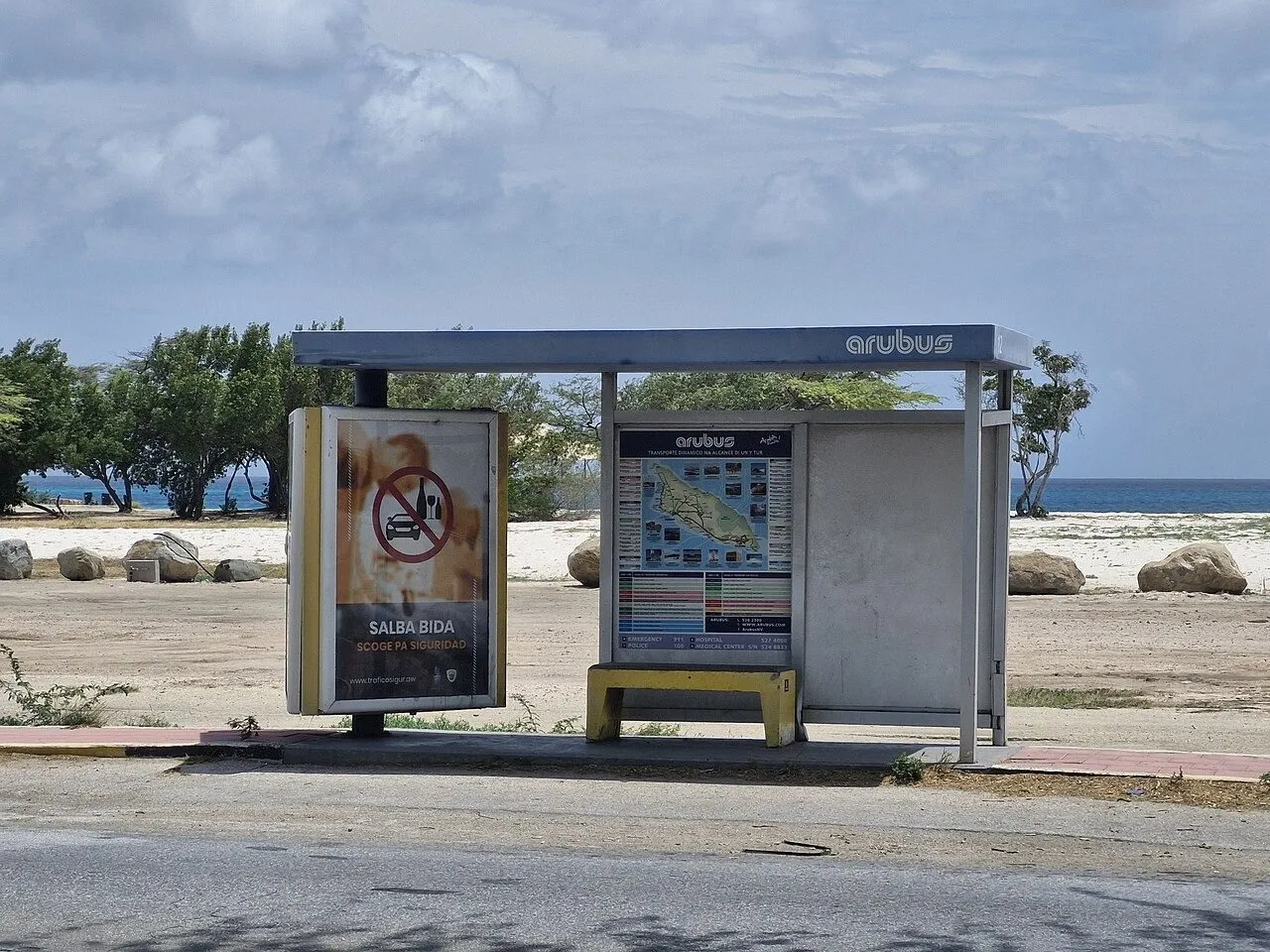
A suitable room is only one part of the stay. Ask for doorway clearances, bed height, shower configuration, grab rails and the route from vehicle drop-off to reception and the room. If a lift is essential, ask whether there is an alternative during an outage. Obtain recent photographs or measurements for features that determine whether the booking works.
Beach access needs separate confirmation about sand, steps, ramps and equipment on your dates. Transport also needs a specific arrangement: Arubus currently says its buses are not wheelchair accessible. Ask a transfer provider about boarding, device storage and securement rather than relying on the word accessible. The accessibility reference explains why a general ADA label should not replace those details.
Book important experiences with a fallback
Before paying for an excursion, read the cancellation window, weather policy and the exact pickup arrangement. Check whether the booking is for a particular time or any available departure and whether admission or equipment is additional. Save those conditions with the confirmation. If the description is unclear, obtain the answer before purchase instead of trying to negotiate it when the vehicle arrives.
Leave another possible day for the activity that matters most. Sea conditions can change a water outing, while park access and ranger instructions can affect a nature visit. Choose a nearby, low-effort alternative so a cancellation does not become an expensive rush to fill the day. Use the weather guide for seasonal context and the operator's current notice for the actual activity.
Useful contacts in Aruba
For a life-threatening emergency, call 911 and follow the operator's instructions. Horacio Oduber Hospital confirms a 24-hour emergency department and gives its general telephone as +297 527 4000. That general number is separate from emergency dispatch. Keep the accommodation's address ready so you can describe the location clearly.
On a small screen, scroll the contact directory sideways if needed.
| Organization | Published contact | Use it for |
|---|---|---|
| Emergency services | 911 | Life-threatening emergencies |
| Horacio Oduber Hospital | +297 527 4000, general hospital line | Hospital information; use 911 for emergency dispatch |
| Aruba Conservation Foundation | +297 585 1234; info@acf.aw | Protected-area questions and conservation information |
| Aruba Tourism Authority | support@aruba.com; 1-800-862-7822 on its visitor site | General visitor information; toll-free access depends on where you call from |
| DIMAS | Official help and application routes | Residence or work eligibility and immigration procedures |
For a reservation change, contact the provider that issued the booking and the property or operator. For a card issue, use your bank's verified app or card contact. Have the booking reference, receipt and exact error message ready, but do not send sensitive documents to an unverified account offering help. CDC is a pre-travel health-information source, not a local emergency service.
Plan the last day before you need it
Agree the departure pickup while you still have time to correct an error. Use Aruba Airport Authority's current advice together with your airline's instructions, especially for US preclearance. A late scheduled flight does not automatically leave a full extra beach day. The airport guide explains the relevant sequence and timing.
Check room checkout, luggage storage and access to a shower if you intend to go out after leaving the room. Return hired equipment and settle any open account before the transfer arrives. Keep travel documents, medication and a change of clothes together, then do a final check of sockets, the safe and the bathroom. Leave the driver a clear, accessible pickup point rather than a vague instruction to meet at the beach.
Travel Tip: Keep one offline note with your accommodation address, arrival and departure pickup, insurance contact and essential medical information. It is easier to use under pressure than a folder of unrelated screenshots.
Aruba travel-essentials questions
What should I arrange before arriving in Aruba?
Check entry requirements, complete the official arrival registration at the appropriate time, save the approval offline and confirm accommodation access and a transfer suitable for your luggage and group.
Where can I find currency and trip-budget advice?
The separate Aruba money guide compares AWG and USD payments, card and ATM questions, whole-group holiday allowances and the different costs of a longer stay.
Can I depend on accessible public buses?
Arubus currently states that its buses are not wheelchair accessible. Arrange suitable transport and confirm the boarding and mobility-device requirements before arrival.
Who should I call for a life-threatening emergency?
Call 911 and follow the operator's instructions. Have your exact location ready. The hospital's general information number is separate from emergency dispatch.
Should I book every day in advance?
Reserve the experiences that are important or capacity-limited, but keep room for conditions, cancellations and rest. Give a priority water or nature activity another possible day where practical.
Tours, Tickets & Experiences
Aruba Travel Tips & Inspiration